Services

Sustainable wellbeing in teaching

Wellbeing in teaching entails both teacher and student perspectives. How can the wellbeing of the teachers and the students be taken into account simultaneously? How do they affect each other? These pages serve as a teachers' reference and study package for improving wellbeing in teaching and studies at Aalto.
Wellbeing in Teaching

    callout

    FROM STUDENTS TO TEACHERS

    "The teacher has an open "office" in his course with a remote connection (zoom, teams, etc) once a week for approx. 30 minutes, where you can stop by and ask about the lecture / the arrangements of the course, etc...."

    Student, spring 2022

    Callout

    FROM STUDENTS TO TEACHERS

    "The importance of managing expectations and communication at the beginning of the course (and a continuous feedback channel open during the course): what is coming, why, what is expected of the students, why e.g. presence, interaction...  the importance of pedagogical metatalk!"

    Student, spring 2022

    Callout

    FROM STUDENTS TO TEACHERS

    "Team Finnish students with foreign students for team work, so that they will get to know each other."

    Student, spring 2022

    According to several studies, the wellbeing of the teacher and the students are inextricably linked. Teaching and learning are not separate things - rarely one exists without the other. The essence of working as a teacher is about daily encounters with students and other teachers. A teacher's wellbeing has effects on the quality of the teachers' work as well as support to student wellbeing. And vice versa. Teaching, where students feel like they are part of it and the dialog is open and two-way, can support the wellbeing of students.

    An individual who is doing well, is better able to regulate stress, and more likely able to recognize their own values and ways of thinking. They are also likely to take action in these issues, and hence support the wellbeing of their social environment. In teaching, this happens, e.g., through positive incentives, empowering students and through supporting experimentation and participation.

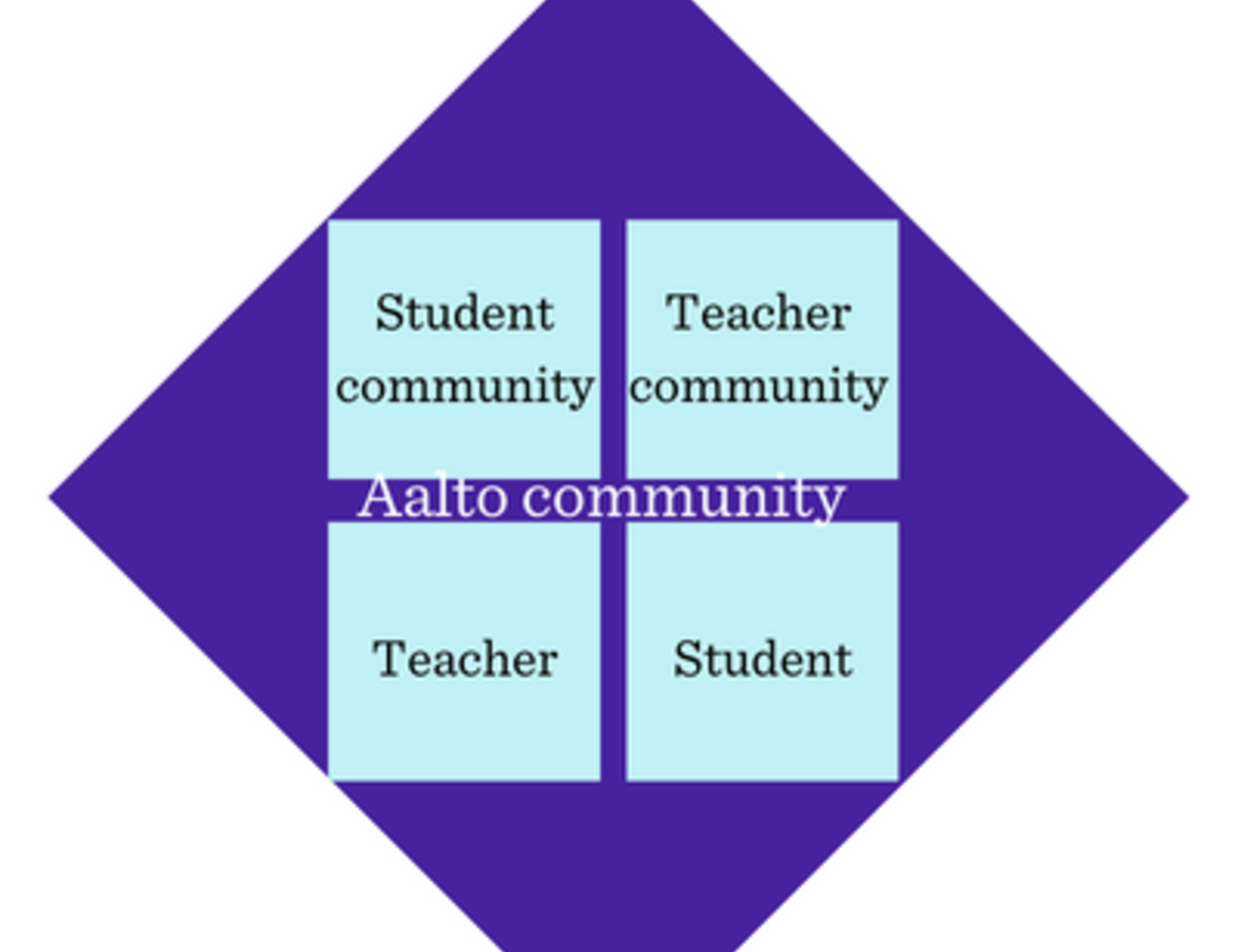
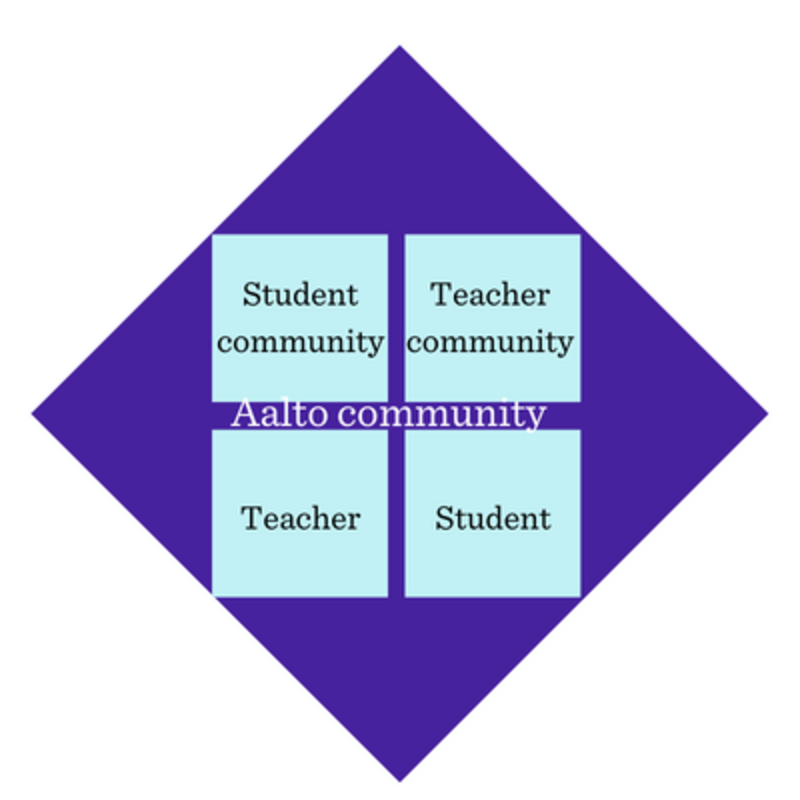
    Instead of consentrating on suppporting individual wellbeing only, we need to think of community wellbeing. Multidimensional understading of wellbeing enables different lifestyles, empowers and supports agency. When social and structural challenges are solved in the community, they do not become individual challenges.

    The Wellbeing in Teaching Toolbox is produced by Aalto Oasis of Radical Wellbeing, Aalto HR and Aalto Learning Services.

    Read more: Together Towards Holistic Wellbeing

    Liisa Postareff: "Academic Wellbeing – The relations between teaching, learning and wellbeing of the learning community"

    Available through Aalto login. English with subtitles.

    Inspiroidu esityksestä
    Liisa Postareff

    Supporting wellbeing in teaching -toolkit

    Wellbeing in teaching can be promoted on several different levels. On an individual level, teacher is able to reflect on their own teaching and think about methods that support students learning. At the level of planning, e.g. consideration of study time allocation is important for the work of both the student and the teacher. From a community perspective, it is important to think about the goals we set for the programme and how they support the progress of studies and wellbeing. What kind of working methods in teaching support wellbeing.
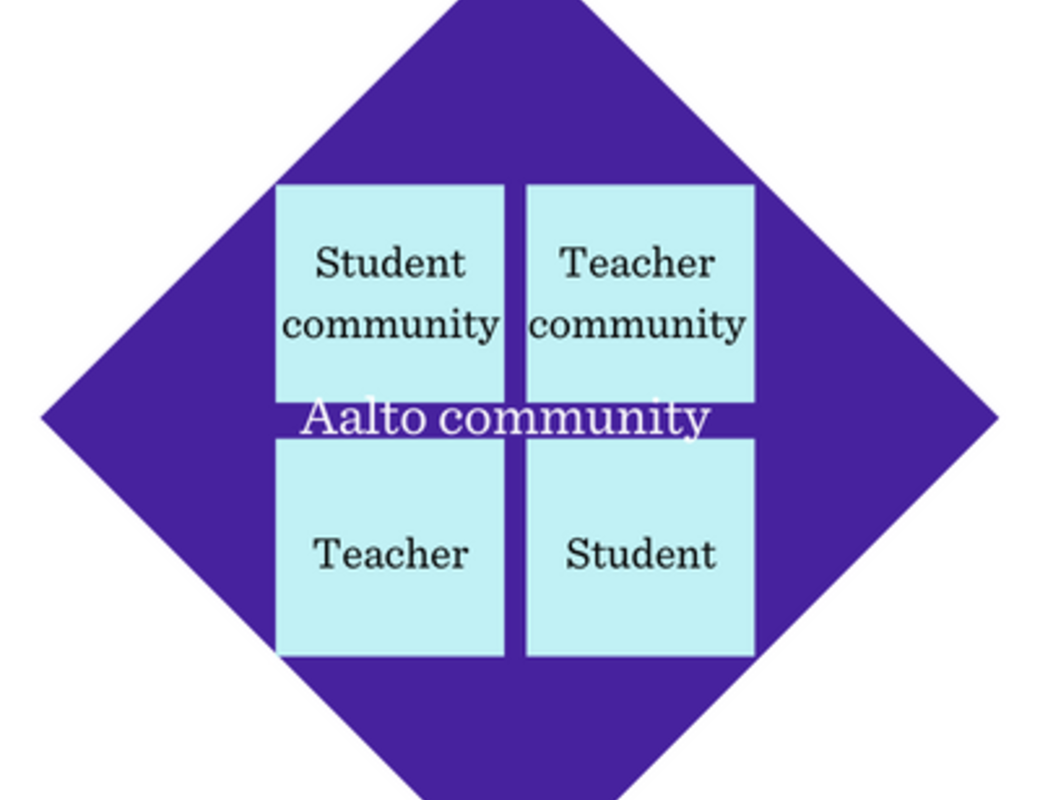
    We gathered activities that promote wellbeing at different levels together.

      Mindfulness SQ

      A calming exercise helps you to stop

      With the help of mindfulness and other exercises that calm the mind and brain, we can return to the present moment, stop with our own thoughts and body, but also get in touch with the environment. Use the exercises to support your own wellbeing or make them part of the teaching. For example, a calming exercise at the beginning of a teaching session helps you and your students stop and focus on the moment. Read more.

      Opettaja ja opiskelija opetustilanteessa

      Well-formed intended learning outcomes support wellbeing on a course level

      A well-formed intended learning outcome (ILO) tells the student what they are expected to learn during the course and helps the student to focus on what is essential. It enables support during the course and serves as a basis for evaluation. Communicating ILO's to students and talking about them during the course supports wellbeing. See here tips for formulating intended learning outcomes.

      IMAGE: Aalto University/Aino Huovio

      Time allocation is an important part of course design

      Allocating enough time for studying is an important part of planning your teaching. Study time allocation is used to ensure that a sufficient amount of time is reserved for the student to achieve the intended learning outcomes (ILO) and for high-quality, comprehensive learning. It is good to look at the time needed also from the point of view of the teacher's work. A well-done calculation makes it possible for teaching and studying not to burden anyone too much. Read more

      AllWell SQ

      Data supports development

      At its best data can support development and help the education programme to support wellbeing. Familiarize yourself with the AllWell results of your programme and the teacher's guide on how to improve teaching. Guide and the instructions how to use PowerBI can be found here

      Levels of wellbeing: Individual and community

      Community wellbeing. Reflect wellbeing in your community:

      What would improve your wellbeing?
      How could you support the wellbeing of others? Who makes up your immediate community?
      How could the wellbeing of your immediate community improve?
      What could the Aalto community do to improve wellbeing?

      Opiskelijoita opiskelemassa ryhmässä

      The teacher(s) and students building community wellbeing together

      The feeling of belonging to a community is one of the most important things that support well-being. This can be supported by both the teacher and the students in the group. Read more about how you support inclusion and a sense of belonging in your teaching. Read more

      students and a teacher talkin

      Feedback as a tool for development and a part of community wellbeing

      Collecting feedback as part of teaching, also during the course, is one of the most important ways to ensure and support the learning of the student and the student group during the course. In addition to traditional feedback surveys, course discussions and short surveys, e.g. In MyCourses, teachers have a chance to make sure that students can follow their teaching. Read more

      Study ability

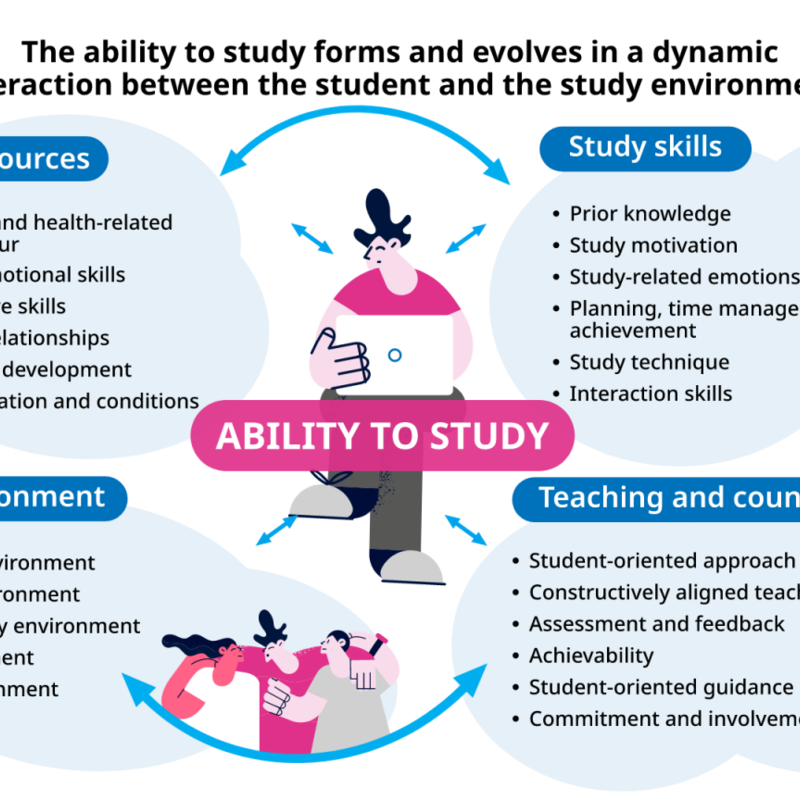
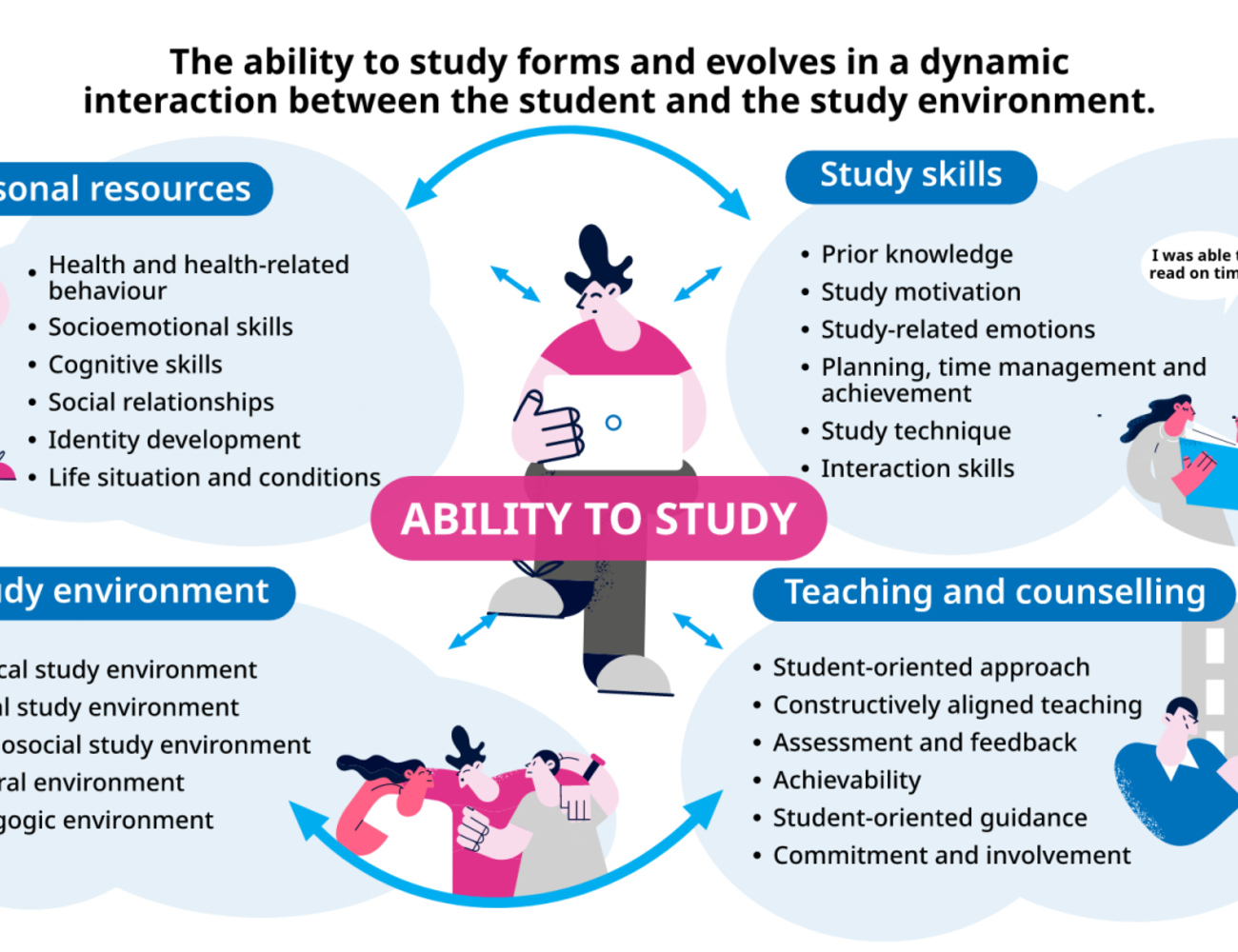
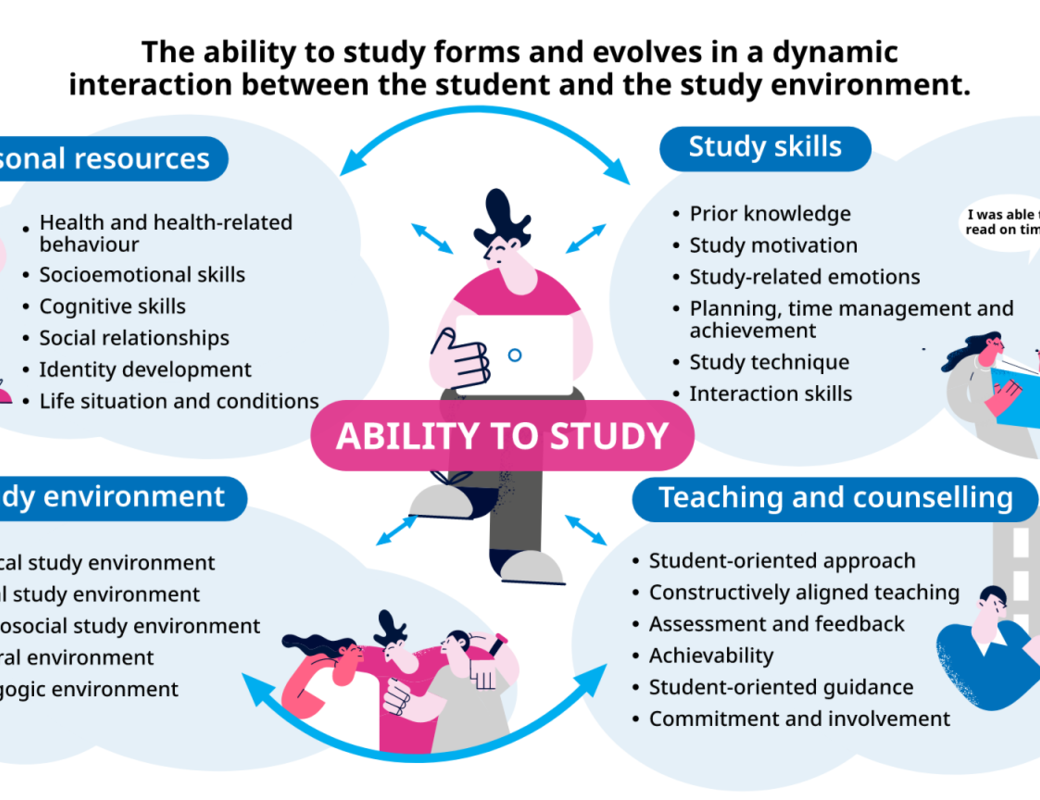
      Ability to study means a student’s ability to work

      Personal resources, study skills, teaching and counselling, and a supportive study environment all have significant impacts on how well a student performs. Strengths in one or more areas may help to maintain a student’s ability to study even when there are problems in other areas. Study progress can be improved by addressing all the different aspects of ability to study.

      Read more

      Developing Wellbeing Through Curricula Development

      A group of people collaborate around a table covered with sticky notes and laptops in a modern office.

      Curriculum development

      The aim of curriculum design is a programme that helps students acquire the competence they will need in their field in the future and to acquire it within the target time frame. In this page, we have described the stages of curriculum development and instructions for each stage. You can find also methods, tools and working templates to support the co-development and carry out each stage.

      Programme director's handbook
      Students at Aalto University Learning Centre

      Programme director's handbook

      The programme director's handbook is a collection of guidelines, templates, and good practices. The handbook gathers together information about processes, schedules and tools and the aim is to support degree programme directors, heads of majors and others involved to succeed in implementing, evaluating and developing the degree programmes.
      Patterned grid with various icons including hearts, stars, light bulbs, and group discussions.

      Teacher’s Handbook

      A landing page for teachers to help them find information, services, and support related to teaching and learning.

      Events and courses

      Illustration of a person at a computer, connected to cloud storage and two servers on a blue background.
      For Aalto community IT & digital tools
      Neurodiversity at work event, banner image
      For Aalto community Networking, Languages and multiculturality

      Neurodiversity at work - Lunch & discussions - Making Waves 31/Mar/2026

      Building inclusive teaching and research: A conversation on neurodiversity. In this event, you share your experiences or just hear your peers’ thoughts while having lunch with peers.
      a group of students sitting and laying on the grass, two are reading a book.
      For Aalto community Pedagogical training

      Multicultural Competence for Aalto Teachers (5 ECTS), pedagogical training, spring 2026

      Teaching period: 1.4.-27.5.2026, in English, register by 22.3.2026
      MyCourses training
      For Aalto community Support for digital teaching

      MyCourses Basics Self-study Online Course for teachers

      Start anytime! Learn the basics of MyCourses as a teacher whenever needed, in 3-4 hours.
      This service is provided by:

      Learning Services

      For further support, please contact us.
      • Updated:
      • Published:
      Share
      URL copied!