






Restoration of Music Recordings Using Generative Models (REMUS)
Description
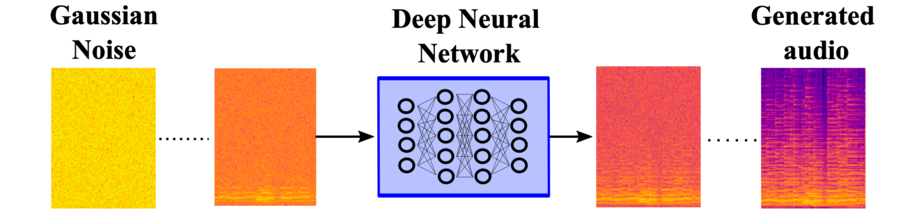
In 2022, the audio signal processing research team achieved a landmark result by demonstrating that a deep neural network based on a two-stage U-net architecture outperforms prior methods in denoising historical music recordings. However, even after this dramatic improvement, old recordings still do not sound great, since other degradations remain. The REMUS project’s objectives extend far beyond denoising. It tackles the demanding challenges of reconstructing missing high-frequency content and repairing physical damage, such as scratches on gramophone and vinyl records, that corrupt long audio segments. A central open challenge is audio source separation of historical music, which decomposes a degraded recording into its constituent instrument stems. This would allow each instrument to be restored individually with high fidelity, addressing specific tasks including audio bandwidth extension, distortion removal, and audio inpainting. The restored stems could then be recombined into a final mix with the clarity, full frequency range, and naturalness of a modern recording.
People
Acoustics Lab Links
News

Hear Aalto University’s acoustics research at Fuuga Music Centre
Professor Tapio Lokki, who has spent years studying concert hall acoustics, took part in the design of Turku’s new music hall as the client’s acoustics advisor.
A summer job at Genelec led alum Sauli Norja to his dream job
For Sauli Norja, a summer job served as a gateway to his dream job. His work has continued after graduation at Genelec, and as a sound engineer for Ellimei.
Shimmering Success: Aalto Acoustics Lab team wins Best Paper at DAFx 2026
The paper reimagines the popular 'shimmer' effect, known for its ethereal, pitch-shifted ambience