






The returnees: why Amplit and Jatke are back at the heart of Building 2030

Jatke: putting our own house in order first
Aaltonen studied construction economics in Otaniemi and spent 12 years in development leadership roles at YIT, from site level to group level. He was responsible for site digitalisation and for developing the company’s construction capabilities, and that role first brought him to the Building 2030 steering group. Six years ago, Aaltonen joined Jatke as development director.
Jatke stepped down from the Building 2030 steering group halfway through its previous strategy period. It was a deliberate choice.

‘At the time, we concluded that we didn’t have much to contribute to the joint effort, so we decided to put everything into reaching our own strategic goals,’ Aaltonen says. ‘Despite the difficult times, that went relatively well. The start of a new strategy period was a moment to reassess the situation, and we saw that our own house was now in good enough order for us to invest more in the common effort. Building 2030’s goals are so well aligned with our new strategy that we wanted to play a stronger role in moving the whole industry forward again.’
Amplit: only involved when there is real time to give
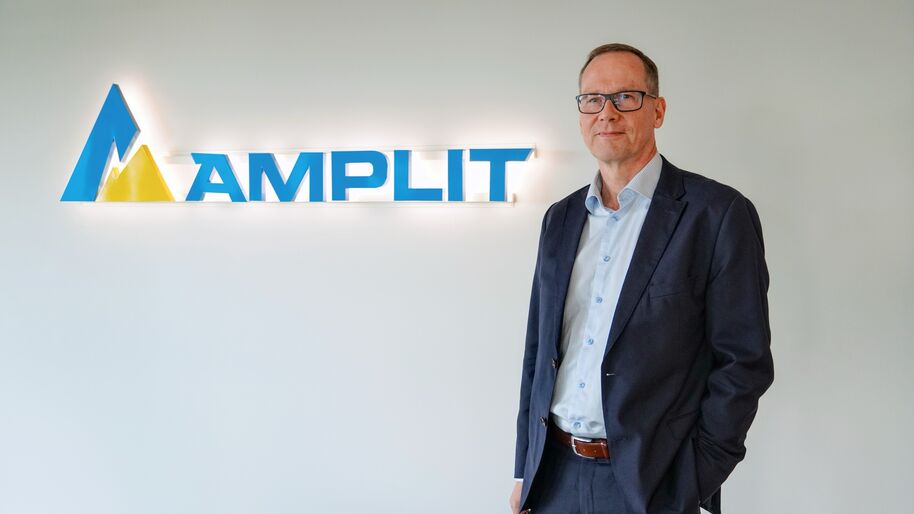
Jan Hellman graduated from Helsinki University of Technology in 1996 with a master’s degree in telecommunications and industrial economics. Instead of construction, his career took him to Nokia’s networks business, where he worked for a total of 20 years over two periods. In between, he served as development director at Amplit. Hellman returned to Amplit in 2018 and became chair of the board the following year. Development is close to his heart, which is also reflected in his role as chair of the board of LCI Finland.
Amplit turns 40 next year and has taken part in joint development for almost its entire history. The company only takes part in a few projects at a time, and for a while Building 2030 was overshadowed by its work in RAIN and LYRA. The decision was a question of resources and did not reflect any stance against the consortium.
‘We don’t want to be in any project in name only. When we join, we actually put time into it,’ Hellman says. ‘Now we were once again able to prioritise Building 2030, where we’d had good experiences.’
According to Hellman, finding the time is a genuine challenge, because the workshops need the very experts who are most in demand and hold key responsibilities in projects.
Development done alone gets stuck in PowerPoint
Aaltonen has worked on putting new practices into use for almost 20 years, and in his view, this is exactly where industry development tends to stall. A single company’s development project too often ends up as a slide deck that never takes root in everyday work. A consortium brings critical mass, continuity and volume that no individual effort can match.
‘Building 2030 does a great job of bringing university research and companies’ development work closer together,’ he says. ‘We gain much more strength to focus on the tricky problems that individual companies usually can’t solve on their own.’
In his view, the concerns about collaborating with competitors are smaller than is often assumed. Development work involves few trade secrets, and at a high level, companies face very similar problems and solve them in very similar ways.
‘In the end, what counts is the ability to execute and implement. You can’t read that off slides. It is an internal capability that a company has to build in an entirely different way.’
Research challenges assumptions
Both companies carry out their own development work, but scientific research adds a new perspective. Hellman highlights the credibility of the results and the systematic approach. Without data, everyone involved forms their own view of a problem, each distorted in a different direction.
‘Academic research comes with a kind of quality guarantee, because the results come out of a scientific process,’ Hellman says. ‘A good example is the study on the productivity of building services installers, which has been cited many, many times. Until we have actual evidence, we have no common foundation to build on or to base our priorities on.’
Aaltonen’s example of what research collaboration can achieve is takt production. Within a few years, the concept has gone from barely known to an area where Finnish expertise attracts international interest. Jatke’s Signe site, which applied digitalised takt production, has been presented in Germany and Singapore as well as in Finland, and France is next.
‘I’m absolutely certain that without the Building 2030 consortium, this would not have progressed this far in any single member company, or at national level either,’ Aaltonen says. ‘Perhaps we Finns are a little too modest about our own expertise.’
At project level, working together is still the biggest challenge
Collaboration works at consortium level, but the everyday reality of construction projects is different. Hellman sees working together as the industry’s single biggest challenge, whether in design, scheduling, decision-making or handling deviations.
In his view, alliances and integrated delivery models have clearly moved things in the right direction, but when the pressure is on, old ways of working return. That is why Hellman would like research to include perspectives beyond the technical.
‘We take a step forward and then slip back into our old behaviour,’ he says. ‘Technical solutions are important, and we know how to develop them. But it would be interesting to bring in the psychology of organisational behaviour and a more multidisciplinary approach as well.’
Focus areas for the new period
In the new period, Building 2030 will study takt production, the digital flow of information in projects and the use of AI. The themes build on the work of the previous period but move closer to practical applications. Both companies consider the choices well targeted.
For Jatke, the top topic is the use of AI in construction production. Technology is one of the four focus areas in the company’s new strategy. Aaltonen also sees untapped potential in takt production, but releasing it requires getting the upstream processes in order.
For Amplit, the starting point is productivity, from which the vision’s other themes follow. Hellman says AI brings many opportunities but even more questions, and it would make more sense to explore them together than for each company to search for the best methods on its own.
‘Productivity comes from smoother daily operations and collaboration, less waste and information that flows,’ Hellman sums up. ‘If we could work more efficiently and with better quality, the same building could be sold to the owner either at a lower price or with a better margin. In practice, it would be some combination of the two. That would again leave a little more room for development.’
Collaboration is visible to future professionals too
Aaltonen links productivity to the industry’s attractiveness, the other main theme of the vision. In his view, the way construction is portrayed in the media does not draw the brightest young people to the industry, even though it is a sector of major economic and societal importance. Pioneering work that attracts international interest can help here.
The most concrete link to future talent runs through theses. However tough the times, Jatke aims to employ interns and commission master’s theses, and the theses supervised at Aalto University are mostly linked to Building 2030 themes.
‘That makes them directly valuable to us, and it serves the interests of both the university and the industry,’ Aaltonen says. ‘They aren’t written on topics that matter to no one.’
Building 2030 is an R&D consortium made up of Aalto University and 16 construction industry partners.
Read more news

How can we reinvent ourselves in the face of uncertainty? Five things everyone should understand about embracing the new
In a rapidly changing world, we need the ability to think differently, question what is familiar and recognise new opportunities. Aalto University’s Professor of Practice Nando Malmelin, explains how anyone can develop their openness skills
The State of Marketing survey: Performance monitoring and budgeting remain relatively weak
Markkinoinnin tila (The State of Marketing) survey opens up important perspectives to the Finnish marketing knowhow and areas for development in marketing
Thinking as a Superpower for Learning – Even in the Age of AI
At the event Marsio Presents: Learning Now in the Age of AI, we reflected on learning in a changing world. How does learning happen if thinking is outsourced to AI?