Kide – Wood Program

The Process

Kide is a stage and canopy that aims to reflect in its architecture the local character and building heritage, as well as Kuhmo's natural environment and forest resources.
Rendered image of Kide on the market square with people around

Design competition

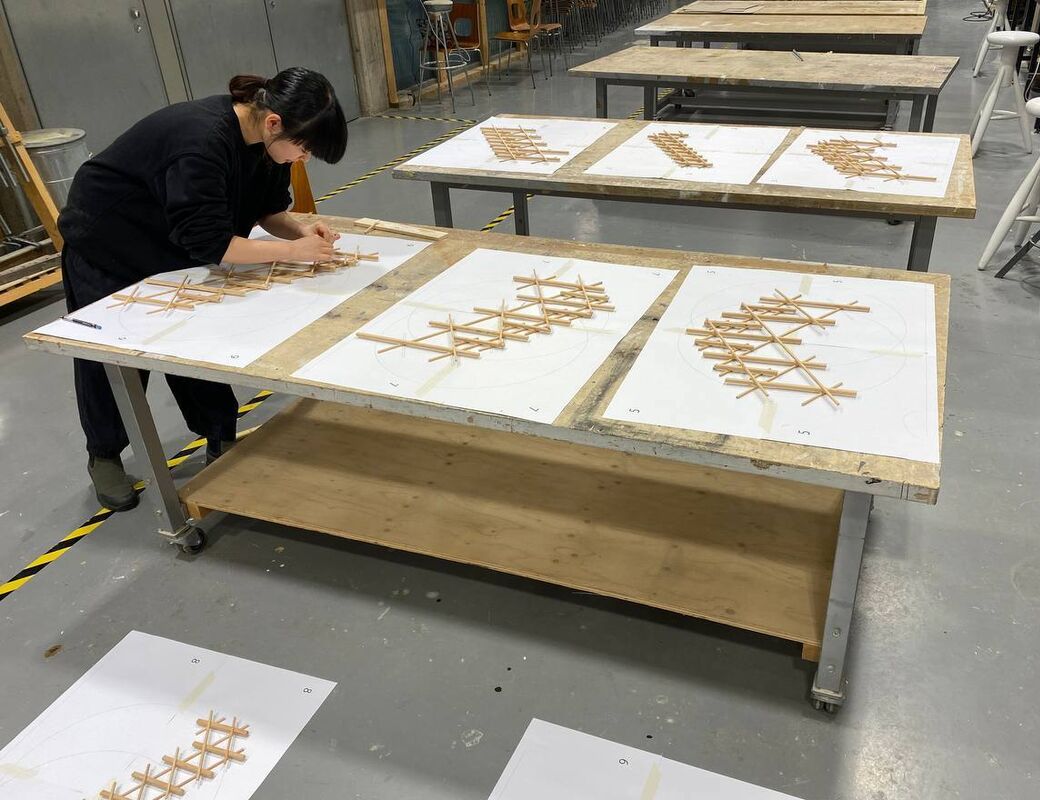
Each Wood Program project starts with a small design competition, where students are free in their interpretation of the project brief. This year, all 17 students designed a proposal for the stage in Kuhmo. Through making drawings, models and mock-ups, both conceptual and tectonic parts of the designs were developed.

One proposal was selected that was further developed into the current design. Read more about this phase of the project here.

Axonometric drawing of Kide joint, with one vertical surrounded by 4 diagonals at 60 degree angles

The 'Kide-joint'

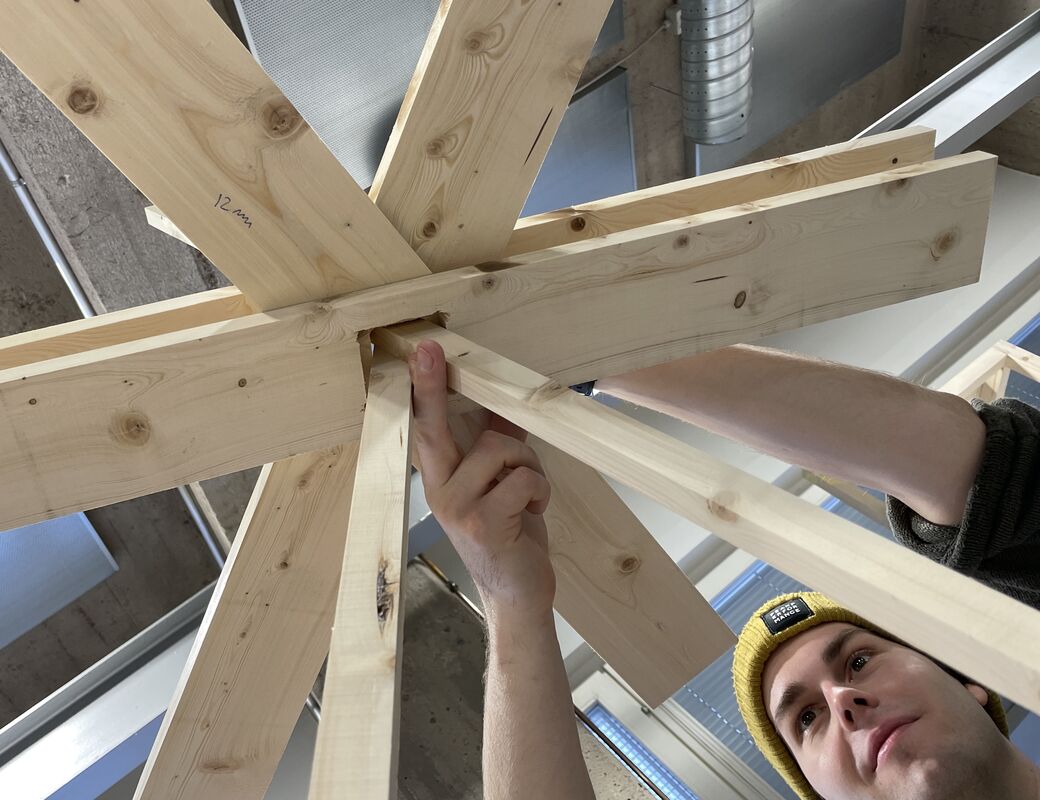
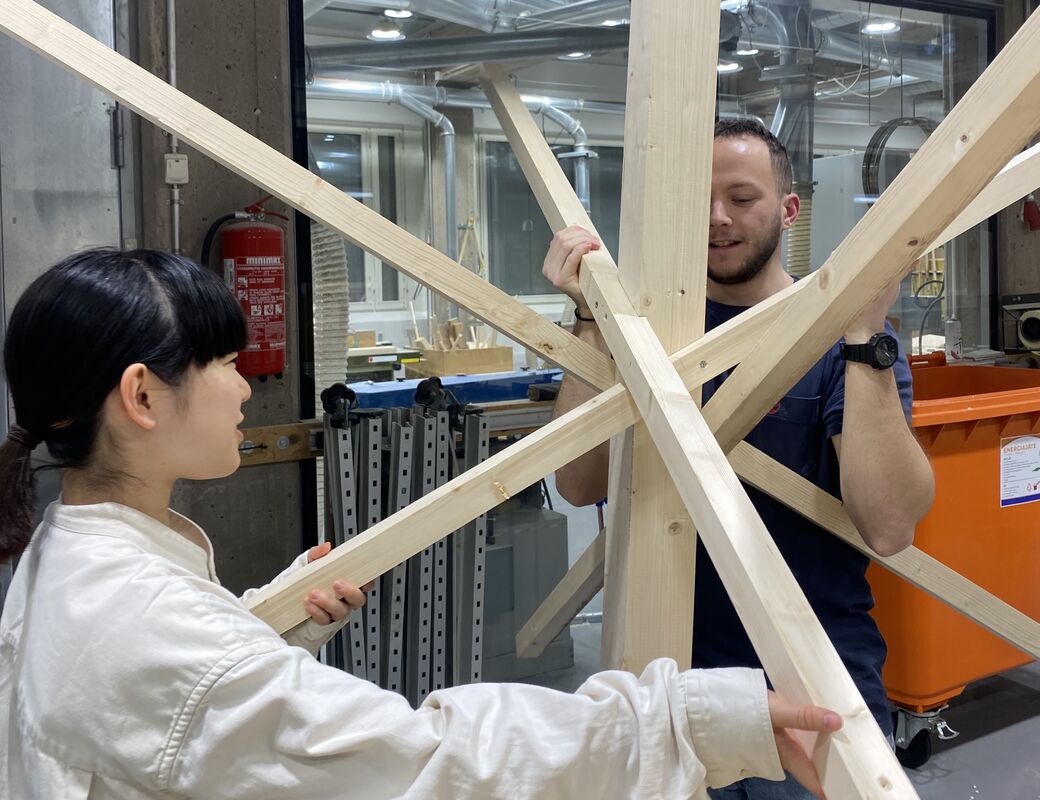
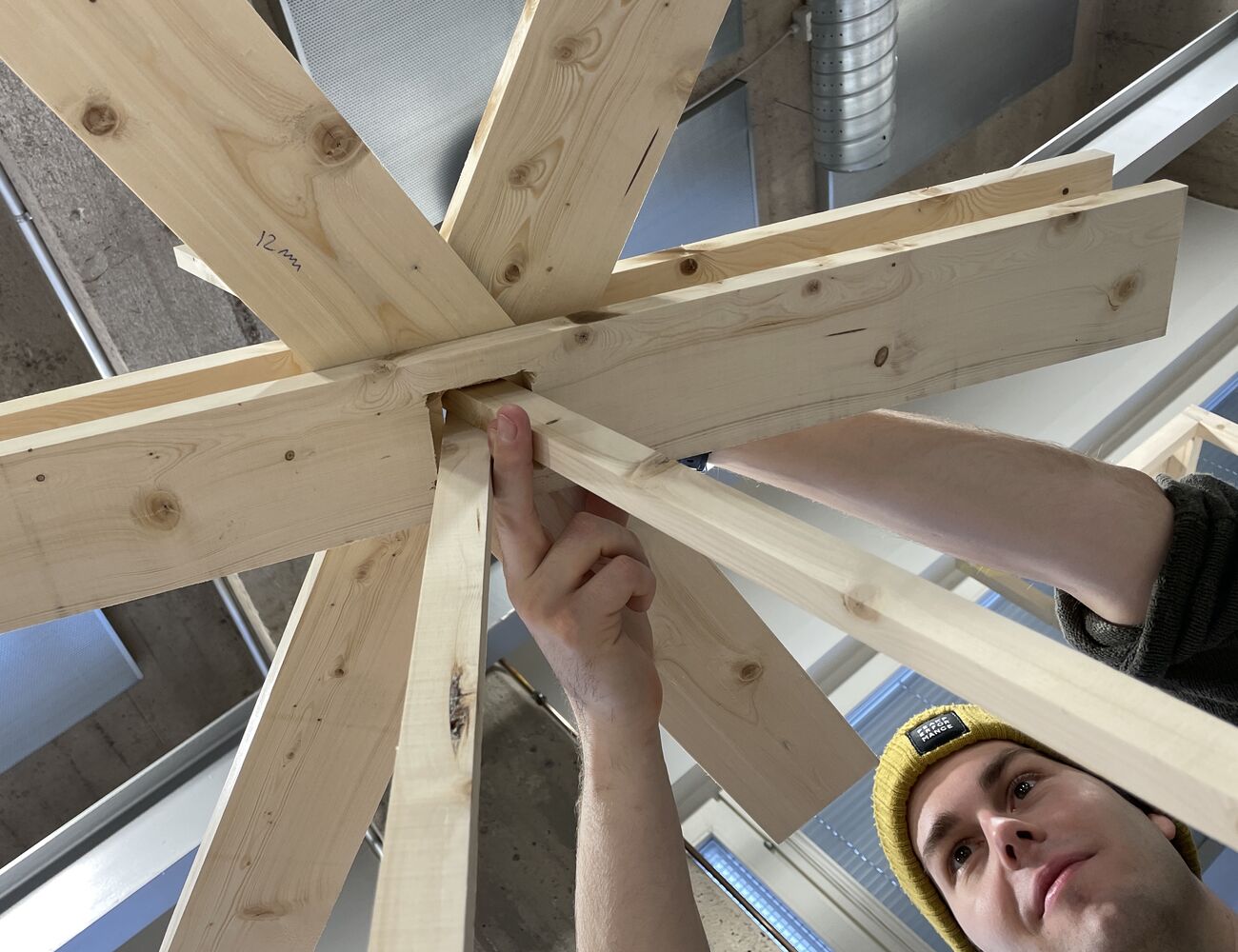
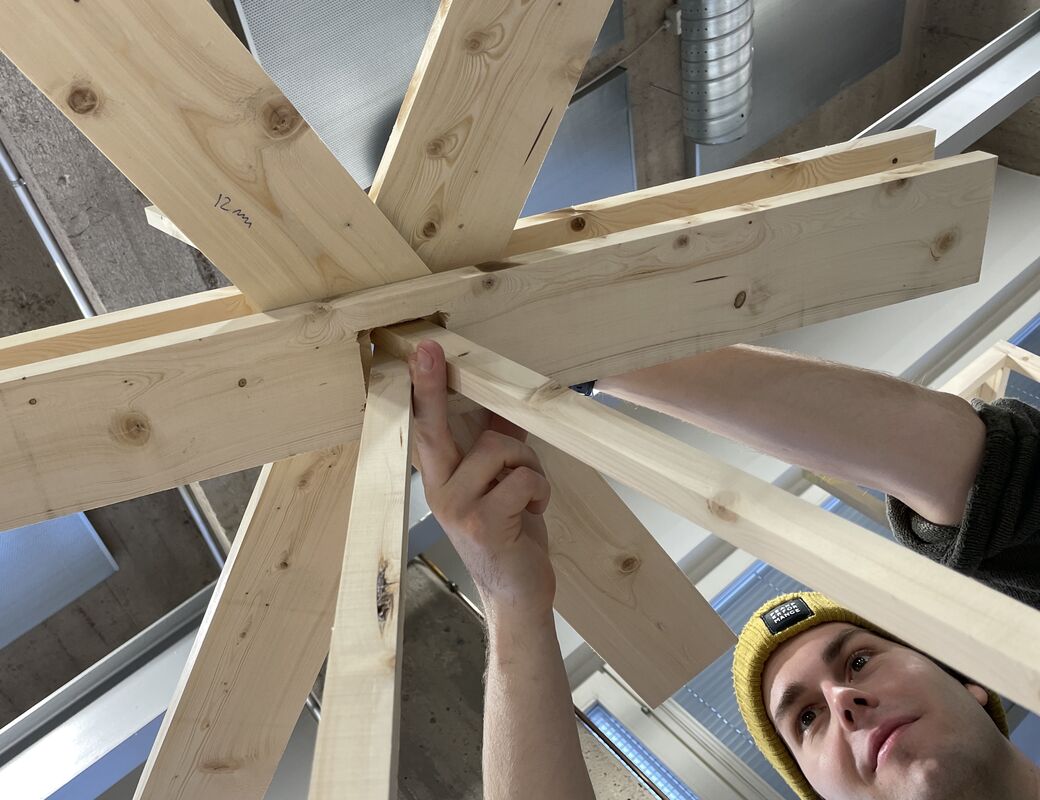
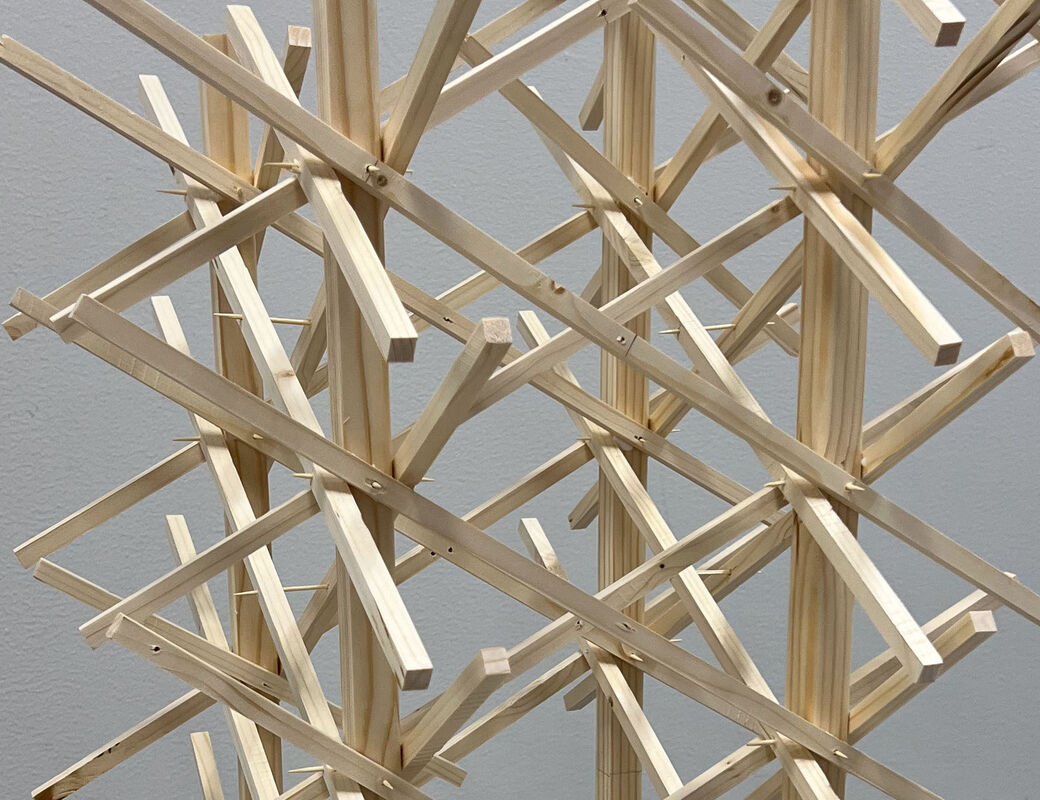
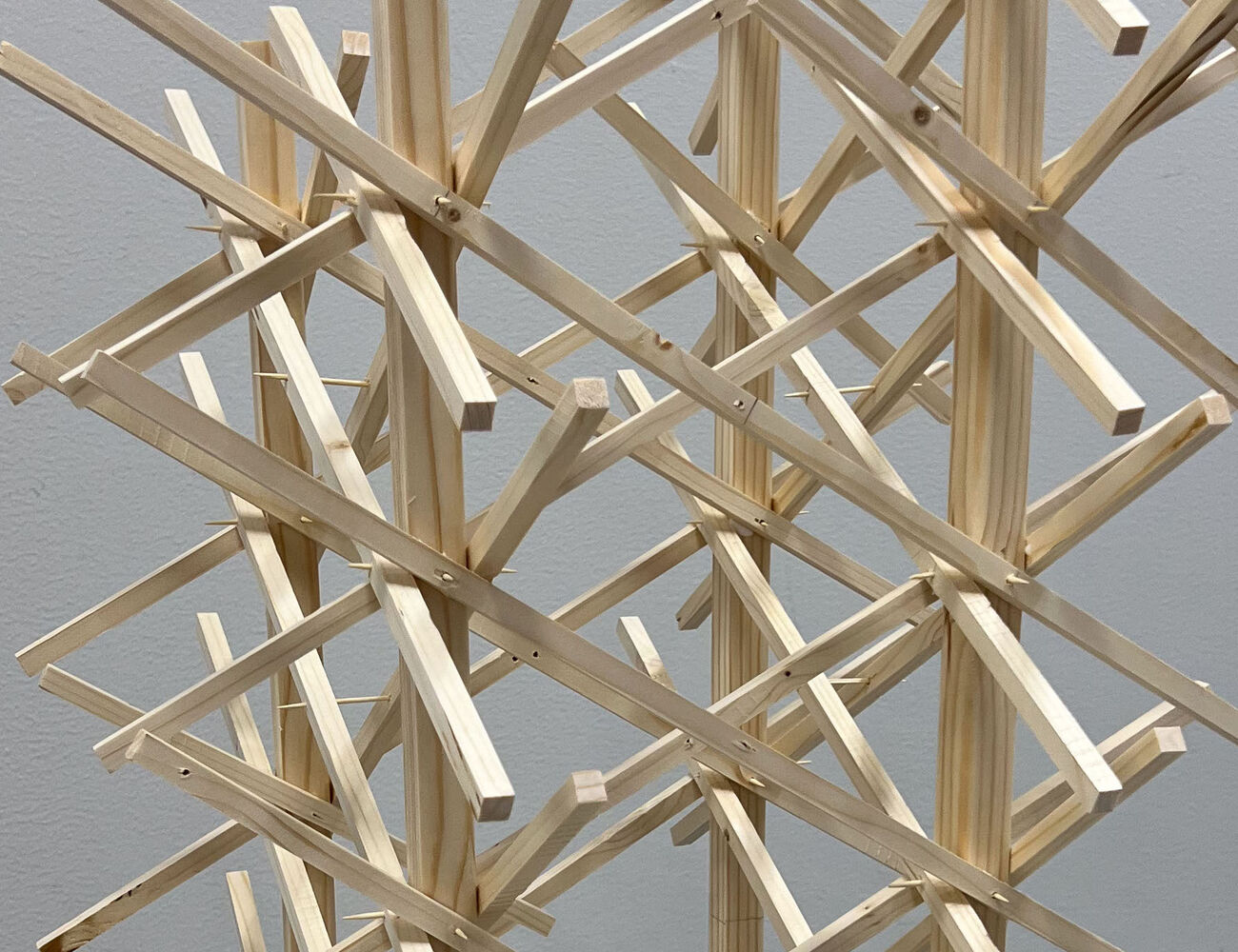
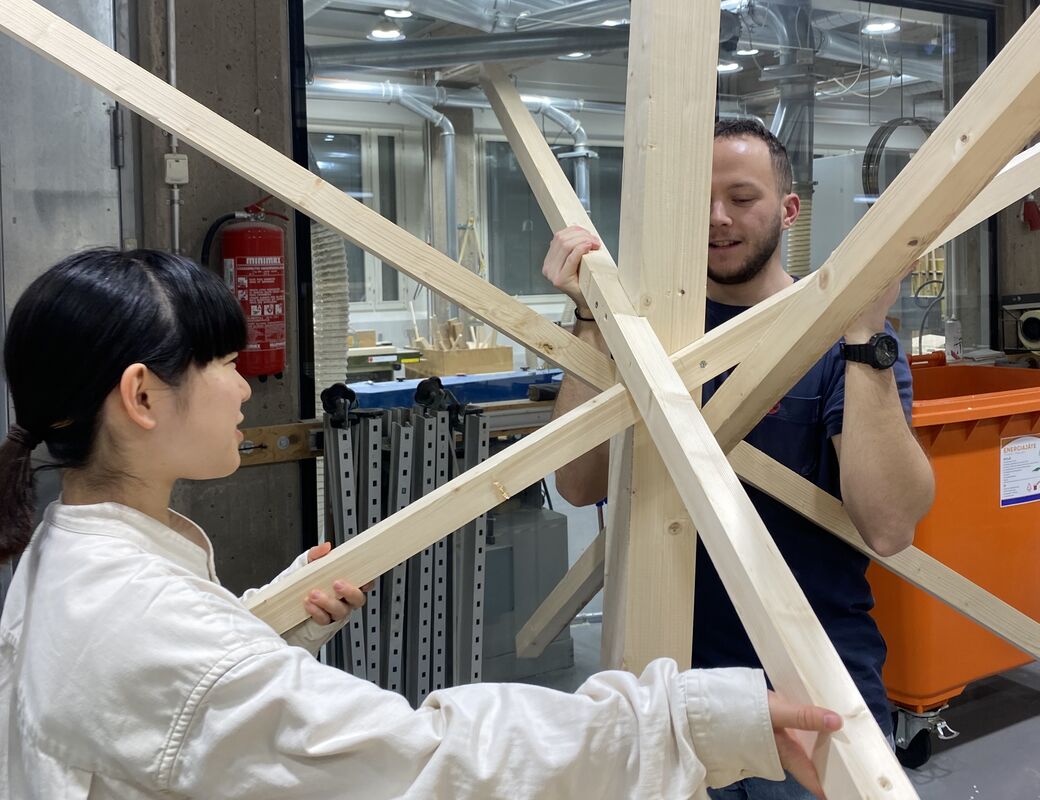
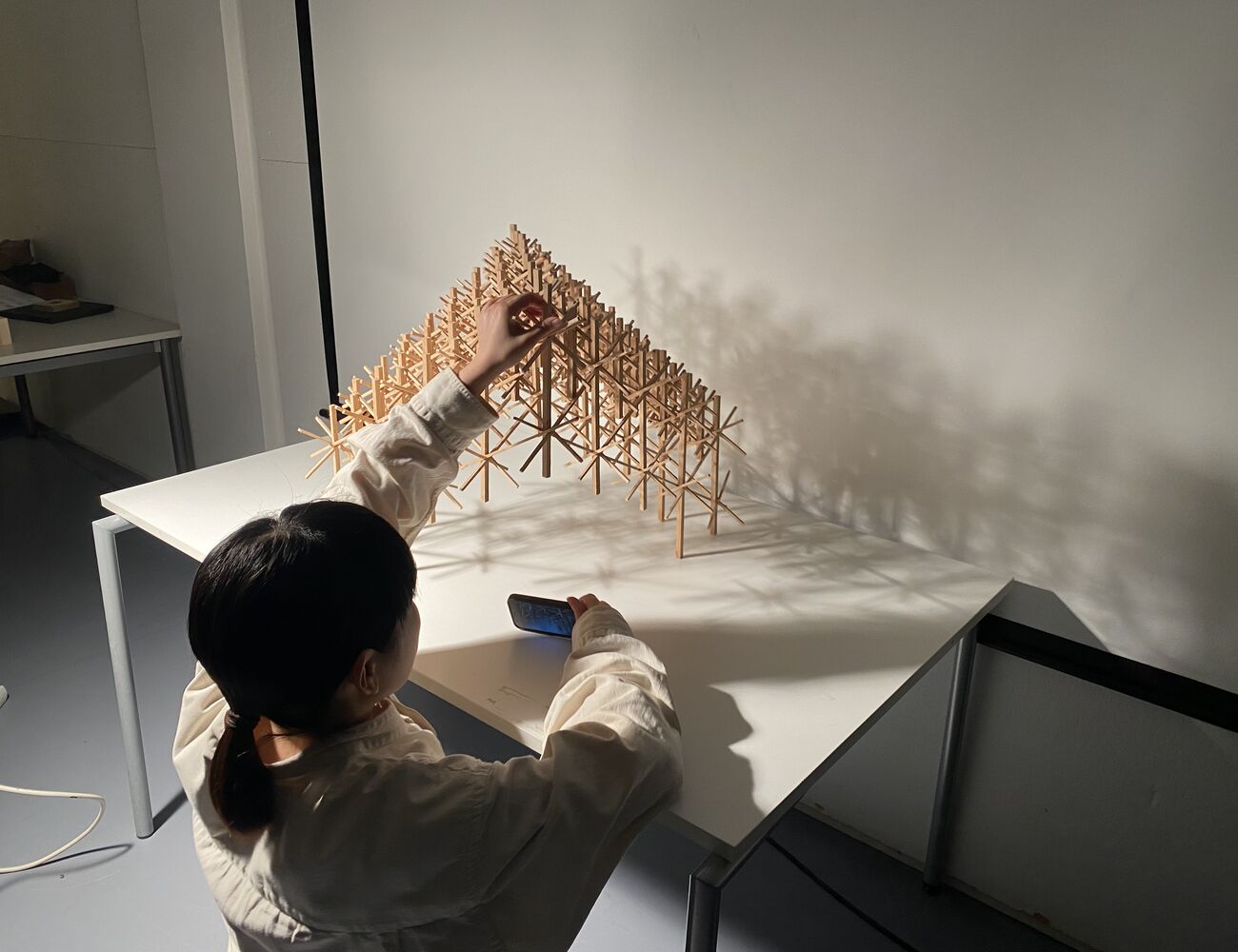
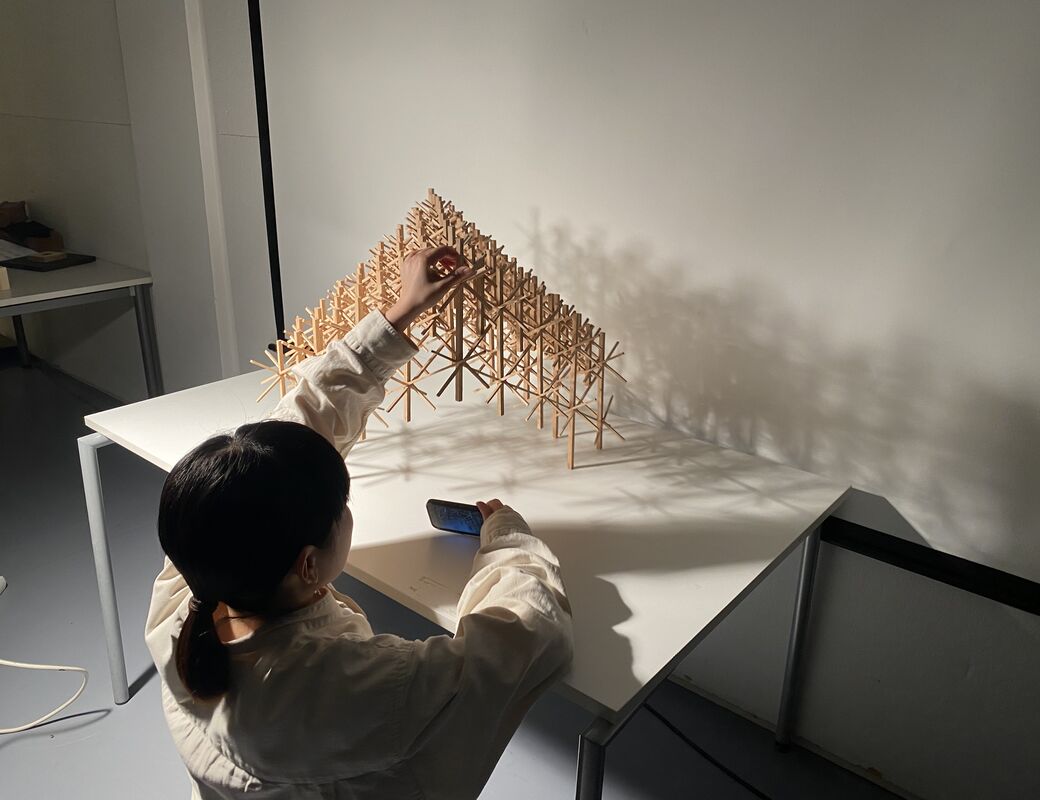
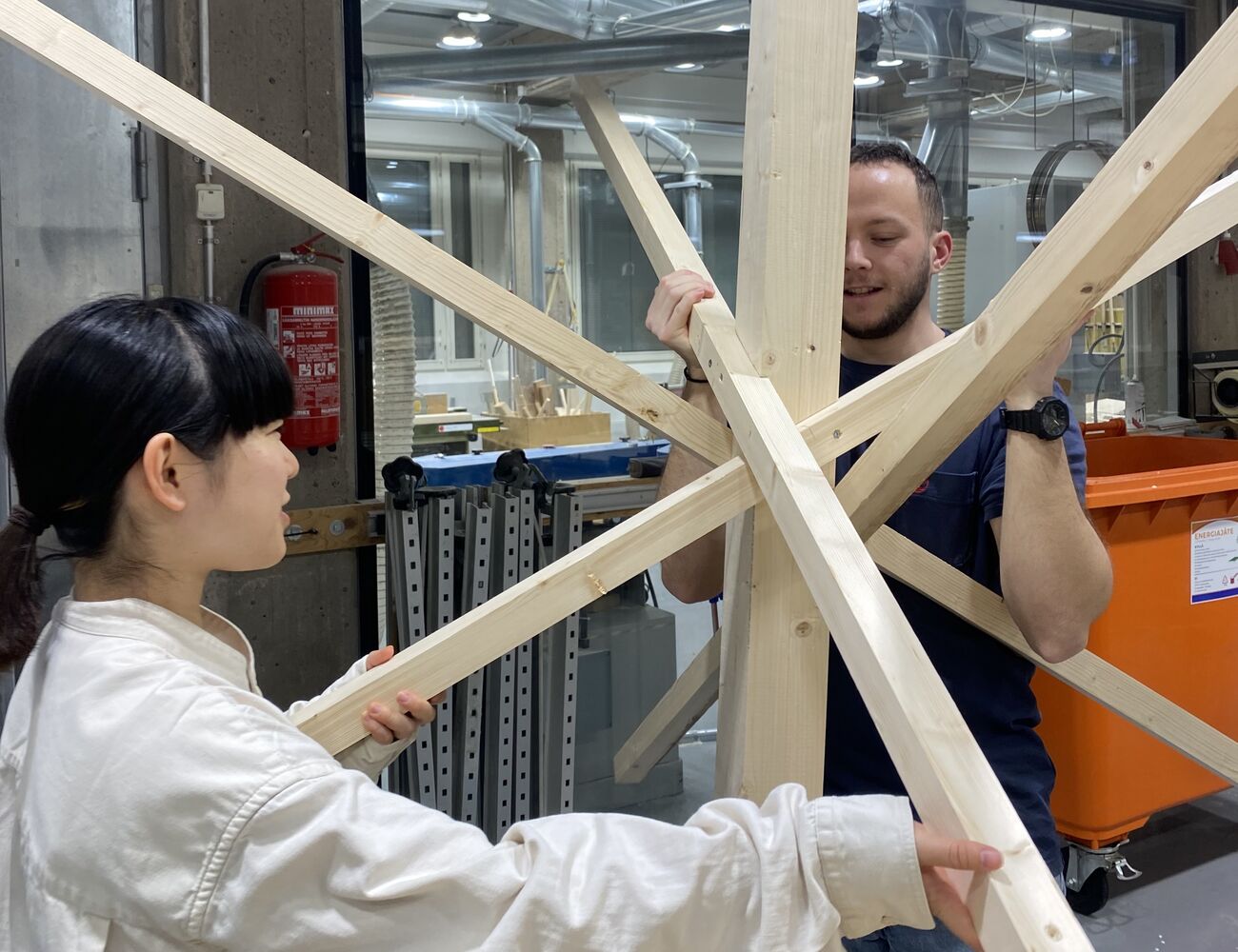
The proposal that eventually became Kide, was based on the crystalline nature of snowflakes while also referencing himmeli, a traditional Finnish Christmas ornament. Through experiments of shapes, materials and joinery, the 'Kide-joint' was developed; consisting of four diagonal beams that wrap around a vertical piece of timber, always at 60 degree angles. Kide's structure is based on this joint, which creates an inherent stability through triangulation.
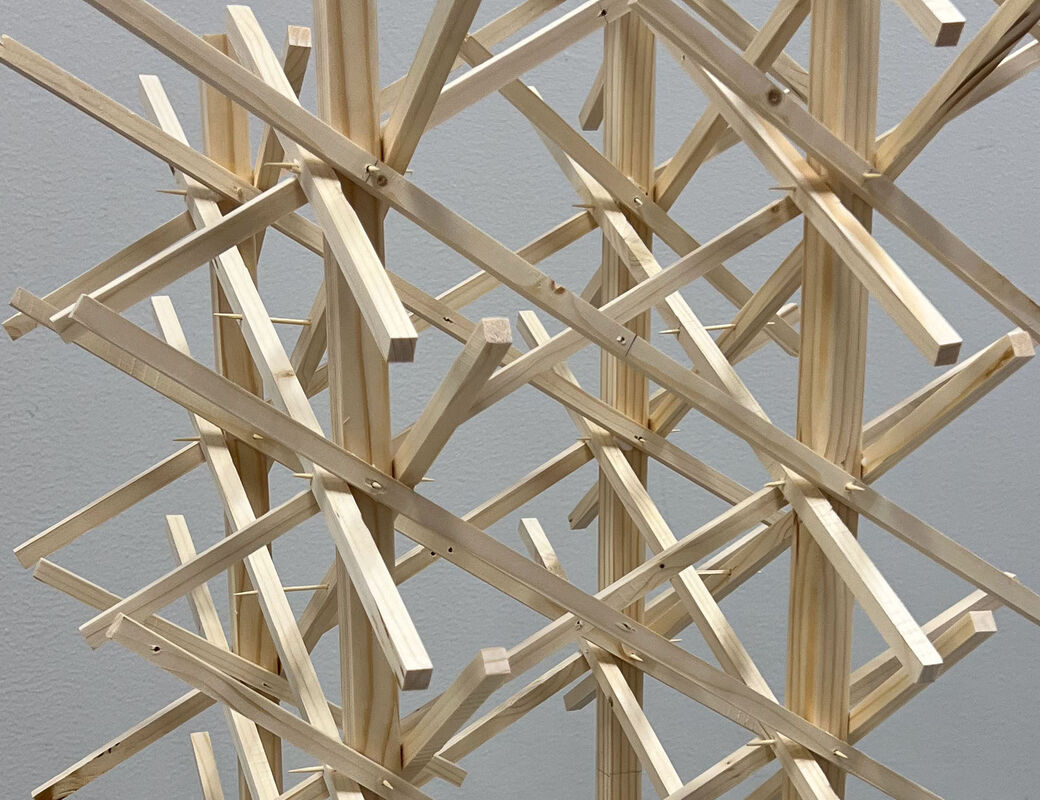
Wooden scale model of joints
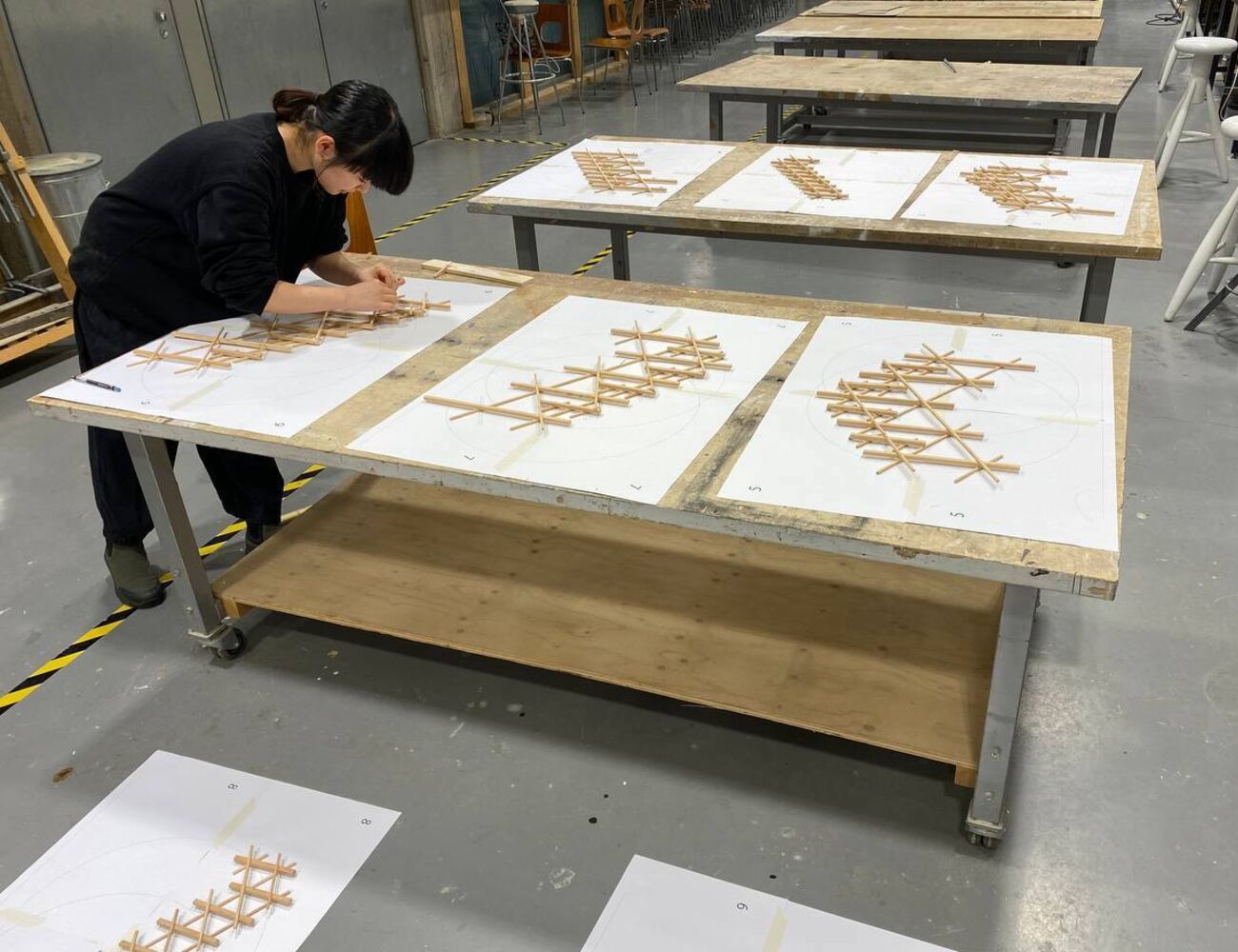
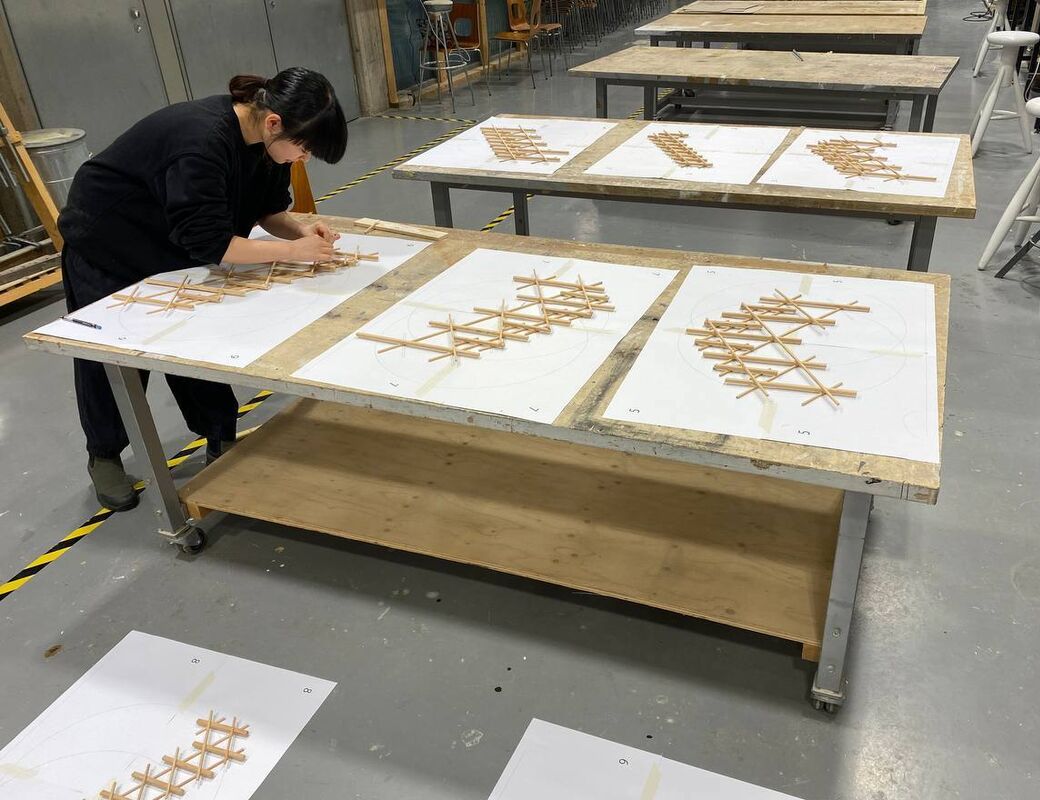
Students making mockup of wooden joint with snowflake shape
More Kide joint testing
Students making mockup of wooden joint with snowflake shape
More Kide joint testing
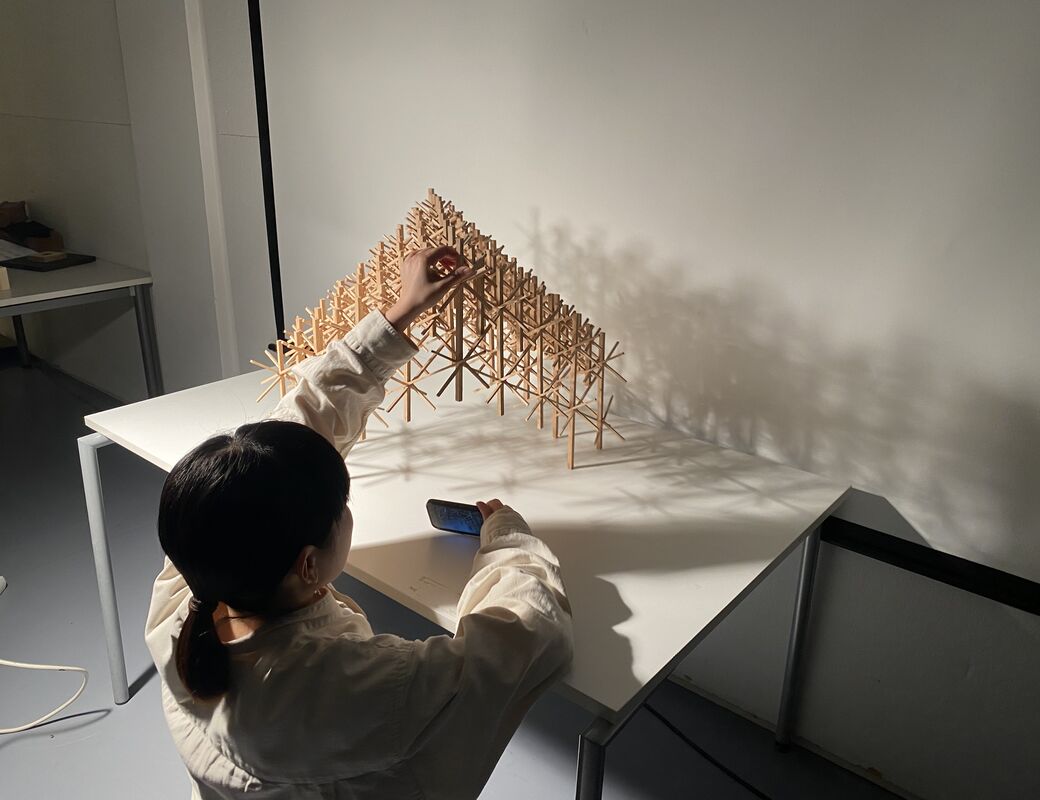
Student making scale model of the structure
More Kide joint testing
Student making scale model of the structure
Wooden scale model of joints
Student making scale model of the structure
Wooden scale model of joints
Students making mockup of wooden joint with snowflake shape

Materiality

One aim of the project was to optimise the use of local timber provided by Kuhmo Oy. Through full scale testing, we found that using sawn timber was too challenging as an option due to large deformations, like twisting, in long components. Therefore glued laminated timber (glulam) was used for the main structure, with the rest of the structure made of sawn timber and LVL.

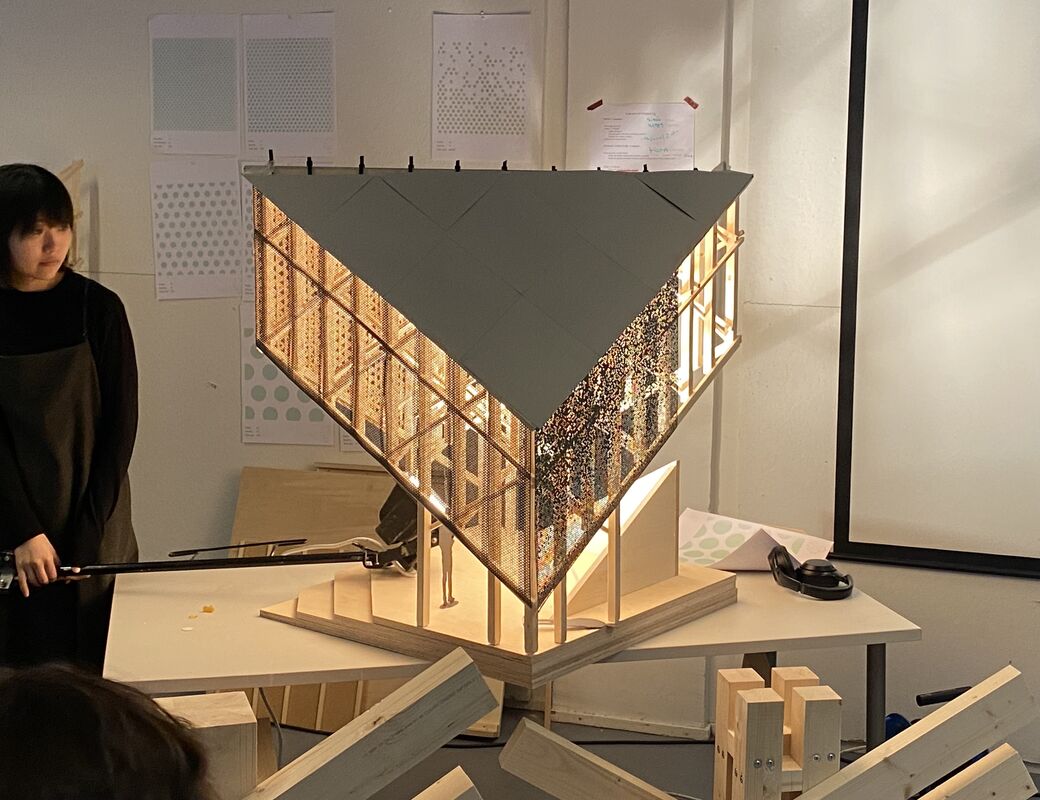
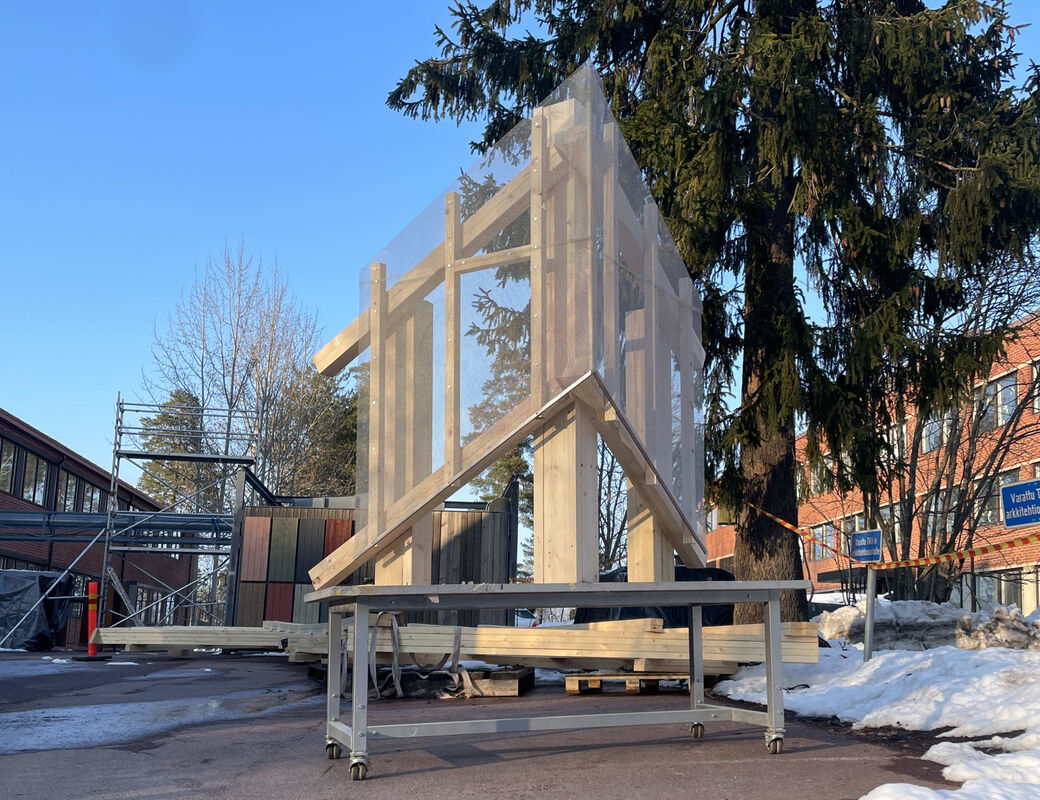
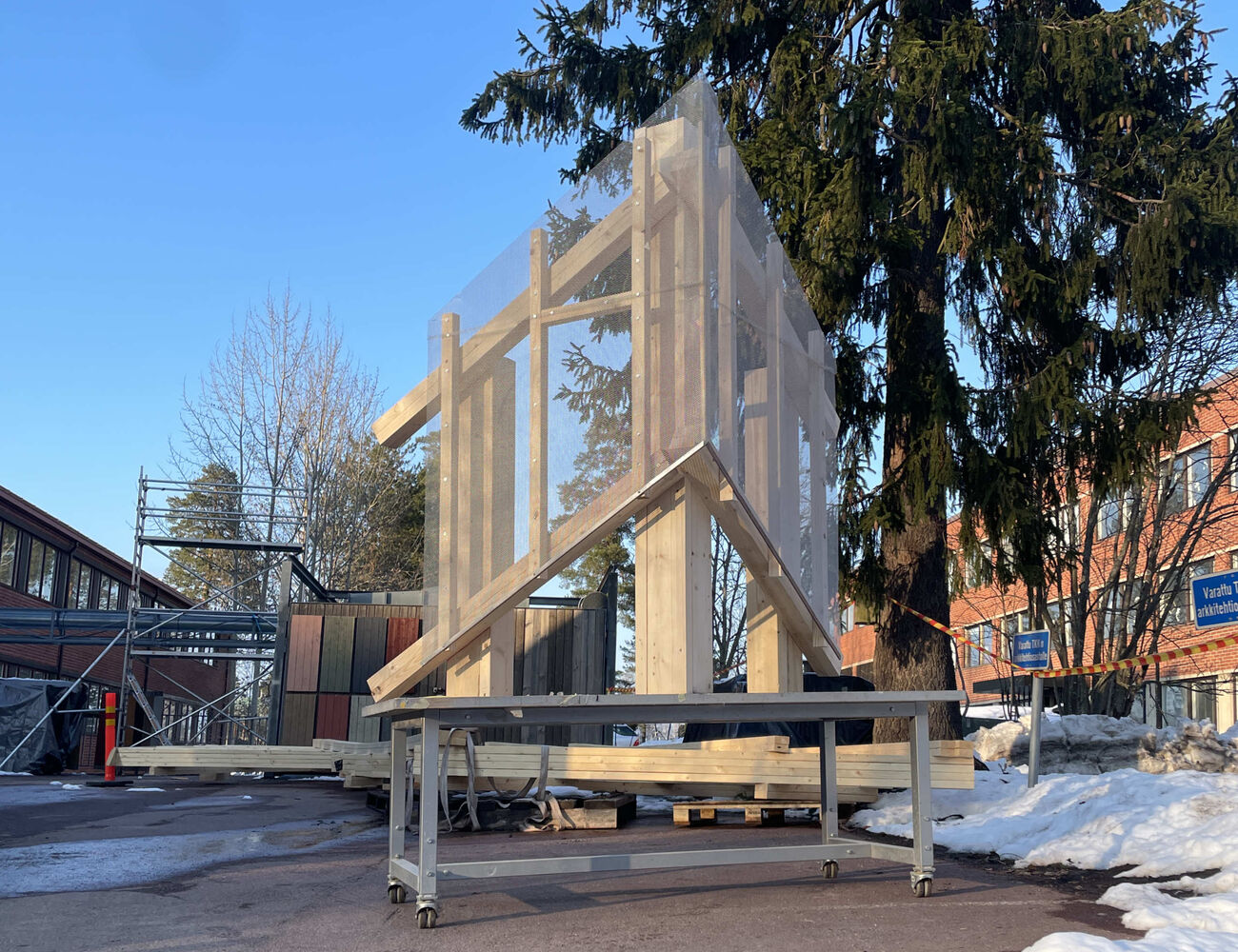
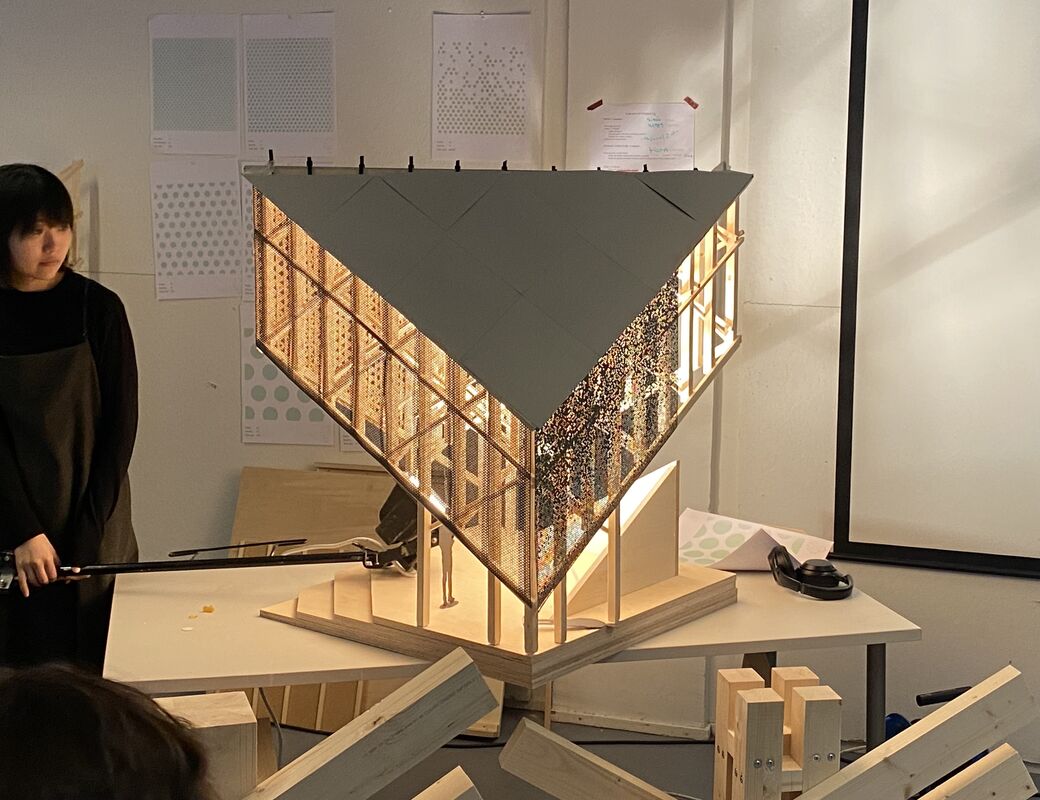
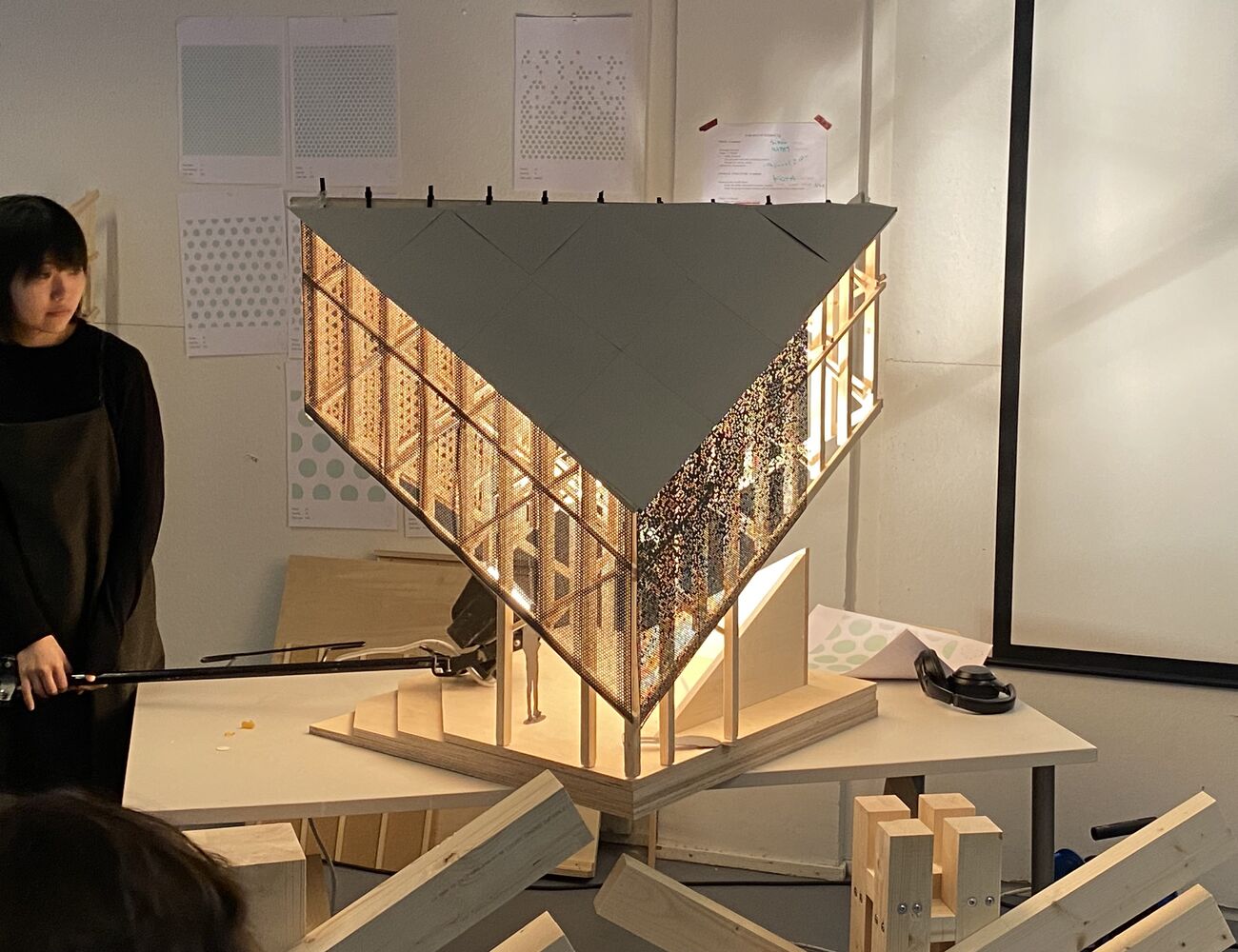
As the timber structure is rich in materiality and geometry, the weather protective facade aims to be as transparent as possible to allow the structure to stay visible both up close and from a distance. An extruded metal mesh is used for this purpose. The roof consists of an LVL substructure with PVC cover.
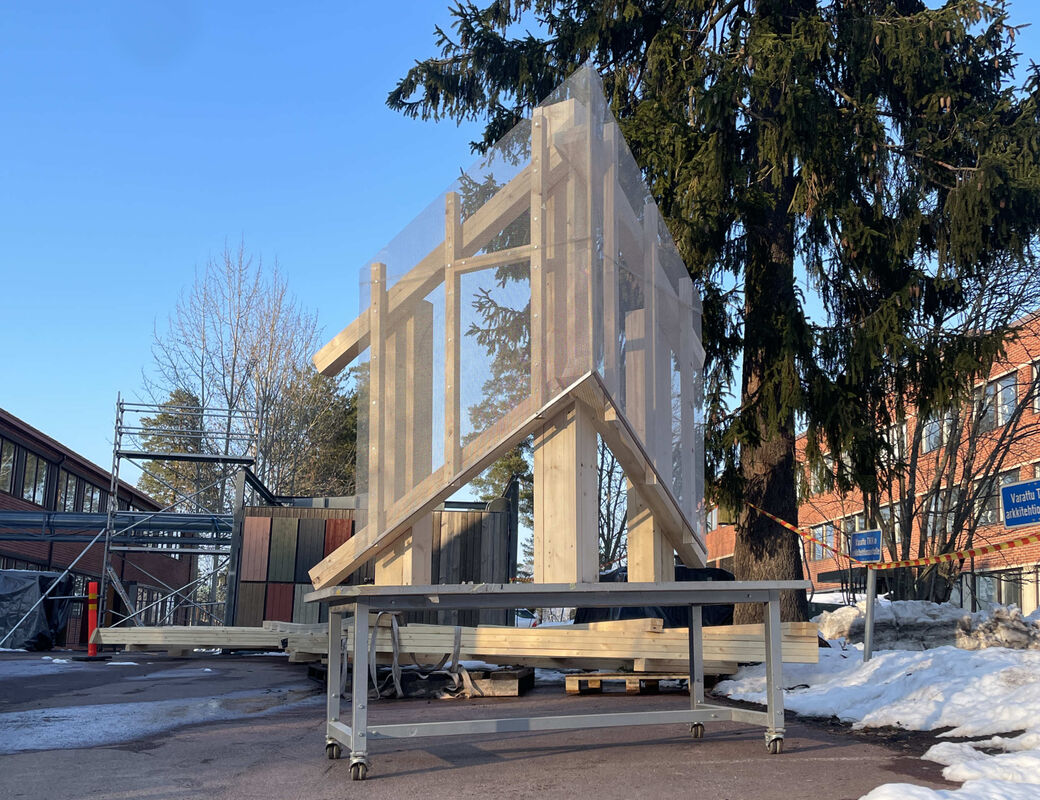
Full scale mockup of a corner of the facade
Model of structure with lights inside for testing facade transparency
Student working on scale 1 to 20 model

Analysing transparency and light

Model of structure with lights inside for testing facade transparency
Student working on scale 1 to 20 model
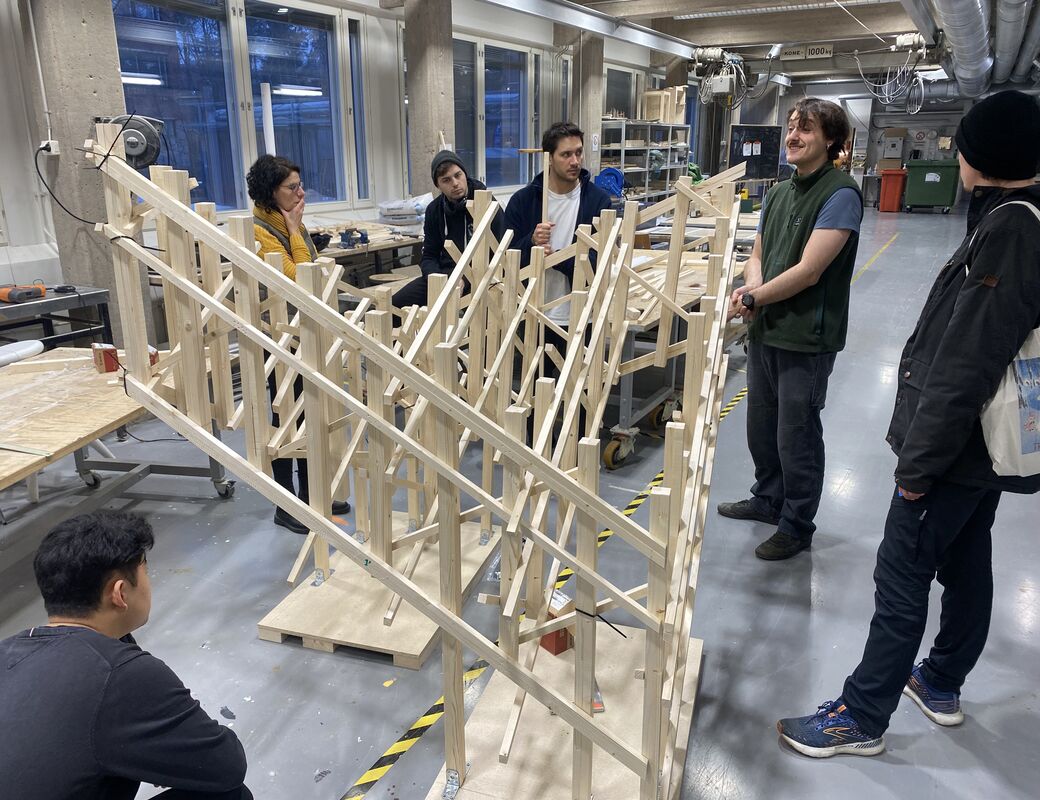
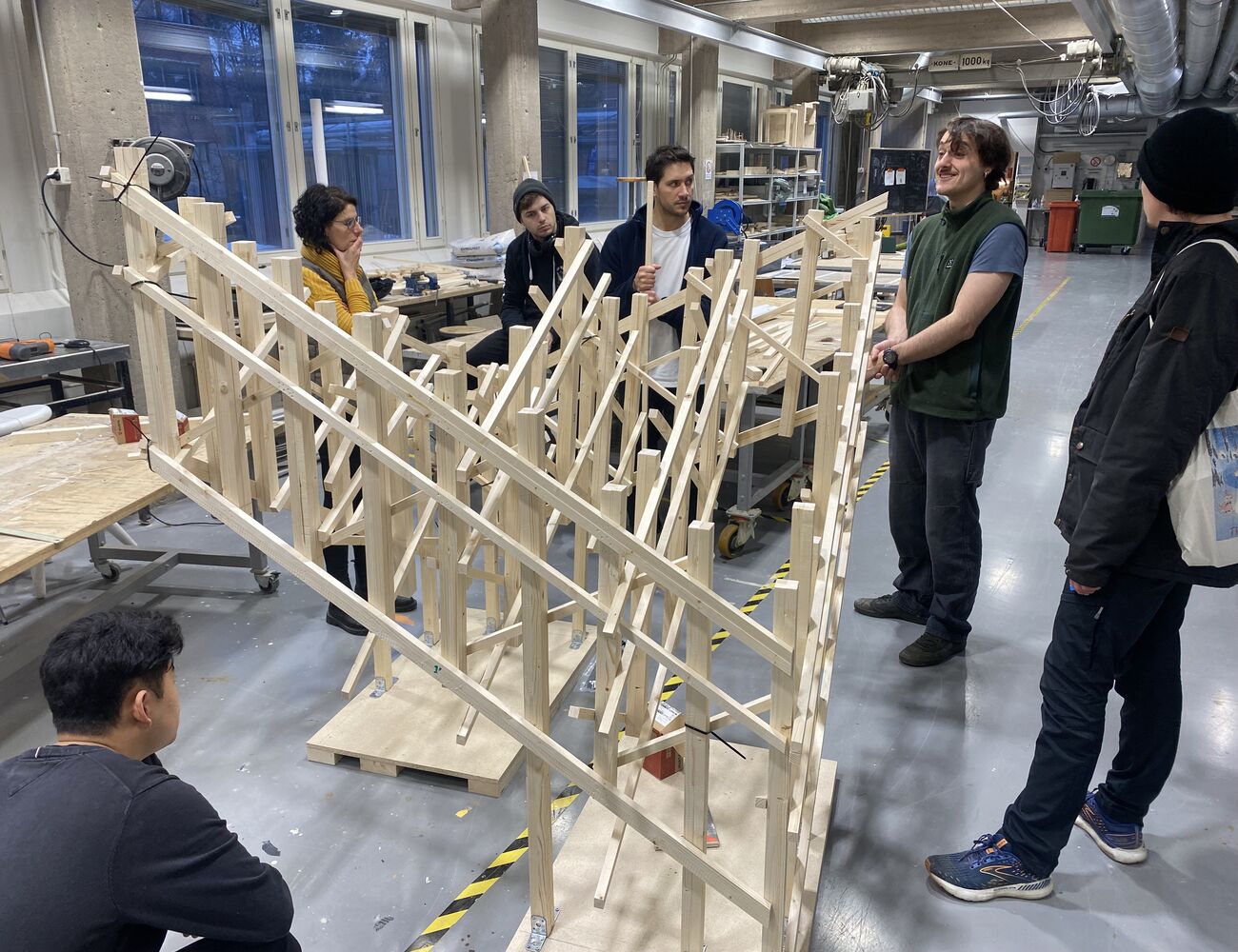
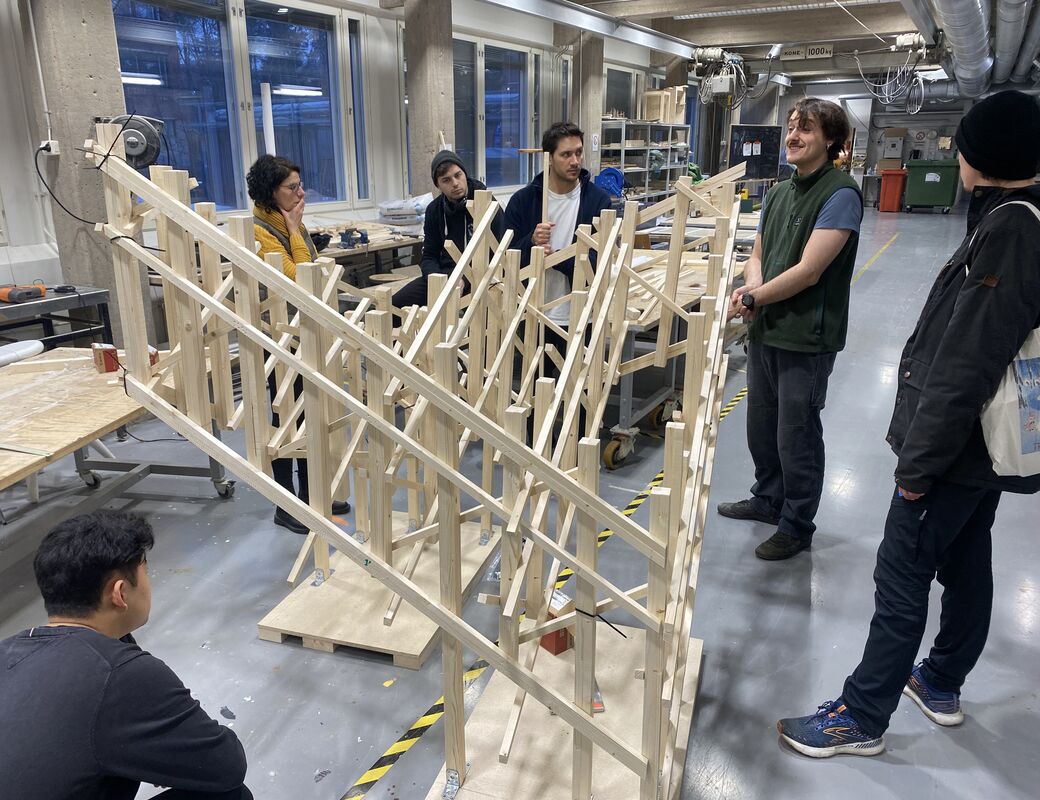
Students and teachers standing around 1 to 5 model discussing assembly strategies

One of the earlier models of Kide

Student working on scale 1 to 20 model
Students and teachers standing around 1 to 5 model discussing assembly strategies
Full scale mockup of a corner of the facade

Construction and assembly was tested through a 1:5 model

Students and teachers standing around 1 to 5 model discussing assembly strategies
Full scale mockup of a corner of the facade
Model of structure with lights inside for testing facade transparency

Full scale facade mockup

  • Updated:
  • Published:
Share
URL copied!