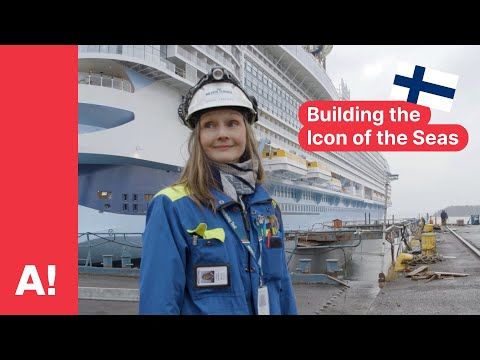





Alumn Liina Vahala is shaping the future of the maritime industry
Liina Vahala has built her career around combining engineering, concept development and big-picture thinking.

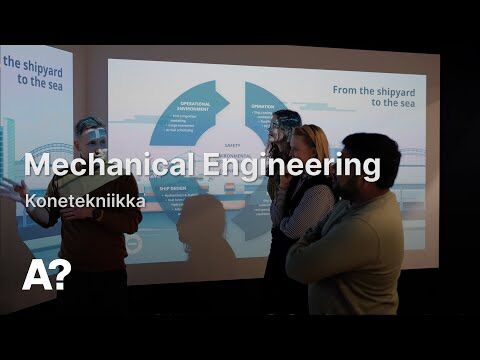
Want to hear more about the Master's Programme in Mechanical Engineering? In this webinar the programme representatives will introduce the programme and answer your questions regarding the studies in...

Today's society relies on mechanical engineering for effective, sustainable and safe solutions everywhere – and its importance is growing every day. The field covers a wide range of activities and technology sectors, from energy and transportation to medical devices and environmental protection and regulation. Mechanical engineering applies to everything from the smallest components to the largest assemblies, resulting in a persistent demand for mechanical engineering expertise.
Aalto University's Master's Programme in Mechanical Engineering has seven possible majors, with studies based on first-rate instruction and research on related topics. With Aalto University’s high-quality research facilities, the programme combines hands-on learning methods with theory, equipping you with a variety of skills that correspond to the challenges our society faces now and will face in the future.
The programme builds upon a thorough understanding of core mechanics subjects, which is then complemented with advanced studies. These studies prepare you to succeed in international, competitive and highly innovative environments that demand both creativity and a rigorously analytical mindset.
As a graduate of Aalto University’s Mechanical Engineering Master's programme, you will have:
The language of instruction is English. More information and guidelines on the languages of the degree and instruction available in the university's website here.
The tuition fee for this programme is 17 000 euros per academic year. Citizens of European Union (EU), the European Economic Area (EEA) or Switzerland do not pay tuition fees. Citizens of other countries must pay tuition fees.
Aalto University offers a small number of scholarships in the form of tuition fee waivers to fee-paying students. Scholarships can be awarded to the highest-achieving applicants based on the programme's evaluation criteria. Applicants are ranked according to the criteria outlined on the programme's webpage.
More information on tuition fees and scholarships at Aalto University is available at the Scholarships and Tuition Fees webpage.
The two-year programme (120 ETCS) consists of major studies (60 ETCS), elective studies (30 ETCS) and a master’s thesis (30 ETCS). In your first semester, you will select your major from among seven different options:
Your first year of studies consists of 60 ETCS of studies (major and elective). You will build a strong foundation in mechanics subjects alongside the topics related to your major. Your electives can be chosen from within or beyond mechanical engineering.
In your second year, you will deepen your expertise through the remainder of your advanced and elective studies and complete the programme with a research-based master's thesis.
These studies combine theory and hands-on experience with a combination of multidisciplinary classroom instruction and independent work. Your theoretical knowledge will be built up through lectures and seminars, and you’ll get valuable hands-on experience working in world-class labs and team projects – skills you’ll be able to use throughout your studies and into your working life.
More information on the programme content and curriculum can be found in the Student Guide.
Mechanical Engineering Master's programme offers seven majors that reflect the top-tier research groups in the Department of Mechanical Engineering. Wherever you choose to focus, you will graduate with detailed up-to-date information about the methods, applications, and research in your field – and the ability to advance them even further.
Arctic Marine Technology studies provide important insights into the engineering design of sustainable and innovative ice breaking ships and offshore structures. You will gain general understanding of the mechanical behavior of sea ice and how ice interacts with ships and structures. In addition, depending on the orientation of the studies, you will gain a solid foundation in engineering mechanics, marine technology or fluid dynamics that can be applied in Artic Marine Technology related problems.
Arctic Marine Technology professionals often find employment in consulting and design firms focusing on ice breaking ships and/or offshore structures for cold conditions. Other common employers include shipyards, classification societies, governmental bodies, universities, and research institutes. Depending on the orientation and elective studies, the studies give you preparedness for careers in shipyards and design offices of ice-going ships, or design offices specialized in numerical modeling of fluid flow or structural response.
Materials are “the stuff that stuff is made of”. Mechanical engineers specialised in the science of our most important engineering materials drive technological advances forward and understand which advances to focus on from a user's as well as a producer's perspective.
In this major, you will build on your prior knowledge in materials science and materials engineering to develop your competences in the characterisation of the microstructure and mechanical properties of materials. You will then apply your understanding of the relationships between microstructure, processing, and properties of materials to the careful and effective use of materials in engineering.
You can complement your Engineering Materials major with, for example, application-specific courses for a particular industry, design and modelling skills, or materials-related courses from other programmes and schools. Graduates typically find work in large and small companies, start-ups, research institutes, universities and government agencies in roles such as product development, research, analysis, and management
The Marine Technology major will equip you with the expertise to confront the emerging technical and environmental challenges in marine and arctic regions. This major blends rigorous mechanical engineering foundations with specialised knowledge in marine systems, sustainable development and social responsibility and the latest technological innovations.
You will gain valuable hands-on experience through the use of cutting-edge research results in your projects related to marine technology, renewable energy, and resilience in system-level design for climate change. Under the guidance of renowned academic and industry experts, this major will deepen your technical proficiency and foster your commitment to sustainable and ethical engineering solutions in marine environments.
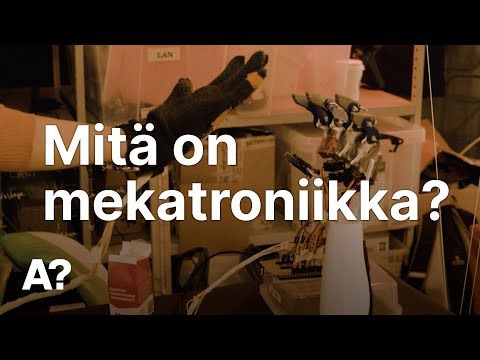
The Mechatronics major will provide you with a comprehensive understanding of the design, development, and application of mechatronic systems. The programme combines mechanical engineering, electrical engineering, and computer science to create a unique and highly sought-after skillset.
Mechatronics offers a balanced mix of compulsory and elective courses, giving you the flexibility to tailor your education to your interests and career goals. The compulsory courses cover the fundamentals of mechatronic machine design, dynamics, and control systems. Your elective courses allow you to specialise in areas such as fluid power systems, vehicle mechatronics, robotic manipulation, and machine learning.
The major emphasises hands-on learning and includes a mechatronics project. This project will give you the opportunity to apply your knowledge to a real-world problem and develop your problem-solving and teamwork skills.
Creative problem-solving is one of the most sought-after skills in creating sustainable futures, and a core skill for engineers. Product development offers you the opportunity to apply knowledge gained from focused engineering courses to the whole process of building products, from ideas to functional prototypes. The major covers different processes and practices needed in engineering innovation, preparing you for industry and research positions in product development, product management, research centres, and a wide variety of positions where research, development, and innovation skills are needed.
Product development courses offer theory and industry cases hand-in-hand. In this major, you will learn the skills and methodologies that experts use during the complex process of developing new solutions. Our courses are hosted at Aalto Design Factory (www.adf.fi), a space that offers students 24/7 access to working spaces, materials and prototyping facilities, from machining and 3D printing to electronics workshops and woodwork.
A production engineer draws from a wide set of skills for managing factory production. Pursuing a major – or minor – in Production Engineering will equip you with the knowledge and skills required to improve factory products and processes while increasing overall productivity.
During your studies, you will develop an understanding of production, processing, manufacturability, automation, system and process modelling, and quality of products – with an emphasis on manufacturing in the metal industry. The focus of your studies can be widened by including courses from other majors within the Mechanical Engineering master’s programme and others at the university.
Studying production engineering is practical, and involves a combination of laboratory exercises, project work and individual assignments. Close cooperation with the industry is common. Typical job roles for a manufacturing engineer include production management, production system design, production development, investments, purchasing, EDP systems, customer project management, and quality.
The Solid Mechanics major combines theoretical, numerical, and practical knowledge in structural mechanics and material modelling.
As a graduate from this major, you will be prepared to work as a structural engineer, where you will be responsible for the safety and durability of new products such as wind turbines, medical devices, elevators, marine propellers, wooden structures, or large-scale steel constructions. The major will also prepare you to pursue a research career either at governmental institutes or universities.
Mechanical engineering topics are strongly international, and the programme attracts international students every year. In addition, the faculty consists of both Finnish and international experts in mechanical engineering.
As a student at Aalto University, you can develop your global competence in numerous ways, such as spending a semester or taking a summer course at one of Aalto University’s top-tier partner universities around the globe.
Moreover, Aalto University is international by nature, welcoming thousands of degree and exchange students from abroad each year. These students join the diverse Aalto community not only through studies, but also multiple free time events, activities and celebrations around the campus. Programme administrators, active student tutors and student support services work rigorously to help international students integrate into Nordic culture and welcome them at home in Finland.
Graduates of Mechanical Engineering Master's programme will have built an excellent foundation for doctoral studies and post-doc positions in Finland and abroad.
Read more about applying for doctoral studies at Aalto University:
https://www.aalto.fi/en/doctoral-education/how-to-apply-for-doctoral-studies
Mechanical Engineering Master's programme opens doors to a multitude of interesting career paths in consulting, design, product development, research and management, or to a postgraduate position within Aalto University or elsewhere.
After the completion of your master's degree, you can find employment in different positions in a wide range of industries and institutions. Examples of typical positions include:
You will work closely with relevant industries during your studies, which can help you find summer jobs or internships, build your professional network, and get your career started even before you graduate.
The Mechanical Engineering Master's programme brings together teaching primarily from three research groups in the Department of Mechanical Engineering: Marine and Arctic Technology, Materials to Products, and Mechatronics.
These research groups work on the design, production, and operation of sustainable systems, mostly involving one or more of the 4Ms: Mechanics, Materials, Marine, and Manufacturing. The research groups make use of digitalisation for innovation, optimisation, and control, for example at the Aalto Industrial Internet Campus for Mechatronics, or ADDLAB for additive manufacturing. The Design Factory and Aalto Ice and Wave Tank are world-class facilities for research in product development and in ice mechanics or marine technology, respectively.
More information can be found at the Department of Mechanical Engineering website.
Seven fields of Aalto University ranked among the top one hundred in the prestigious Shanghai Ranking Global Ranking of Academic Subjects

In teaching as well as in research, the programme often collaborates with industry and other research institutes for our projects. Most master’s theses in the programme are carried out in co-operation with industry, and annual events that showcase the outcomes of student projects – such as the Mechatronics Circus, the Product Development Gala, and the Marine Technology Gala – are well-attended by people from industry and academia alike. Within the programme, you will collaborate in project courses and case studies, and may choose to develop a multidisciplinary professional profile by taking minors or elective studies in other fields.
You can choose to supplement your studies with, for example, courses from other Aalto schools, programmes, and majors, or courses offered by other Finnish universities.
Aalto University is well-known for bridging the disciplines of business, arts, technology and science. The lively campus and freedom in choosing elective courses across the university bring students from different fields under one roof. This spontaneous multidisciplinary environment sparks new ideas, gathers enthusiasts together and gives birth to friendships, networks, and every so often, startups.
Find out more about the field of study, the programme and what comes after from our students and alumni.

Liina Vahala has built her career around combining engineering, concept development and big-picture thinking.

In the future Waqas Ahmad's wants to take his research towards the solution of a crucial matter- impact of global warming on Arctic sea ice.

Janni Kerkkänen, a student in the Master’s Programme in Mechanical Engineering, was surprised that she didn't have to work on mopeds or lawnmowers all her life to study mechanical engineering. For her, the best thing about her studies is versatility and working together in student organisations.

Mechanical Engineering alumna Lien Tran is currently conducting her second master’s degree while working as a Concept Designer.

Mikko Koskinen is a co-founder of Kyrö Distillery Company. He studied his master’s Mechanical Engineering, where he specialized in Product Development.

Aino Soro's interest in engineering materials led her to win an award for her master’s thesis and to pursue a career in research.


Curious about life at Aalto University? Chat with Aalto students on Unibuddy and join them for virtual Coffee sessions on Fridays!

Applicants to the programme must meet the general eligibility and language requirements that are common to all Master's programmes in Aalto University. Applicants meeting Aalto’s general eligibility criteria for master's studies are evaluated and ranked according to the evaluation criteria decided in advance for each study option.
The applications to Master’s Programme in Mechanical Engineering are evaluated based on the following criteria.
| What is evaluated? | Grades of the previous studies/CGPA |
| What we look for in an applicant? | Grades need to be mainly good or excellent |
| Method of demonstrating competence | Transcript(s) of records, degree certificate(s), grading scale |
| What is evaluated? | Recognition and quality of the applicant's previous institution |
| What we look for in an applicant? | Recognized for high quality of education and research |
| Method of demonstrating competence | International (and field-specific) rankings of higher education institutions |
| What is evaluated? | Contents and scope of previous studies compared to demands/ contents of study option applied to |
| What we look for in an applicant? | Previous studies should prepare for very good or excellent study performance in the study option. This requires a thorough understanding of statics and dynamics, basics of solid mechanics, and materials, complemented for example with some combination of continuum mechanics, fluid dynamics, machine design and production engineering. |
| Method of demonstrating comptence | Transcript(s) of records, degree certificate(s) |
| What is evaluated? | Applicant’s fit to the study option, motivation, and commitment for studies |
| What we look for in an applicant? |
Motivation should be clearly in connection with the study option. Motivation letter is mandatory in this study option. Please see further instructions for the motivation letter |
| Method of demonstrating competence | Motivation letter |
| What is evaluated? | Practical experience and other acquired knowledge/achievements: e.g., publications, formal and non-formal education, competitions |
| What we look for in an applicant? | Context situating the motivation in connection with the study option |
| Method of demonstrating competence | Curriculum vitae (CV) and (if applicable) supporting documents |
Applicants’ evaluation process is described under Evaluation Process.
The applicants are first evaluated based on Aalto’s general eligibility requirements. Applicants meeting the general eligibility criteria for master's studies are evaluated and ranked according to the evaluation criteria decided in advance for each study option.
The selection process for those who meet the general eligibility criteria is described next. Firstly, the applications are evaluated based on the following (critical) criteria.
Only the applications who fulfill the requirements for these criteria will be evaluated against the full set of evaluation criteria. If any of these criteria are not fulfilled, the application will not be evaluated further.
After the evaluation of the remaining criteria below, the best applicants will be selected based on the joint evaluation of all criteria.
This study option (master's programme) requires two sets of documents from their applicants:
1. Obligatory application documents detailed on the Apply to master’s programmes webpage
2. Documents required by the study option listed below.
Applicants who already have a master’s degree in a closely related field will only be admitted with well-justified reasons which should be explained in the motivation letter.
The lack of these application document will adversely affect the evaluation of your application. Study-option-specific documents must be uploaded for each study option separately. If you use for example the same CV, you must upload it twice.
The motivation letter is an important part of your application. It gives you an opportunity to show us the context in which you want us to consider your application, and to present relevant pieces of information that cannot be provided elsewhere in the application. An excellent motivation letter is concise, persuasive, forward-looking, and evidence-based (consistent with transcripts, CV, and reference letters). It should be written in good English and formatted as a letter. We do not have a strict limit on the length of the motivation letters, but one page of 12-point text laid out to be easily readable should suffice, so not much more than 500 words. Please reflect on what specialisations we offer and ensure your motivation letter identifies some courses or a topic group you are particularly interested in.
Examples of questions to consider when writing the motivation letter:
The curriculum vitae is also an essential part of your application. It summarises your professional identity and the path you have taken to where you are now. An excellent CV is complete (it should clarify rather than obfuscate any gaps in your career or studies), facilitates to find relevant information at a glance, highlights what you want to emphasise, and focuses on verifiable quantitative information. Supporting documents for information included in the CV should also be submitted, if applicable. Practical experience —gained for example through projects, assignments, internships, working, or extracurricular activities— should indicate not only start and end dates but also briefly address your role and responsibilities, and outcomes you take credit for.
Examples of supporting documents you should provide if applicable:
Note that whereas the evaluation of your application will not be adversely affected if you have little or no work experience or other activities because you focused on your studies and are continuing directly to our programme, the evaluation of your application will be adversely affected if you fail to provide a CV.
Katri Koistinen
Planning officer (content and studies of the programme)
masterstudies-eng@aalto.fi
Aalto University, Admission Services
For enquiries regarding the application process, obligatory application documents or English language proficiency, please contact Admission Services at
admissions@aalto.fi