




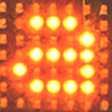

World premiere: Play Quantum Garden and help build a quantum computer!

Quantum Garden is a citizen science project where everyone can contribute to solving a quantum physics research problem of crucial importance for the outbreak of quantum technologies. The project is a collaboration between the University of Turku, the School of Science and the School of Arts, Design and Architecture at Aalto University and it is sponsored by the Centre for Quantum Engineering (CQE).
Realised by London-based game artist Robin Baumgarten in collaboration with a team of quantum physicists headed by Prof. Sabrina Maniscalco (Aalto University and University of Turku), and curated by Dr. Annakaisa Kultima of the Media Department (Aalto University), the piece is an interactive light installation which will be part of the Lux Helsinki Light Challenge (#valohaaste).
Quantum Garden, however, is much more than an artistic piece, since it is connected to Quantum Black Box, a sophisticated software device developed by quantum physicists of the Turku Quantum Technologies group and the Centre for Quantum Engineering of Aalto University. The Quantum Black Box simulates a complex time-dependent optimal control problem which is one of the key ingredients for realising a quantum logic gate - the building block of a quantum computer. Every input created by people playing the Quantum Garden will be processed by the Quantum Black Box and will be used to find the optimal solution, therefore helping to solve a real and important open scientific research problem! This interactive exhibit will be playable from 16th November - 14th December in the Otaniemi A Bloc shopping centre, Otaniementie 12.
We are entering a new technological era, where the power of quantum devices and effects is being channelled into technological applications, such as the quantum computer. Quantum technologies can revolutionise our society providing computational power with tremendous impacts on artificial intelligence, robotics, cryptography, sensing, and all communication protocols.
Artist:
Robin Baumgarten (http://wobblylabs.com)
The Scientific team:
- Prof. Sabrina Maniscalco
- Dr. Nicola Lo Gullo
- Dr. Matteo Rossi
- MSc Francesco Cosco
- MSc Walter Talarico
- Turku Quantum Technology Team
Sponsors:
Centre for Quantum Engineering (https://www.aalto.fi/centre-for-quantum-engineering-cqe)
Aalto University
European Commission
QPlay project
Contact:
Prof. Sabrina Maniscalco
050 366 3922, smanis@utu.fi
www.tqt.fi; www.tcqp.fi; www.qtf.fi
Dr. Annakaisa Kultima - Curator
050 443 7258, annakaisa.kultima@aalto.fi
Read more news

What is quantum tech?
Many of today’s devices would not exist without quantum technology, but the most exciting applications are still on the horizon
Is quantum the next AI? Behind the quantum hype
Doctoral researcher Christa Schauman explains how Finland and Europe are faring in a race everyone wants to join – despite its uncertainties.
Training available in AI use, research data management, open science + more – register now!
New topics included! Registrations for autumn 2026 are open.