






Master’s Thesis Demonstrates Sustainable Textile Printing with Biocolours

The research forms part of the ongoing Biodyes Project at Aalto University, an initiative dedicated to developing environmentally friendly alternatives to conventional textile dyes. The project explores how natural compounds derived from forest and agricultural materials can replace synthetic dyes, which are widely associated with environmental pollution, toxic effluents, and dependence on petrochemical resources.
Supervised by Professor Ali Tehrani, Head of the Textile Chemistry Group, and guided by advisors Dr. Susan Kunnas, Senior Scientist at the Natural Resources Institute Finland (LUKE), and Dr. Md. Reazuddin Repon, Postdoctoral Researcher at Aalto University, Lotta investigated innovative textile printing methods using biocolours extracted from lingonberry and roseroot.
During her presentation, Lotta demonstrated effective textile printing results achieved through bio-based colourants, indicating strong potential for sustainable applications in textile processing. Her findings contribute to broader research efforts seeking to transform agroforestry residues such as plant materials and by-products into value-added dye sources that reduce waste while supporting circular economy principles.

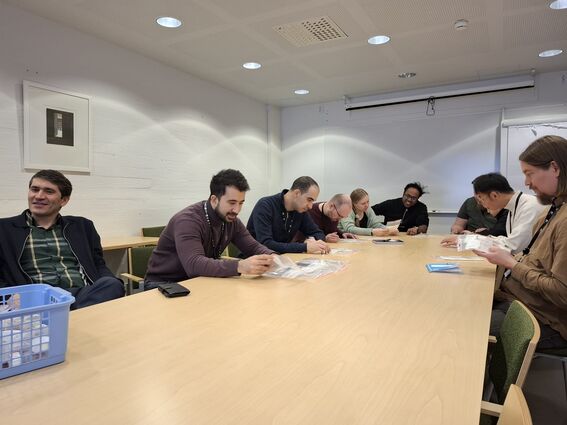
Lotta expressed gratitude for the opportunity to contribute to the group’s research activities, emphasizing the importance of mentorship and collaboration throughout her thesis work. She also acknowledged the role of the group’s well-equipped laboratory facilities in enabling extensive experimental testing.
The audience congratulated her on the successful completion of her research and recognized the significance of her contribution to advancing textile chemistry and sustainable manufacturing practices. Colleagues and supervisors extended their best wishes for her future career, noting that her work represents a meaningful step toward greener textile technologies.
As sustainability continues to reshape the global textile industry, research initiatives such as the Biodyes Project demonstrate how academic innovation can support the transition toward renewable, low-impact materials and environmentally responsible production methods.
Read more news

Prejudices are more complex than stereotypes suggest
According to social psychologists, individuals who belong to one’s own group, as well as those associated with highly esteemed and approachable groups, more often elicit admiration or respect compared to those who belong to less esteemed or perceived-as-distant groups. New brain research shows that the emotions people evoke depend not only on the social group, but also on the emotional expression and the distance from the viewer.
Government support can help SMEs internationalise – but it can also become a ‘golden cage’
Governmental support can end up undermining the internationalisation, new research shows.
Your home’s energy performance is already affecting your mortgage – soon climate risk will too
European banks are already taking into account energy performance when they make loan offers, finds a new study.