






The journey of a 17th-century shipwreck continues as a unique knitted dress
The dress will be exhibited at the Tomorrow’s Wardrobe exhibition opening 22 May at Oulu Art Museum, and its twin piece will be shown at Aalto University’s Designs for a Cooler Planet exhibition opening 1 September.

In 2019, a rare discovery was made during the renovation of a hotel in Oulu: remains of a 17th-century cargo ship were uncovered beneath a parking lot. The vessel was named the Hahtiperä wreck after Oulu’s first harbour.
After years of conservation work, some leftover pieces of wood remained and were at risk of ending up in the trash.
‘The wreck had only partially survived, and not everything could be preserved, even though every piece was documented. It felt unfortunate, and I began wondering whether the wood fragments could still be of use somehow,’ says maritime archaeologist Minna Koivikko from the Finnish Heritage Agency.

Colour straight from the wreck
Susanna Ahola, coordinator at Aalto University’s Bioinnovation Center, heard about surplus wood and got a group of Aalto’s researchers excited about it.
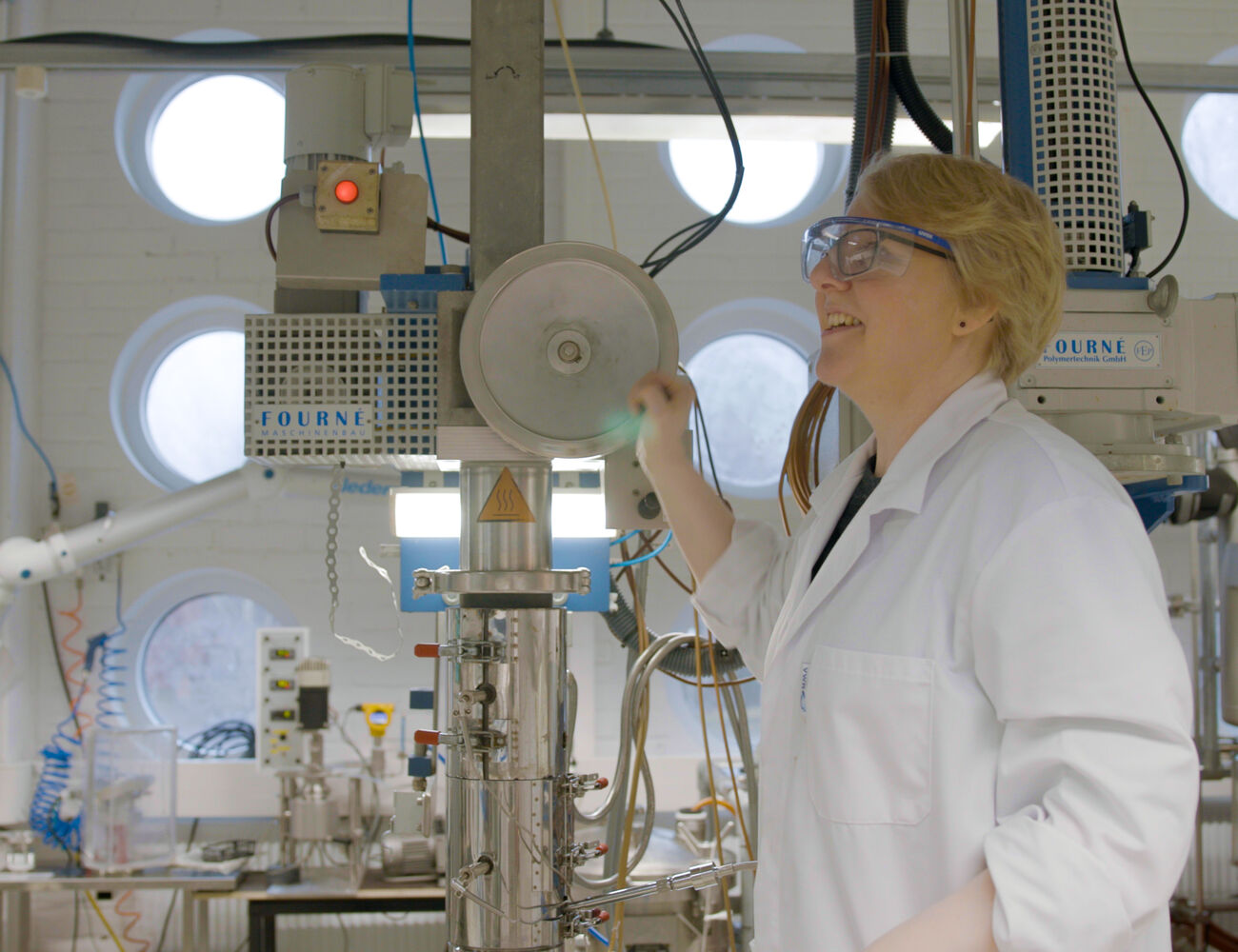
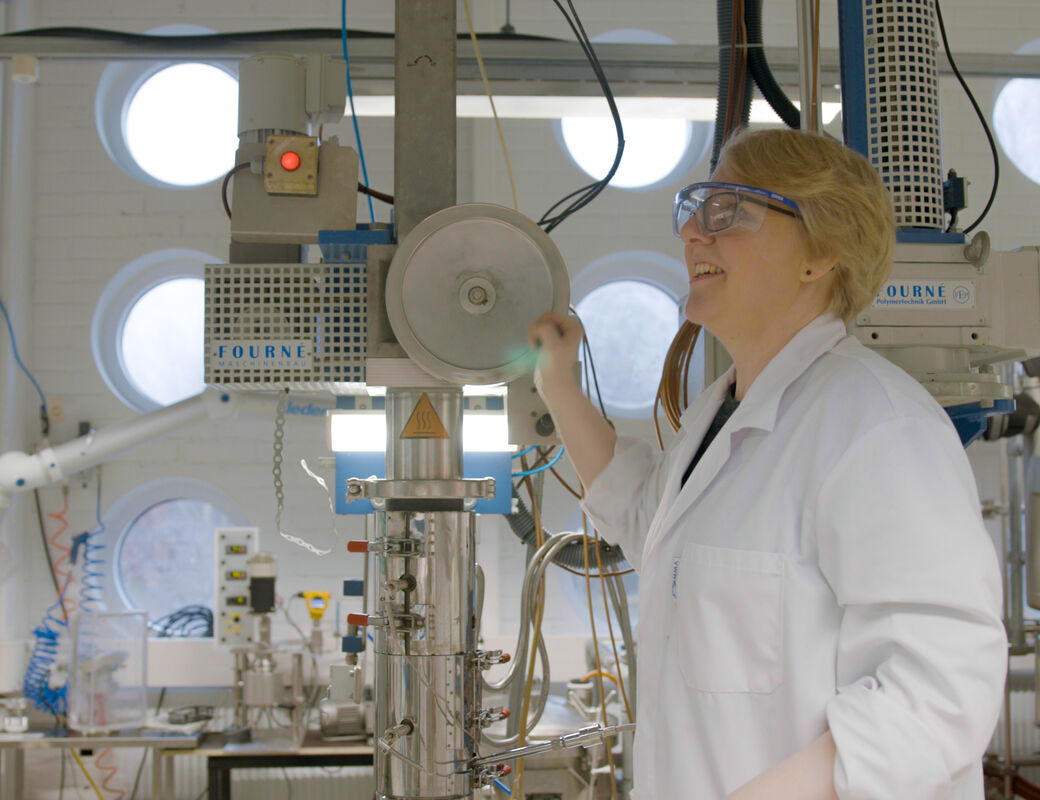
Inge Schlapp-Hackl, a researcher at Aalto, along with her colleagues supervised by Professor Michael Hummel, converted over 300-year-old wood from Oulu into textile fiber.
First, the outer, impurity-containing layer was removed to expose the wood’s core, which was then shredded and processed into dissolving pulp. The pulp was subsequently transformed into fiber through the environmentally friendly Ioncell® process, which was developed at Aalto University in partnership with University of Helsinki. Ioncell fibres have a silky feel and are stronger than cotton. In addition to new and reclaimed wood, the Ioncell® method can utilize recycled materials like paper, cardboard, textile waste, and straw for fiber production.

The finished yarn from the wreck has a subtle sheen and a beautiful brown tone.
Schlapp-Hackl explains that the yarn remains undyed and unbleached, with its color directly originating from the Hahtiperä wreck.
‘The pulp made from the wreck contained very few impurities and was surprisingly easy to process. This project demonstrated that the Ioncell® method can be used to produce fibre from practically any cellulose-based material. Most exciting of all was the enthusiasm and willingness of dozens of people at Aalto to celebrate such a unique material.’
Inspired by wood
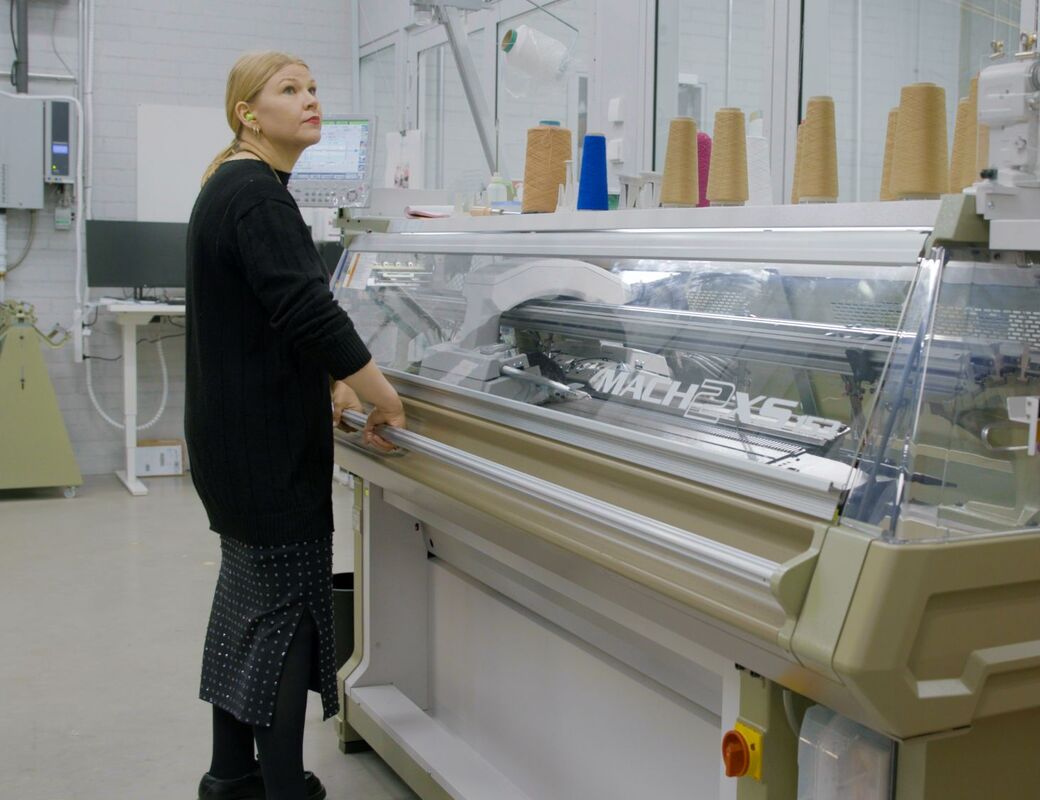
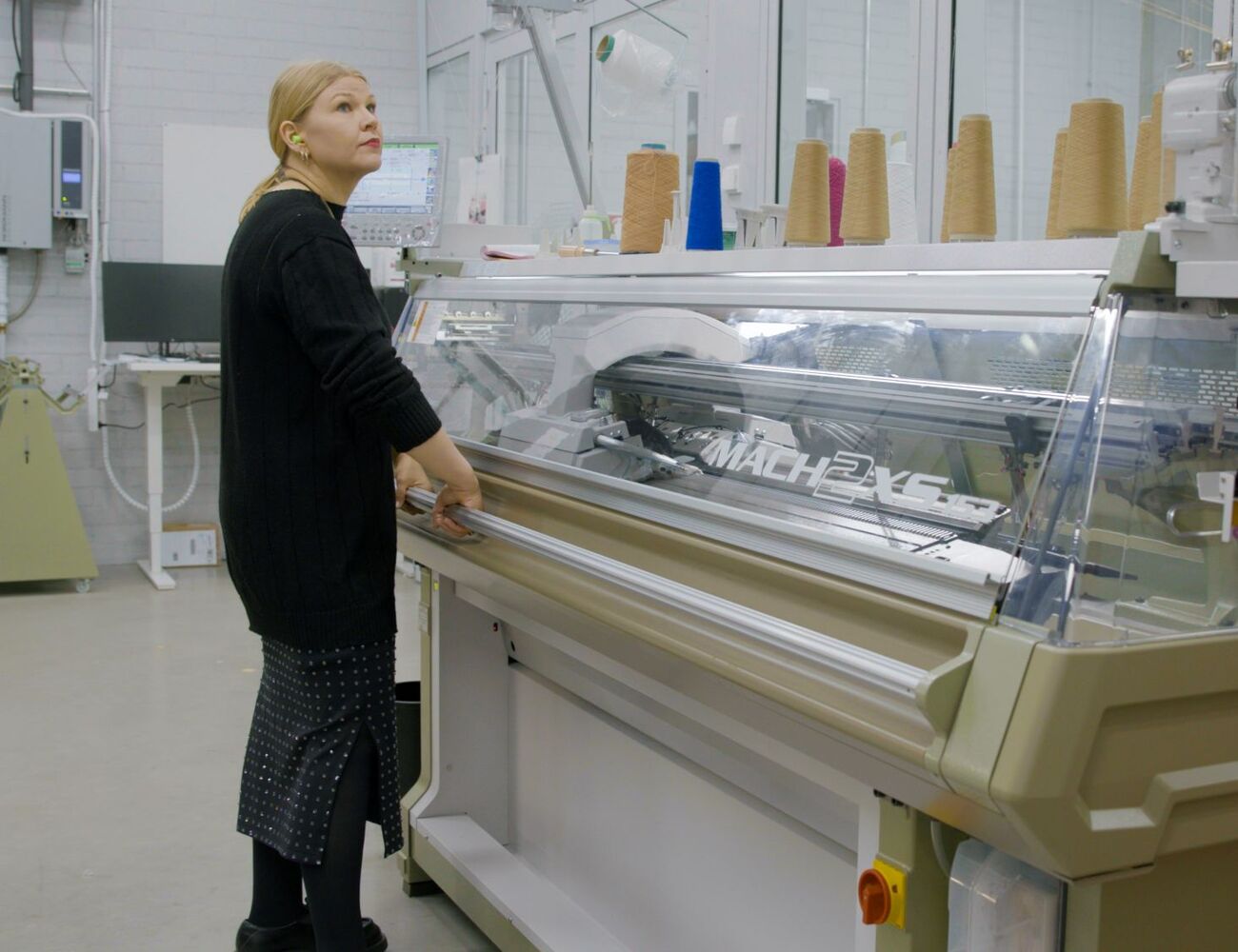
At Aalto’s knitting studio, lecturer Anna-Mari Leppisaari designed and knitted two identical dresses from yarn: one for the Oulu Art Museum and the other for Aalto University. The surface of the dresses is highlighted by a pattern inspired by wood grain and digital noise. In designing both the pattern and the dress, Leppisaari utilized an experimental knitting design program developed by senior university lecturer Severi Uusitalo, based on an evolutionary algorithm.
‘The finished program no longer requires heavy computing power and therefore large amounts of energy. For example, different surface pattern proposals were generated locally on my own computer. This is about co-creativity, not about artificial intelligence replacing the designer,’ Leppisaari says.

Leppisaari knitted the dresses on a Shima Seiki knitting machine as seamless, single three-dimensional pieces. This means no material is wasted at all.
‘I was nervous about how the yarn would behave in an industrial machine. It turned out to be surprisingly strong, and I’m very pleased with the final result,’ Leppisaari says.
Making invisible heritage visible
Aalto University was given free rein by the Finnish Heritage Agency to transform the material. The only wish was that the final result would honour the unique discovery and continue its story.
‘Underwater cultural heritage is often invisible, but the shipwreck dress brings it into people’s everyday environments. It’s almost like a spokesperson for history — with a modern twist,’ says Koivikko.
Material design expert Pirjo Kääriäinen and her colleagues at Aalto University have spent more than 15 years researching the use of different biomasses as raw materials for textile fibres.
‘We want to reduce the use of virgin raw materials and the waste of natural resources. A shipwreck is, of course, an exceptional case, but it is also a story that makes people pause and appreciate materials in a new way. If something this beautiful can be made from centuries-old wood, why do we keep throwing away materials that could still be circulated and reused?’
The project lasted nearly two years and involved dozens of experts in chemistry, forest products, textiles, and design.
‘Collaboration is one of Aalto’s strengths. I think it’s wonderful to work in a community that combines technical expertise with the enthusiasm to pursue ideas that might initially sound a little crazy,’ Kääriäinen says.
Image gallery and image descriptions availabe for media use here.
The Tomorrow’s Wardrobe exhibition opens at the Oulu Art Museum 22 May. The exhibition will close in stages: the upper floor on 27 September and the lower floor 11 October. Read more on the Oulu Art Museum website.
The Designs for a Cooler Planet exhibition opens at Aalto University 1 September. Read more on the Aalto University website.


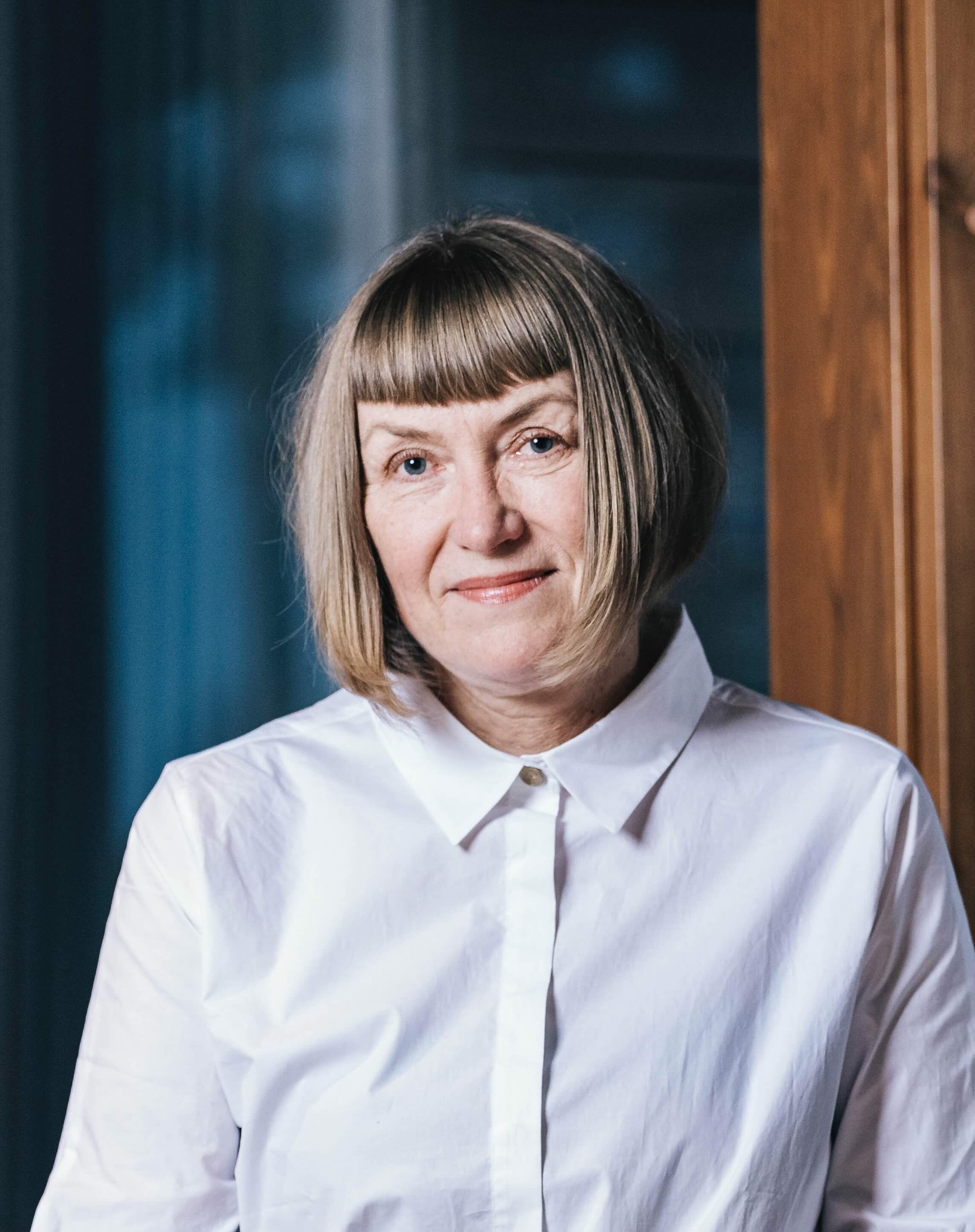
Minna Koivikko
Maritime archaeologist, Finnish Heritage Agency
minna.koivikko@museovirasto.fi
Read more news

What is quantum tech?
Many of today’s devices would not exist without quantum technology, but the most exciting applications are still on the horizon
Is quantum the next AI? Behind the quantum hype
Doctoral researcher Christa Schauman explains how Finland and Europe are faring in a race everyone wants to join – despite its uncertainties.
Health x technology: Magnetic stimulation activates neurons to target depression
Brain stimulation has helped depression patients for years, yet only a small minority can access the therapy. Researchers are now making it easier, faster, and more personalised.