






Reflections on the Doctoral Defence: is it really over? by Bilge Aktas
Bilge Aktaş defended her dissertation, Entangled Fibres: an examination of human-material interaction on 26.10.2020 at Aalto University, School of Arts, Design and Architecture.
Opponent: Prof. Elvin Karana, TU Delft, Netherlands.
Custos: Prof. Maarit Mäkelä, Aalto University.
The dissertation can be downloaded at https://aaltodoc.aalto.fi/handle/123456789/47034.
More info about the event can be found here.
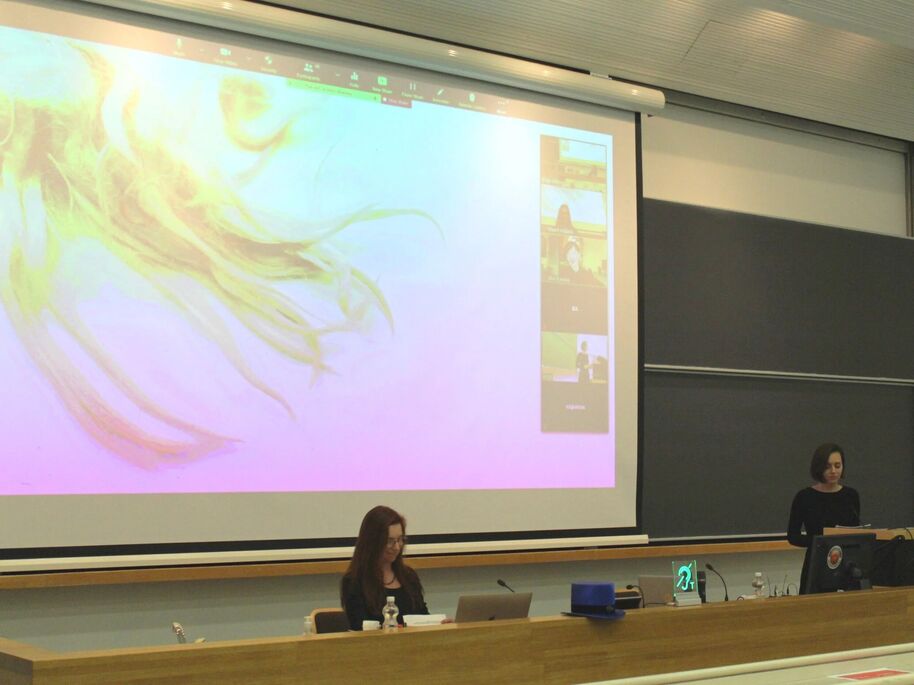
After years of hard work and dedication, the defence is finally the time to discuss the research motivations, findings, and implications. Although it sounds intimidating for some, it is in fact an opportunity to share the tiny little details that we have been thinking about so passionately. It’s time to talk about your work as extensively as you wish. And it’s a once in a lifetime opportunity, at least for most of us, to talk about this big project for several hours.
My research took a little longer than four years to complete. I worked with many people and utilized personal reflections to understand how makers interact with their materials while making, and how these experiences can inform understanding our participation in the world. The entire research process became a platform to think about our actions together with materials, and the defence brought similar reflections as well.
A few days before the defence, I was very calm. I had already made my peace that there was no turning back. So, I decided to take long walks, listen to my favourite music, eat healthy food, lit some candles, and relax. At the same time, I was thinking about what I would ask if I was the opponent of that dissertation. This was a nice exercise to imagine the event and, in a way, prepare myself – although the actual defence was quite different from this one. Being in the moment was the best way to answer the questions. Honesty was my method of choice while answering them. Trusting the decisions that my previous self-made during the past four years guided me in answering the questions with confidence.
But this doesn’t mean that my heart was not about to explode when I started reading the Lectio Praecursoria. It was only in that moment I felt like, in contrast to the discussion in my doctoral research, my body and mind were not in unity. The mouth spoke, the body wanted to run away, the brain tried its best to hold everything together. Very quickly, seeing the approving and excited faces of my colleagues and friends, I told myself: well, this is happening and it’s not that bad. The unity was back. And after finishing the reading of the Lectio Praecursoria, sitting, and getting ready to answer the questions, my joy was back.
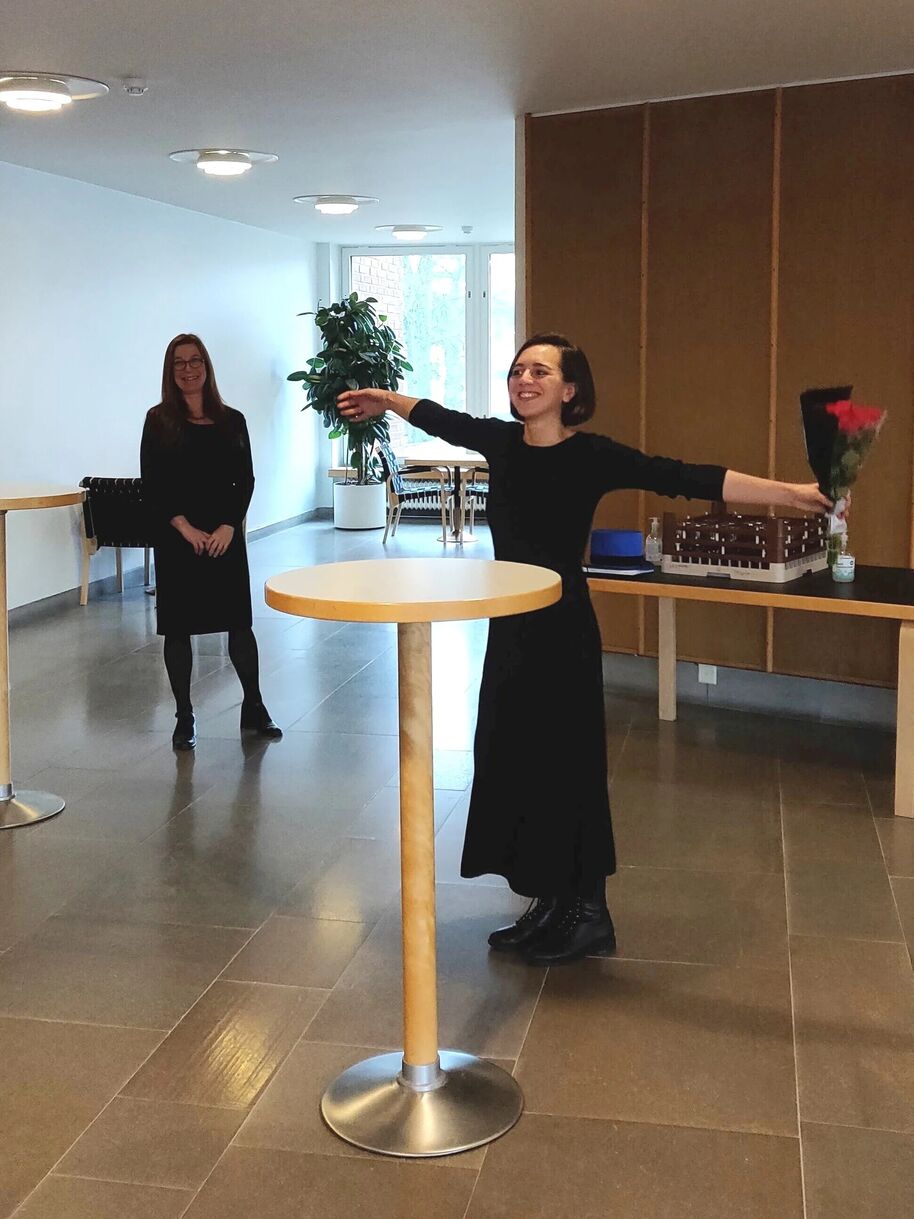
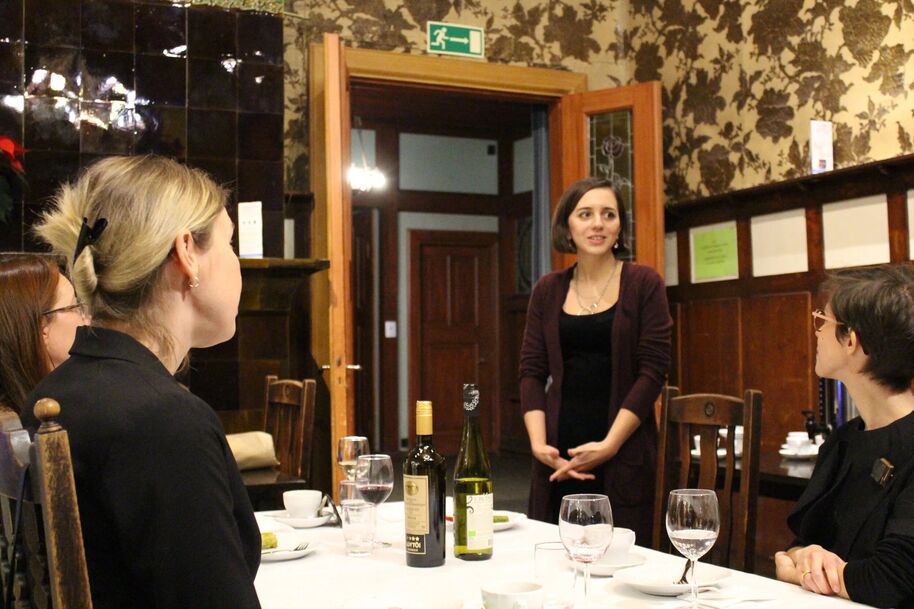
Seeing that no one from the audience didn’t have any questions was the cue to slowly leave the room, with the question of “is it really over?” and more excitement. With some champagne and warm smiles, I was feeling happy with the defence. This feeling of completing a big project was crowned with a nice Karonkka, which is an excellent tradition of Finland to celebrate the day with the people who supported you in the process.
Due to the pandemic, the defence took place remotely, but I was allowed to have up to ten people in one of the large Alvar Aalto designed lecture halls to have emotional support. With online streaming, listeners from different cities and countries were able to join us. With the physically participating listeners, we carefully practised social distancing. There were no physical hugs, but I could feel the warmth in my heart from a distance.
A few days before the defence, I asked some senior researchers if they had any suggestions for me and the common answer was to enjoy the day. And now I suggest the same to the doctoral researchers reading this: enjoy the day and celebrate it with a glass of sparkling.
Read more news

Professor Anton Zasedatelev awarded Väisälä grant to study how large particles behave near quantum limit
A better understanding of how macroscopic objects behave could unlock ultra-precise sensors or even help determine if gravity is quantum mechanical.
Aalto ARTS exhibiting AI-inspired designs at Dutch Design Week 2026
Aalto University’s School of Arts, Design and Architecture returns to Dutch Design Week with ‘art-ai-fact’, an exhibition featuring multiple AI-inspired designs.
Health x technology: Making prosthetics feel natural for users – for a lifetime
Traditional prosthetics often feel clunky but tomorrow’s hands could move intuitively with users, without a moment’s thought.