






Kristiina Kruus believes in the power of community – eight years as Dean of the School of Chemical Engineering

When Kristiina Kruus took up the position of Dean of Aalto University’s School of Chemical Engineering in 2018, she embarked on a new kind of role in her career. She had spent the previous 21 years at VTT in various positions, including Research Professor, Chief Scientist and Team Leader. Now she faced a broad academic leadership role, new responsibilities and a unique opportunity to contribute to the development of a university community.
Over the past eight years, both Aalto University and the School of Chemical Engineering have undergone major changes. The operating environment for research and education has also changed significantly.
One thing, however, has been clear to Kruus from the outset: the School’s success is built on collaboration and working together.
From researcher to academic leader
Before taking up the position of Dean, Kruus had a good working environment at VTT, interesting research projects and recently secured research funding for the Academy of Finland’s FinnCERES Flagship Programme. She was also responsible for several ongoing projects, so changing roles was not a decision she took lightly.
“I had seen colleagues with extensive experience successfully move on to new kinds of roles. Aalto University had also interested me for some time. I had worked in Otaniemi and followed the University’s development at close quarters, as well as the enthusiasm that had grown around it,” Kruus says.
The position of Dean offered an opportunity to take a new direction in her career and learn something new. Kruus had a background as a docent and experience in teaching at the University of Helsinki and Helsinki University of Technology (TKK). However, taking overall responsibility for university teaching, developing degree programmes and overseeing degree structures were new areas of responsibility for her.
“I have always enjoyed learning new things and challenging myself. Although the role of Dean has brought its share of challenges, the opportunity to familiarise myself with new subjects has been one of the most interesting aspects of the job,” Kruus says.
Her background as a Research Professor provided a solid foundation for leading an academic community. Kruus specialises in industrial biotechnology and also worked on questions related to the bioeconomy. Although biotechnology played a central role in her research, she has always seen herself first and foremost as a chemical engineer.
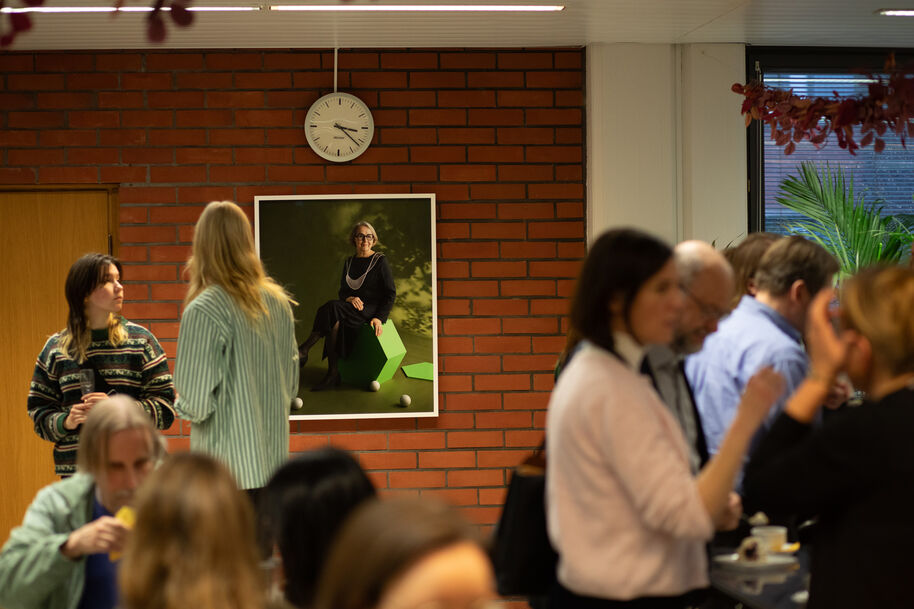
Developing the School through a period of change
Kruus’s term as Dean has included many situations that have required the School to adapt and renew itself. One of the most significant came early in her tenure: the COVID-19 pandemic, which rapidly moved teaching and much of the University’s operations online.
“During the pandemic, we had to think quickly about how to ensure that all our activities could continue to be delivered to a high standard under exceptional circumstances. The situation called for resilience and resourcefulness.”
According to Kruus, Aalto University managed to organise its operations exceptionally well. At the beginning of the pandemic, there was a widespread expectation that online teaching would fundamentally and permanently change the way universities operate. At Aalto, however, the return to campus was a great success.
Developments in research funding and national targets for expanding higher education have also changed the School’s operating environment. At the School of Chemical Engineering, the number of new Bachelor's students admitted each year has doubled, while admissions across Aalto University as a whole have increased by 40 per cent over the past seven years.
This growth has required considerable effort from staff and further development of teaching.
“I am proud of the contribution made by our professors, lecturers and other staff during challenging times. Our School has navigated these changes very well, and student satisfaction has improved at the same time.”
The development of Aalto’s innovation activities has also been an important part of the changes in recent years. The University’s position as an innovation university has grown stronger, and the School of Chemical Engineering has contributed to developing these activities. As a relatively small school, it has provided a good environment for experimenting with new approaches.
Leading the School by fostering people's motivation
For Kruus, one of the distinctive features of university leadership is that people are strongly intrinsically motivated. Researchers and teachers do much of their work because they are genuinely interested in their respective fields.
“For many people, research is still a way of life. It is demanding work and requires the ability to cope with competition, for example when it comes to research funding. Researchers need to have the stamina to pursue their research interests and believe in their work even when results are not yet visible. That is what makes success particularly rewarding,” Kruus says.
Research, however, is not an individual pursuit. Research questions are increasingly multidisciplinary, and answering them requires building networks and bringing together different areas of expertise.
“Building collaborative networks is one of the key factors behind success. The success stories of the School of Chemical Engineering are also based on successful collaboration,” Kruus says.
As universities' core funding has declined, securing external research funding has become increasingly important. At the School of Chemical Engineering, professors submit an average of five to six funding applications each year.
Kruus greatly appreciates the staff's commitment and dedication to this work. The School has invested in support and high-quality services for professors, including grant writers, staff scientists and, most recently, academic coordinators. Maintaining a positive outlook and believing that things can be developed further are also important aspects of leadership.
“A positive attitude is contagious, and even in difficult times it is important to recognise opportunities. We need ambitious and positive visions,” Kruus says.

Kristiina KruusAn individual Dean can be part of the change, but ultimately it is people who bring it about together.
International experience broadens a researcher's horizons
International experience has been an important part of Kruus’s research career and one of its most rewarding aspects. She has spent just over six years working abroad in total: first in Japan, then four years at the University of Rochester in the United States, followed by approximately two years as a postdoctoral researcher at a company in the Netherlands.
Working abroad exposed her to different research environments, ways of working and approaches to thinking. In Kruus’s view, researchers should not remain at their home university throughout their careers. It is important to seek opportunities elsewhere, gain experience and discover new perspectives. They can always return home afterwards, bringing new skills and expertise with them.
“I encourage early-career researchers to go abroad after completing their doctoral degrees. Moving to a new environment challenges your existing assumptions and is an extremely valuable learning experience.”
One particularly memorable aspect of her years in Japan was the gender balance in the workplace and the attitudes surrounding it. At the research centre, Kruus was told that there was only one woman among approximately 120 male researchers. The comments she encountered about women's position reflected traditional structures within the local culture.
“I approached the experience with understanding, but also with a critical eye. Working abroad broadens your horizons not only in terms of science and research; it also gives you an opportunity to look at society and different realities from a new perspective.”
The university's most important task is to teach people how to think
Kruus considers the university an exceptional institution with a long history and an important role in society. Its impact is built on research and education, as well as the new innovations that emerge from them.
“One of the university's strengths is also its ability to renew itself. Teaching cannot be delivered in the same way as it was 20 years ago. Students are different today, and technological developments influence how they learn and work.”
Artificial intelligence brings new opportunities for education, but also new challenges. Kruus believes technological developments should be approached with an open mind, while maintaining a critical perspective.
“Developing critical thinking is one of the university's most important tasks. It is part of the institution's fundamental mission and embedded in the way universities operate.”
In a world where more information and interpretations of it are available than ever before, the university's role is to help people understand, question and form their own views. In Kruus's opinion, this is where the fundamental value of university education lies.
“Alongside subject-specific knowledge and expertise, universities above all develop people's ability to evaluate information. We increasingly need to be able to distinguish reliable information from unreliable information and assess its significance.”
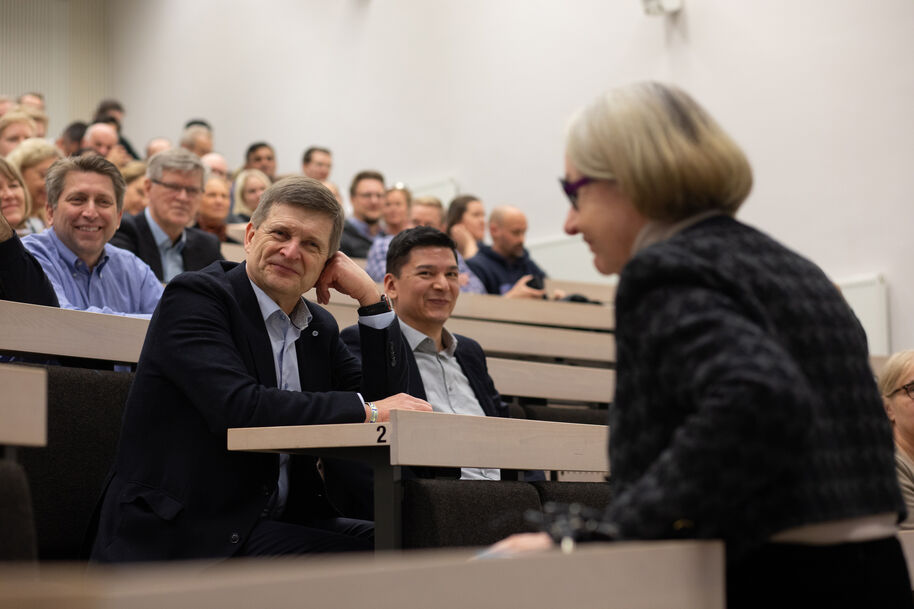
Students are an important part of the community
Students play a central role in developing the university community. However, direct contact with students is not always a given in the role of Dean, as there are fewer natural opportunities for meeting and close collaboration than in many other university positions.
During the pandemic, a valuable new form of collaboration emerged when Kruus began meeting monthly with representatives of the student guilds, together with the Head of Academic Affairs and the Vice Dean for Education. These meetings have become an important way for her to stay connected with students' everyday experiences and perspectives.
“I really value these meetings. The student guilds do extremely important work by welcoming new students, looking after student wellbeing and ensuring that students' perspectives are taken into account when developing education and degree programmes,” Kruus says.
In this way, students are seen not simply as recipients of education, but as active members of the community whose contributions influence the work of the entire School.
The community's work continues
When asked what kind of legacy she hopes to leave at the School of Chemical Engineering as Dean, Kruus emphasises above all the importance of community. She also hopes that people will have the courage to think big and set ambitious goals. Taking risks is both acceptable and necessary, and there is no need to be overly afraid of failure.
“The changes that have taken place over the past eight years have been significant, but they cannot be credited to any one individual. The School's development is the result of the community's collective efforts. Professors, lecturers and other staff, together with the support of the University's leadership, have played a central role in enabling the School to respond to change and develop its activities.”
Kruus also wants to emphasise that the work carried out during her time as Dean has built on a strong foundation that her predecessors have developed over many years. She greatly appreciates the work and progress on which the School's current success is based.
“I have had the opportunity to continue the work that has been going on here for a long time. The School has a strong foundation, and my predecessors have done an excellent job of building it. It has been wonderful to play my part in taking this development forward,” Kruus says.
Kruus describes the School of Chemical Engineering as a wonderful community. She also sees Aalto's positive public image as an important asset that strengthens the position of the entire University and its schools.
During her eight years as Dean, Kruus has led the School through a wide range of changes and challenges. These years have called for resilience, the ability to adapt and a long-term commitment to development. At the same time, they have given her the opportunity to learn more about university operations and academic leadership. “It has been particularly rewarding to have the opportunity to work for the benefit of my own alma mater,” Kruus says.
One principle, however, has remained unchanged: the School's success story cannot be built alone.
“An individual Dean can be part of the change, but ultimately it is people who bring it about together.”
Read more news

Community spirit, a bike and confidence in the future
Aalto University's community drive brought people together to pedal an exercise bike for 10 hours in support of students.
Aalto coordinates the AI research flagship and is involved in four others
The Finnish Center for Artificial Intelligence, FCAI-X, develops new AI methods – the other flagships focus on the hydrogen transition, intelligence and networks, global health threats and emotions
"You do not need to have everything figured out before you start."
Irving Wang was the winner of the Slush ticket raffled among the 100STARTUPS event participants. We interviewed him to learn more about him and how the event benefited him.