






Aalto WiT Programme and Fida International collaborate in Kenya to create accessible playgrounds for children with disabilities

The Aalto University World in Transition (WiT) Programme is an intensive, interdisciplinary post-master’s programme, which aims to bridge the gap between academia and humanitarian work. It brings together universities, NGOs, professionals of different fields and local communities to co-create practical solutions to real-world challenges.
The case study projects are a central part of the programme. In 2026 there are altogether four projects, two in Rwanda and two in Kenya. One of them is Inclusive Play, developed in collaboration with Fida International and the local partner Pamoja Change Kenya (PCK).
Inclusive Play, Kenya
The core idea of Inclusive Play is to create an accessible playground that also takes into account children with disabilities. These children often have limited opportunities to play outdoors because the surrounding play areas may be unsafe or they are non-existent altogether.
Inclusive Play will create a design for a community-oriented playground suitable for children with disabilities. However, the larger idea of the project is to reframe the playground altogether — as part of the educational environment, rather than an optional recreational space. The childrens’ right to education can be combined with a more holistic experience of participation, play and belonging, even for children with special needs.
The project will involve families, teachers and other local stakeholders. The working group will carefully document the process, and develop an easily maintainable, long-lasting design. Thus, the project offers practical guidance for more inclusive school environments in general.
“The WiT programme’s case study projects aim to generate new knowledge and have a societal impact through participatory design. Collaboration between communities and organizations is key to finding solutions that stand the test of time and strengthen inclusion even in challenging circumstances,” says Saija Hollmén, architect and program director at Aalto WiTLAB.
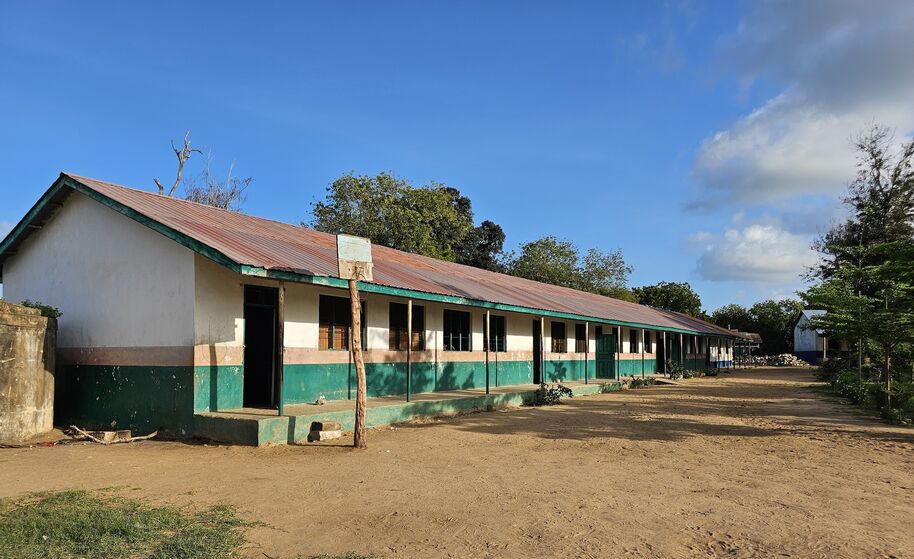
“The project is being carried out in a poor rural area on the Kenyan coast. Attitudes toward children with disabilities are very negative there, and although local schools have special education classes, there has been no previous collaboration within the schools between students with special needs and those in general education. Using play as a tool for learning and rehabilitation is a new concept for local teachers. An important goal of the project is to change attitudes and increase collaboration between students in special education and those in general education,” says Marjukka Anttila, a special education teacher and disability expert at Fida International.
Inclusive Play is a concrete example of how humanitarian architecture can address social inclusion through everyday spaces, not only through housing, infrastructure, or emergency response.
Previous WiT case studies (2024–2025) included work in Rwanda, Jordan, Kenya, Zanzibar, and Tanzania, addressing healing environments, cultural heritage, migration, environmental degradation, sanitation and waste management.
The mindset of the WiT programme
The WiT programme values the perspectives of indigenous communities and local people in the Global South, and combines it to traditional Western knowledge. The programme wants to help locals build the skills to find their own solutions and continue developing long after the programme ends. By bringing together different fields, cultures and ways of thinking, WiT believes we can better tackle the world’s most complex challenges.
The programme also advances environmental sustainability through regenerative approaches to architecture and the built environment. Furthermore, the WiT programme gives future professionals and researchers practical experience and research skills within humanitarian work.
A key component of the studies is transformative learning, where participants reflect critically on their personal assumptions, values, and experiences to develop new perspectives.
The WiT Programme is more than a conventional academic course. Its ambition is to shift from aid-driven approaches toward capacity-building, mutual learning, and locally grounded solutions. WiT was established in 2024 within Aalto University's School of Arts, Design and Architecture. It is hosted by the World in Transition Research LAB (WiTLAB) at Aalto University.
For more information:
Professor of Practice in Humanitarian Architecture, Architect Saija Hollmén
saija.hollmen@aalto.fi
Read more news

How can we reinvent ourselves in the face of uncertainty? Five things everyone should understand about embracing the new
In a rapidly changing world, we need the ability to think differently, question what is familiar and recognise new opportunities. Aalto University’s Professor of Practice Nando Malmelin, explains how anyone can develop their openness skills
THIS ’N’ THAT Exhibition: Workshop Masters' exhibition until 18.11.2026
School of Arts, Design and Architecture's Workshop Masters’ exhibition showcases the school’s diverse workshop activities and the craftsmanship of the workshop masters.
The State of Marketing survey: Performance monitoring and budgeting remain relatively weak
Markkinoinnin tila (The State of Marketing) survey opens up important perspectives to the Finnish marketing knowhow and areas for development in marketing