






Spring School on Quantum Optics in Coherent Circuits - Lecturers
Invited lecturers
Olivier Pfister

Anja Metelmann
Peter Samuelsson
Alessio Serafini
José Aumentado
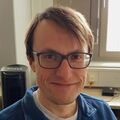
Kirill Fedorov
Attending
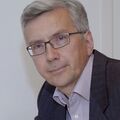
Pertti Hakonen

David B Haviland
Lecturers and preliminary lecture topics introduction

Olivier Pfister
Professor of Physics (and Electrical & Computer Engineering) at University of Virginia, USA
Introduction: Professor Olivier Pfister is a pioneer in the field of experimental and theoretical multimode quantum optics. His work has been particularly influential in the area of quantum computing with light, with special attention to measurement-based approaches and to continuous-variable quantum computing. He pioneered the use of the quantum optical frequency combs for quantum computing He has demonstrated the CV entanglement of a record 60 qumodes into a cluster state and established that Gaussian cluster states and non-Gaussian photon-number-resolving (PNR) detection form a complete set of resources to implement fault tolerant universal quantum computing. The Pfister group has also validated the use of machine learning for the deterministic generation of non-Gaussian resources for universal quantum computing.
Main areas of research: Continuous-variable quantum optics, generation and control of multimode entangled states, design and implementation of optical cluster states as resource states, photonic architectures for measurement-based (one-way) quantum computing in continuous variables, interplay of squeezing, entanglement, and measurement in scalable optical quantum information processing.
Lecture topics:
- Cluster states / Continuous-variable quantum computing
- One-way quantum computing / Measurement based quantum computing

Anja Metelmann
Karlsruhe Institute of Technology (KIT) / University of Strasbourg. Professor / Bridge Professor, Quantum Optics & Spectroscopy (KIT) & associated with CESQ at Univ. Strasbourg, Germany
Introduction: Anja Metelmann is a physicist and an expert in quantum computing. She teaches and conducts research as a senior bridge professor at the Karlsruhe Institute of Technology (KIT) and the University of Strasbourg (CESQ). She obtained her doctorate from the Technical University of Berlin in 2012, then completed two post-doctorates at McGill University (Montreal, Canada) and Princeton University (USA), before joining the Free University of Berlin as the recipient of the prestigious Emmy Noether Fellowship. She was appointed professor at KIT in 2022.
Main areas of research: Theoretical and experimental engineering of nonreciprocal (directional) quantum devices using dissipative coupling or parametric interactions; achieving quantum-limited amplification and isolation in microwave and optical platforms; parametric optomechanics and reservoir engineering in hybrid quantum systems to realize directional signal flow, noise suppression, and isolation without magnetic elements. Her work bridges theory and experiment, providing a framework for reservoir-engineered non-reciprocity in microwave, optical, and hybrid optomechanical systems. She also explores how quantum noise and coherence can be controlled to realize robust information flow in quantum networks.
Lecture topics:
- Non-reciprocal devices
- Quantum-limited amplifiers

Peter Samuelsson
Peter Samuelsson, Lund University. Professor, Theoretical Physics / Mesoscopic PhysicsGroup, Sweden
Introduction: Peter Samuelsson is a prominent Professor of Theoretical Physics at Lund University, currently serving as the Head of the Mathematical Physics Division as of 2026. He is also a key member of NanoLund, the university's Center for Nanoscience and contributes to the LTH profile area in Nanoscience and Semiconductor Technology and the LU profile area in Light and Materials.
Main areas of research: Quantum transport in mesoscopic and nanoscale systems, phase-coherent electronic conduction and fluctuations, full counting statistics and noise in quantum conductors, quantum thermodynamics at the nanoscale (heat, entropy, work), generation and detection of electronic entanglement in nanoelectronic systems, coupling of quantum conductors to microwave cavities for hybrid quantum electrodynamics.
Lecture topic:
- Electron quantum optics
- Quantum entanglement and correlations in nano-electronic systems

Alessio Serafini
Professor of Theoretical Physics at University College London (UCL), Department of Physics & Astronomy, UK
Introduction: His research interests focus primarily on continuous-variable (CV) quantum information and quantum optics, encompassing both fundamental and applied aspects. More recently, his work has focused on the characterization of quantum correlations, in particular entanglement, in continuous-variable states with many degrees of freedom. His current research interests include the coherent generation and manipulation of entanglement in trapped-ion systems, as well as the investigation of locality and entanglement in quantum field theories and their discrete counterparts.
Main areas of research: Theoretical foundations and advanced methods for continuous-variable quantum systems, Gaussian and non-Gaussian quantum states, quantum entanglement and quantum channels in infinite-dimensional Hilbert spaces, symplectic and covariance-matrix methods, quantum optics and quantum information in bosonic systems, use of continuous-variable methods for quantum communication and computing (as exemplified in his book Quantum Continuous Variables).
Lecture topic:
- Quantum Continuous Variables
- Quantum information with Gaussian states

José Aumentado
NIST Boulder / SQMS Center. Group Leader, Advanced Microwave Photonics Group; Staff Scientist, NIST, USA
Introduction: José Aumentado is the group leader of the Advanced Microwave Photonics Group at NIST Boulder. The AMP Group is focused on basic and applied quantum information science research topics, specifically quantum computing and optomechanics based on superconducting circuits. Members of the AMP Group are assisting SQMS with parametric amplifiers and qubit test/measurement, design, fabrication.
Main areas of research: Design, modeling, and realization of superconducting parametric devices (amplifiers, mixers, modulators) with low noise and high dynamic range; traveling-wave parametric amplification and broadband parametric systems; integration of parametric coupling in quantum circuits for squeezing, frequency conversion, and nonreciprocal behavior; optimizing amplification chains for quantum measurement with minimal back-action.
Lecture topics:
- Parametric multi-mode coupled mode theory, including
- Amplifiers, including simple JPA examples
- Frequency converters
- Basic optomechanical interactions

Kirill Fedorov
PD Dr. Walther Meißner Institute, Technical University of Munich
Introduction: His research focuses on microwave quantum communication and sensing, with the aim of developing key technologies for future quantum networks and quantum-enhanced sensing systems. By exploiting the natural compatibility of microwave frequencies with superconducting quantum processors and modern communication standards, the group investigates fundamental and applied aspects of propagating quantum microwave signals.
Main areas of research: Microwave quantum optics—manipulation of quantum states of microwave fields (squeezing, entanglement, coherence) using superconducting circuits; interface between microwave photons and qubits or other hybrid systems; quantum communication and detection in the microwave domain; design and analysis of parametric amplifiers and microwave photonic components, quantum control of microwave fields in circuit QED platforms.
Lecture topics:
- Microwave quantum optics
- Microwave Quantum Communications
- Quantum Sensing