






They changed Finnish fashion in the 2020’s

There has been a significant change in the Finnish fashion scene in the last 10 years. For example 3D clothes, gender-neutral clothing, wearables and inclusivity have been the big topics that are continuing to shape the industry.
Professor Annamari Vänskä of Aalto University has researched these international phenomena and the Finnish solutions to these questions can be seen in an extensive exhibition “Intimacy” at the Designmuseum where she has curated 40 Finnish fashion designers and companies.
“The ongoing transformation offers Finnish fashion industry players a lot of international opportunities. We do not have the weight of history in fashion, but we are used to taking advantage of technology, digitalization and doing things in a new way.” Annamari Vänskä states.
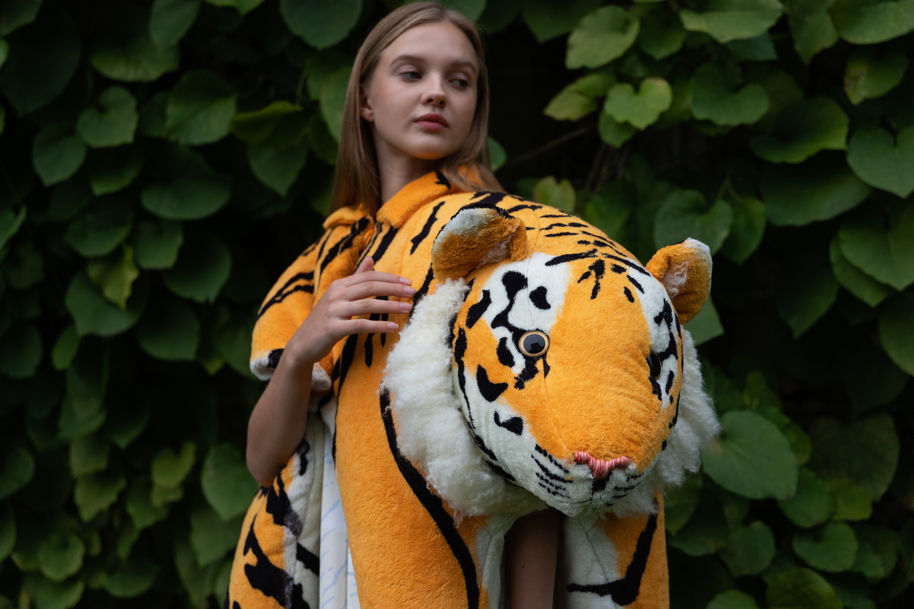
In between fashion and art: Venla Elonsalo & Sasu Kauppi
Combining fashion and art has become a trademark of new Finnish fashion. Contemporary fashion expands from clothing to space, and can be, for example, an art installation. Fashion is close to painting and sculpture or it can be part of a fantasy culture. The “Intimacy” exhibition features works with no actual physical clothing at all, such as Sasu Kauppi’s installation based on light and sound, or sculptural clothing such as Hyerès Festival 2021 finalist Venla Elonsalo’s clothing, built with huge teddy bears and other animal figures.

Social and cultural responsibility: Ervin Latimer, Ville Pölhö & Henna Lampinen
“Ecological responsibility is already a matter of course in Finland today and it is well integrated into brand operations,” says the curator of the exhibition, Professor Annamari Vänskä. “Social and cultural responsibility such as body positivity or highlighting diversity and non-discrimination are ways for a designer to stand out and profile. They build the brands values and create community and communality. ”
The clothes of the Young Designer of the Year 2020, Ervin Latimer, that are on display in the exhibition change according to the body and size of their wearer. Throughout the process of creating the entire collection, Latimer has given space to people who are rarely seen in traditional fashion catalogs. In his collection, Ville Pölhö has studied the effect of men's sexual subcultures on men's fashion and clothing. Henna Lampinen, on the other hand, strives to break the ideal of leanness that still prevails in fashion. The muse in his collection is a lush body.

Gender-neutral clothing: Nomen Nescio
Gender-neutral clothing is one of the major international phenomena of the 21st century. The product or its customer base is not defined by gender, but rather by style and interests of its user. In Finland, the brand that introduced gender-neutral clothing to the Helsinki street scene is Nomen Nescio, founded in 2013. Originally favored by graphic designers and architects, Nomen Nescio, who focuses entirely on black, graphically cut collections, has grown steadily and now touches a wide consumer base.

Fashion as a means of communication: The Fabricant
Digital channels such as Instagram have become the most important means of fashion communication. The media also shapes how fashion is understood. Finnish-Dutch Fabricant only makes digital clothes. The company, which collaborates with top fashion houses, makes 3D clothes for use in virtual worlds with animated details. In addition, The Fabricant works as a creative agency specializing in digital fashion.
Part of the ”Intimacy” exhibition are:
Rolf Ekroth, Venla Elonsalo, The Fabricant, Leevi Ikäheimo, Image Wear, Anna Isoniemi, Juslin/Maunula, Lauri Järvinen, Sasu Kauppi, Heidi Karjalainen, Jarno Kettunen, Maria Korkeila, Emilia Kuurila & Sofia Okkonen, Laivi, Henna Lampinen, Ervin Latimer, Matti Liimatainen, Marimekko, Moodmetric, Teemu Muurimäki, Myontec, NaNi, Aapo Nikkanen, Nomen Nescio, Oura, Paintings, Daniel Palillo, Ville Pölhö, Amina Saada, Heli Salomaa, Sami Samaledtin & Timur Samarskiy, Antonina Sedakova, Anna Semi, Suunto, Autuas Ukkonen, Wildkind Kids, Vyner Articles
Curating: Professor Annamari Vänskä, doctoral researcher Natalia Särmäkari and postdoctoral researcher Jenni Hokka.
8.10.2021 – 13.3.2022 ”Intimacy”
Designmuseo, Korkeavuorenkatu 23, Helsinki, Finland
Read more news

Prejudices are more complex than stereotypes suggest
According to social psychologists, individuals who belong to one’s own group, as well as those associated with highly esteemed and approachable groups, more often elicit admiration or respect compared to those who belong to less esteemed or perceived-as-distant groups. New brain research shows that the emotions people evoke depend not only on the social group, but also on the emotional expression and the distance from the viewer.
Aalto ARTS exhibiting AI-inspired designs at Dutch Design Week 2026
Aalto University’s School of Arts, Design and Architecture returns to Dutch Design Week with ‘art-ai-fact’, an exhibition featuring multiple AI-inspired designs.
Government support can help SMEs internationalise – but it can also become a ‘golden cage’
Governmental support can end up undermining the internationalisation, new research shows.