






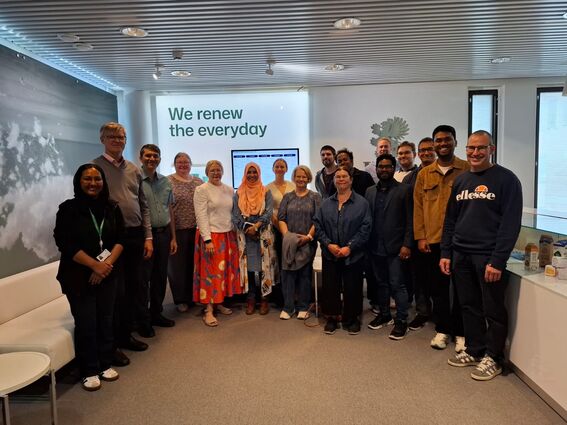
TexirC Project Results Meeting Held at UPM


The meeting provided an opportunity for the project partners to share updates from the different work packages and discuss the next steps towards achieving the project’s objectives. TexirC focuses on four key challenges in textile recycling: textile waste analysis, colour stripping, fibre separation, and the de- and repolymerisation of synthetic fibres.
The day began with an introduction by UPM, offering participants an insight into the company and its activities. UPM develops material solutions based on renewable raw materials, with a focus on renewable fibres, advanced materials and solutions that support the transition towards a more sustainable future.
Following the introduction, the project partners presented updates on their respective work packages, highlighting recent results, ongoing activities and future plans. The discussions provided an opportunity to exchange knowledge and strengthen collaboration between the academic and industrial partners involved in TexirC.
The meeting demonstrated continued progress within the TexirC project and reinforced the importance of collaboration between research organisations and industry in developing practical solutions for a more circular textile sector.
The meeting at UPM also provided a valuable opportunity for participants to learn more about UPM’s expertise and innovations in renewable and sustainable material solutions, while strengthening cooperation among the TexirC partners.

Read more news

Aalto Distinguished Professor Tapani Vuorinen receives prestigious Wihuri International Prize
Over more than four decades of research in wood chemistry, Vuorinen has had a wide-ranging impact on science, industry and society
Prejudices are more complex than stereotypes suggest
According to social psychologists, individuals who belong to one’s own group, as well as those associated with highly esteemed and approachable groups, more often elicit admiration or respect compared to those who belong to less esteemed or perceived-as-distant groups. New brain research shows that the emotions people evoke depend not only on the social group, but also on the emotional expression and the distance from the viewer.
Making music with the Cosmos: sound art and radio astronomy improvising at the Metsähovi Radio Observatory
Want to know what the origins of a solar system sound like? Scientists joined forces with a sound artist to play with molecular gas thousands of light-years away