






OtaNano
OtaNano is Finland's national research infrastructure for micro-, nano-, and quantum technologies

Every year, the Department of Applied Physics at Aalto University selects an innovation from its staff that has particular significance and commercial promise. That innovation is then awarded the PHYS Innovation Prize.
This year, the honor went to Postdoctoral Researchers Dr. Mariia Kiseleva and Dr. Sakari Lepikko and Professor Robin Ras from the Soft Matter and Wetting group. The innovation that landed them the prize is a transparent surface that repels all sorts of droplets, including tiny droplets of water like fog.
‘Conventional anti-fogging materials employ hydrophilic surfaces that form a thin water film when exposed to a humid environment. This also means that dirt, bacteria and everything else flying around in the air would stick to that film. Our surface actively repels a wide range of droplets and contaminations, making it useful for self-cleaning purposes too,’ Kiseleva says.
The team’s unique combination of excellent optical properties and exceptional repellency has the potential to improve surfaces operating in humid, condensing, and contaminated environments. Applications include optical sensors, lenses, protective screens and windshields.
‘The EU is in the process of banning environmentally destructive and hazardous PFAS materials, which are the basis for many previous solutions. Our innovation can be created without PFAS and has the potential to be easily synthesized outside of our specialized laboratories. That makes it very scalable,’ Ras says.
Postdoctoral Researcher Mariia KiselevaOur surface actively repels a wide range of droplets and contaminations, making it useful for self-cleaning purposes too.
The innovation is the brainchild of Kiseleva and Ras, and Lepikko created a unique surface design that’s a key element of it. Kiseleva’s initial idea stems from her experience in the medical device industry.
‘While working in the industry, I came across a fogging problem during carbon dioxide measurements in humid human breath. I started studying how to prevent that, which eventually led me to work at Aalto University. Working on anti-fogging was quite challenging for me at first because I made a sharp turn in my research field since my PhD. Additionally, my previous work had been mostly theoretical, and I now had to switch to experimental work, which I greatly enjoy. In a couple of years here, I’ve gotten a handle on it with the help of great colleagues, excellent infrastructure and an inspiring environment, ’ Kiseleva says.
Unlike Kiseleva, Lepikko has been involved with superhydrophobic surfaces ever since making the move from an energy technology physics major in 2017.
‘When I graduated with my masters, Robin happened to have a job opening in his group working on these surfaces. He was looking for someone who had measurement expertise, which I did. At first, I was unsure if my knowledge of chemistry was up to the task, but it worked out in the end,’ Lepikko says.
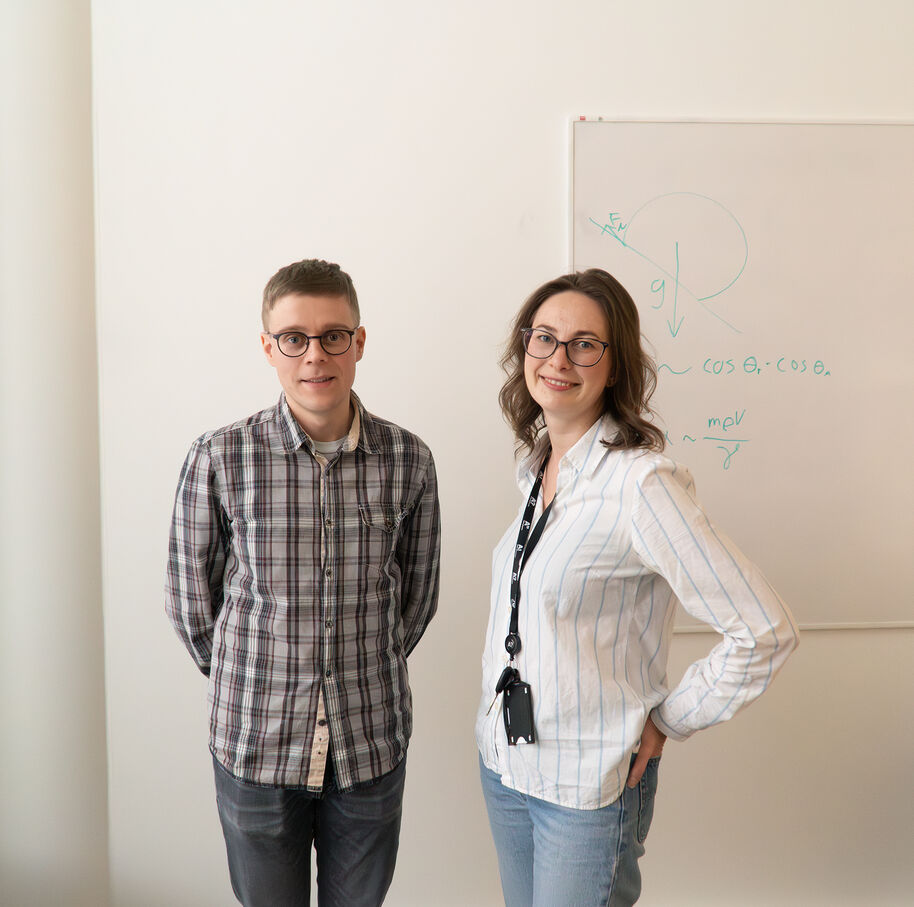
The team has plenty of plans for their innovation.
‘Currently we are applying for funding to help with commercialization, and we’re looking toward the industry to get this off the ground,’ Ras says.
Individually, Kiseleva and Lepikko have a lot to look forward to in the coming years. Kiseleva has applied for further fundings to keep researching water condensation phenomena and surface design at Aalto. Conversely, and after many years at the department, Lepikko plans to put his expertise to work in the startup world.
The team carried out their pioneering work with facilities belonging to OtaNano, the Finnish national research infrastructure for nano, micro and quantum technologies.

OtaNano is Finland's national research infrastructure for micro-, nano-, and quantum technologies

Functional soft materials and wettability of surfaces are the key research interests of Soft Matter and Wetting research group at Aalto University Department of Applied Physics.


