






Study: Smartwatches could end the next pandemic
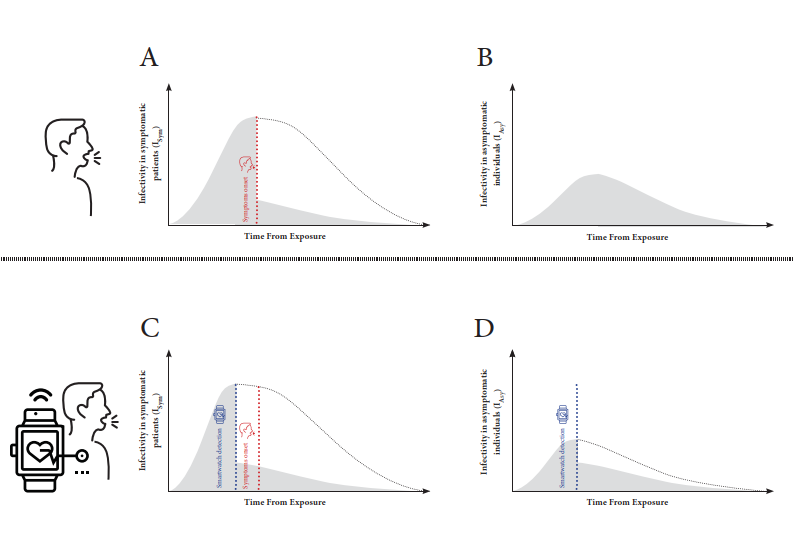
Early detection of sickness is critical for preventing its spread — whether it’s COVID-19, influenza or the common cold. Yet, many illnesses are at their most contagious before people even know they’re sick. Research shows that 44 percent of COVID-19 infections were spread several days before the sufferer came down with symptoms.

Now, researchers at Aalto University, Stanford University and Texas A&M, have released a study that models how smartwatches could provide a simple and effective way to dramatically minimise the unwitting spread of disease in pre-symptomatic or asymptomatic people. The research, published in prestigious US journal PNAS Nexus on March 4, reveals a powerful new tool for pandemic management.
‘Unlike during the pandemic, we now have concrete data on how pandemics develop, and how effective different measures are at curbing the spread. Add to this that wearable technology is now extremely effective when it comes to detecting the very early physiological signs of infection, and we are much better prepared,’ says Märt Vesinurm, from Aalto University in Finland.
How an early ‘ping’ could flatten the curve
Numerous studies have proven the accuracy of wearable devices when it comes to recognising the physiological markers of various illnesses several days before the wearer themself. For example, everyday smartwatches can tell with 88 percent accuracy — from respiration and heart rate, skin temperature and other markers — if you’re coming down with COVID-19. And their accuracy rises to 90 percent accuracy for the flu, Vesinurm says. On average, people reduce social contact between 66-90 percent from the point when they realise they’re sick, even when not in a pandemic situation.
‘Even at the lower end of compliance, if people receive and act on an earlier warning by self-isolating, the impact is significant. Even just a 66-75 percent reduction in social contacts soon after detection by smartwatches — keeping in mind that that’s on a par with what you’d normally do if you had cold symptoms — can lead to a 40-65 percent decrease in disease transmission compared to someone isolating from the onset of symptoms,’ says Vesinurm.
Notably, the research shows that higher compliance, such as that seen in a pandemic situation, could effectively stop a disease in its tracks. So, could smartwatches help us manage potential H5N1 (avian flu) epidemic?
‘I see no reason why not,’ says Vesinurm. ‘As we gather more specific data about how different illnesses affect these measurements, there’s no reason we couldn’t distinguish between diseases, from bird flu and HIV to the common cold, especially when used in conjunction with advanced machine learning methods and other data from the user.’
Towards smarter pandemic policies
The team of researchers are the first to take real world data from numerous peer-reviewed epidemiological, biological and behavioural studies, drawing it together to mathematically model how infection spreads at a population level. Through this powerful combination of data and tech, Vesinurm foresees a future in which smartwatches change the way we deal with pandemics, at both individual and policy level.
‘People are used to wearable devices and they’re likely to trust them. While they’re not yet diagnostic, they could help make unpopular approaches like masks, lockdowns and invasive testing more targeted and less of a blunt instrument,’ he says. An early warning from your smartwatch would be the cue to take other actions, like getting a PCR test, wearing a mask, or ‘not visiting your grandma’. The action would depend on the social context at the time, and an individual’s assessment of risk.
Having this information not only empowers individuals to make choices that keep their loved ones or community safe, but it also gives decision-makers a powerful tool.
‘It could be that governments find it most cost effective in a pandemic situation to provide every person who wants one with a smartwatch — although of course, this comes with its own ethical considerations,’ says Vesinurm. ‘Either way, with early detection literally at our fingertips, I see a lot of reason to hope.’
Märt Vesinurm
Read more news

Prejudices are more complex than stereotypes suggest
According to social psychologists, individuals who belong to one’s own group, as well as those associated with highly esteemed and approachable groups, more often elicit admiration or respect compared to those who belong to less esteemed or perceived-as-distant groups. New brain research shows that the emotions people evoke depend not only on the social group, but also on the emotional expression and the distance from the viewer.
Making music with the Cosmos: sound art and radio astronomy improvising at the Metsähovi Radio Observatory
Want to know what the origins of a solar system sound like? Scientists joined forces with a sound artist to play with molecular gas thousands of light-years away
Joel Kallio joined Research Services as Information Specialist
Joel Kallio works in the Open Science and ACRIS team.