






Soil Laboratory: One solar cycle in Utsjoki
Many indigenous cultures believe in the earth as a sacred environment and regard themselves as an integral part of this holistic living landscape. They belong to the land and are in unison with plants, animals, and ancestors whose spirits inhabit these places, whereas Westernized society has been distancing itself from nature, creating a point where reconnection is needed.
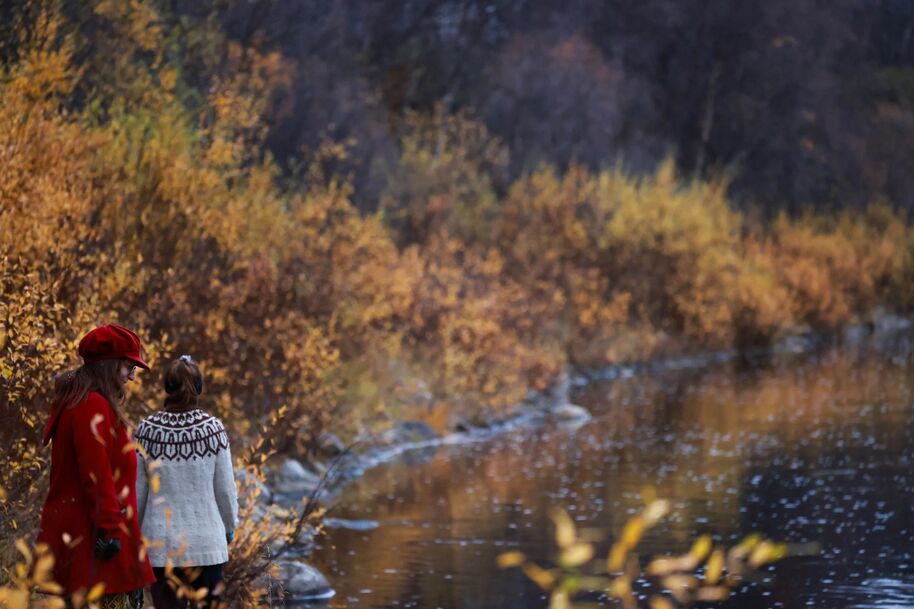
In the Utsjoki iteration of Soil Laboratory, four artists embarked on an exploration of the dialog between humans and the land in the northernmost part of Finland during 2023–24. The team consisted of EMPIRICA researchers Maarit Mäkelä and Priska Falin, alongside Contemporary Design alumni Mira Niittymäki and Vertti Virasjoki. The research was grounded in Professor Mäkelä’s year-long relocation to Njavijohka by the Teno River, with the rest of the team making periodic visits to conduct field studies both on-site and at Aalto University.
Approximately half of Utsjoki’s inhabitants are Indigenous Sámi people, and one of Mäkelä’s key motivations for relocating was to deepen her understanding of their culture and relationship to the land. In doing so, she followed in the footsteps of her ancestor, Jacob Fellman, a priest who lived in Utsjoki from 1820 to 1831. Fellman was among the first priests to learn the Sámi language and document it in written form, while also making detailed notes on the surrounding nature.
This Soil Laboratory project sought to investigate the interconnectedness between humans and the living landscape of the North. This included dwelling in nature and delving into the local history and craft heritage. Before her move, Mäkelä conducted research into the pottery and ceramic traditions of Northern Finland. Although clay is not used in traditional Sámi handcraft (duodji), Stone Age pottery finds have been discovered near where she resided, suggesting that perhaps ceramic objects, due to their fragility and weight, did not have a role in the nomadic lifestyle.
By engaging with locals and listening closely, Mäkelä learned of nearby clay deposits along the Teno River, one of them once utilized by her landlord’s grandfather for brickmaking. Walking was used as a method to explore the changing landscape and to identify the clay sites, ultimately leading the team to discover three locations. Additional soil samples were collected and processed into slips, and test tiles were fired to assess the properties of the local materials.


When crafting her initial ceramic pieces, Mäkelä drew inspiration from the traditional Sámi duodji vessel form known as giisa. She painted the pieces with slips made from local soil samples, thematically incorporating animals that frequently visited her home. Meanwhile, Niittymäki conducted parallel work with local materials in Porkkalanniemi, located in Southern Finland. These interwoven processes will be showcased as an installation called Maan Äärellä at the KWUM Ceramics Museum and Gallery in Fiskars during the winter of 2024–25.
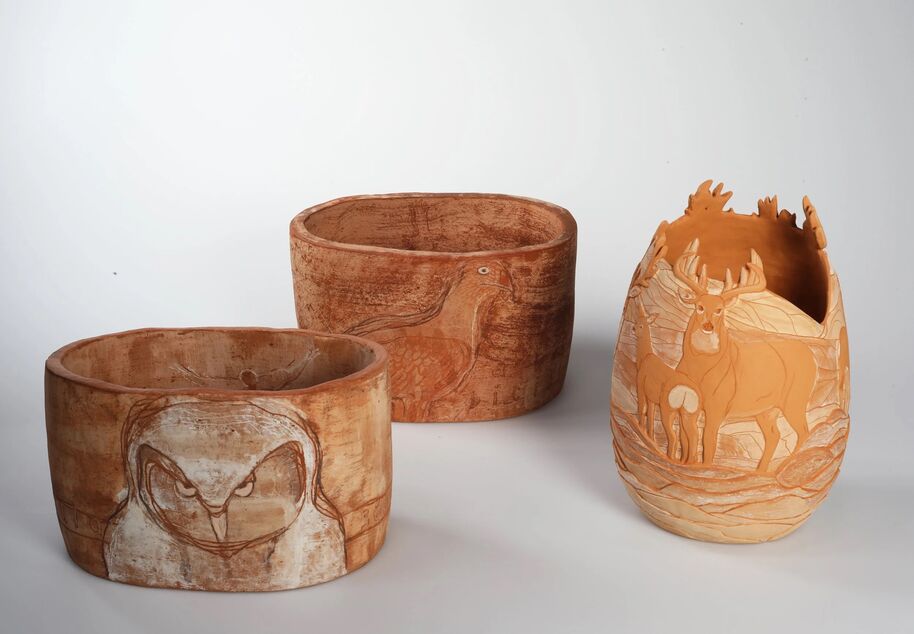
After becoming familiar with the materials, Mäkelä began constructing a larger vessel intertwining with the Sense of Water project. This third piece completed a trio of vases, the first of which was made from Somero earthenware and painted with Puolanka kaolin slips by Amedeo Martines. This initial vase represented the entanglement of locally endangered species and ecological interconnectivity. After firing, the amphora was briefly installed in the Badjeseavttet River by Mäkelä and artist-researcher Priska Falin before Mäkelä’s move to Utsjoki.
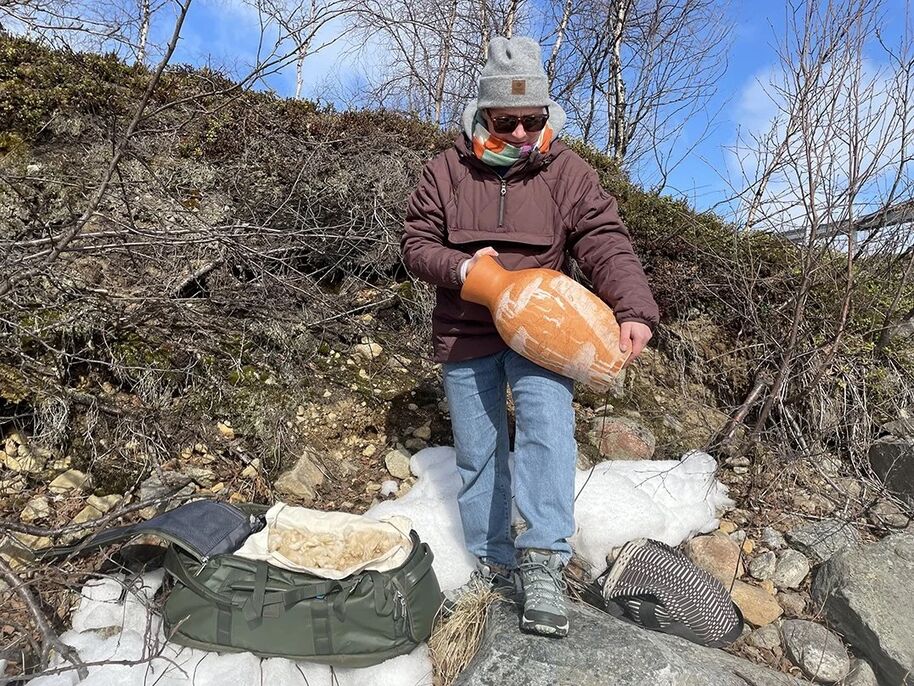
Upon relocating, Mäkelä brought the second vase, that she had made from the same materials as the first, which was then placed in the Geassemahjohka River. There, it froze and fractured due to a sudden temperature drop in early October 2023. The broken vase was subsequently moved to the Njavijohka River, where Mäkelä observed it from her window throughout the winter.
The final vase was constructed using clay from Njavijohka and the local slips. Mäkelä painted it with motifs of locally endangered species: the Arctic fox (Vulpes lagopus), snowy owl (Bubo scandiacus), and Atlantic salmon (Salmo salar). This piece was also placed in the Geassemahjohka River, where Mäkelä aimed to study the active agency of water in dialogue with the maker and material. Additionally, the third vase experiment was conceived as a speculative shelter for juvenile salmon that inhabit the small rivers around Njavijohka.


The project’s progress was documented by the whole team. These documentations culminated in video artworks by Falin and Virasjoki. An underwater camera installed near the final amphora captured footage of a juvenile salmon.
Read more at: https://www.researchcatalogue.net/view/2872725/2877440
Links:
Soil Laboratory: Exploring a dialog between human and land in Utsjoki
Read more news

The State of Marketing survey: Performance monitoring and budgeting remain relatively weak
Markkinoinnin tila (The State of Marketing) survey opens up important perspectives to the Finnish marketing knowhow and areas for development in marketing
What is quantum tech?
Many of today’s devices would not exist without quantum technology, but the most exciting applications are still on the horizon
Is quantum the next AI? Behind the quantum hype
Doctoral researcher Christa Schauman explains how Finland and Europe are faring in a race everyone wants to join – despite its uncertainties.