News

Researchers turn energy loss into a way of creating lossless photonics-based devices

Turning energy loss from a fatal flaw into a dial for fine-tuning new states of matter into existence could yield better laser, optical and quantum technology.

Electronic, optical and quantum systems are never perfect. Energy can leak from them, which is a ubiquitous and undesirable phenomenon that leads to various problems physicists refer to as decoherence, noise and loss. 

Of the three, particularly energy loss can prevent making the most of new technologies in extreme cases. For example, there is quantum information loss in qubits, the kernels of quantum calculation power, which severely limits the scaling-up of quantum computers.

Conventional wisdom for physicists and engineers is to minimize opportunities for loss to arise in the first place. This is difficult enough, and troubles only increase if the systems need to be coupled to their environment for functionality. An alternative but largely unexplored strategy is to use loss itself as a tool for creating exotic behaviour inside the system. Now researchers from Aalto University, the famed Nokia Bell Labs and the University of Central Florida used the alternative approach to create loss-protected optical systems which can operate perfectly even in noisy environments.

Elizabeth Pereira, Doctoral Researcher at Aalto University in the Nokia Industrial Doctoral School in Quantum Technology, created a theoretical design together with her supervisor, Department of Applied Physics Assistant Professor Jose Lado. A group led by Andrea Blanco-Redondo at UCF, in collaboration with Hongwei Li at Nokia Bell Labs, then demonstrated the design experimentally. 

The paper was published in the prestigious journal Nature Materials: https://www.nature.com/articles/s41563-025-02278-8

The design centres around a state of matter known as a non-Hermitian topological state, which emerged from carefully engineered energy losses. These states are protected from loss and noise precisely by the engineered loss itself. This protection leads to photonic edge excitations, which are the result of a mathematical protection associated with the description of the system, known as a topological protection. The team then realized the design experimentally inside a programmable and integrated photonics platform. 

Photonic systems are ideal platforms for exploiting the control of losses to engineer unconventional states.

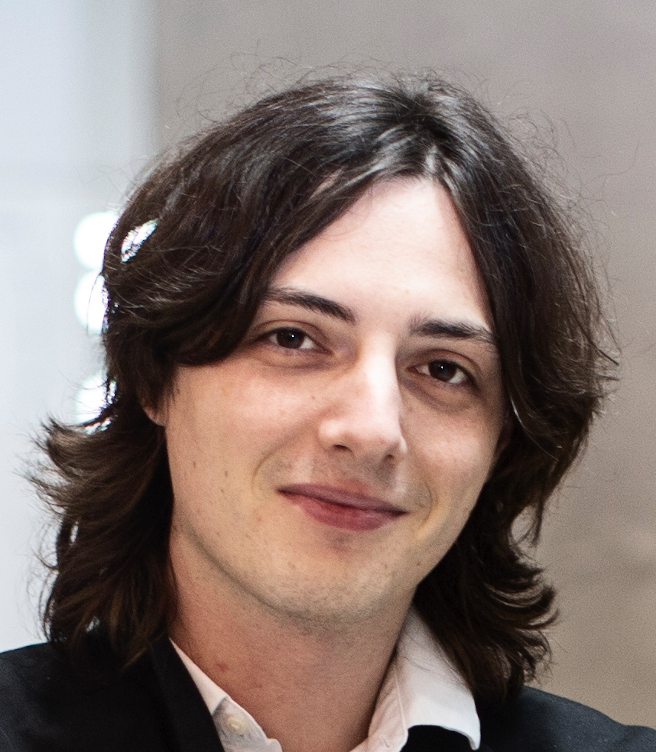
Doctoral Researcher Elizabeth Pereira

“Controlling how devices couple to the environment provides a new strategy to engineer collective excitations that make new functionalities possible. While loss is often considered a nuisance, carefully controlling it allows us to engineer exotic phenomena, which would not be possible in perfect devices,” Lado says.

The discovery has potential both for fundamental science and industrial applications.

For fundamental science, it enables exploring so called non-Hermitian phenomena: states of matter that are not allowed in closed environments but which might prove a way to poke at some of the most fundamental constrains in physics research.

For industry, creating topological excitations driven by engineered losses might make it possible to build devices that operate perfectly even in noisy environments. It would be a significant boon for developing more robust laser, optical and quantum technologies.

“Photonic systems are ideal platforms for exploiting the control of losses to engineer unconventional states. In my doctoral work, I first performed a theoretical design of this system, and it has been hugely rewarding to show that such a strategy works in devices experimentally,” Pereira says.

The study is a result of the Nokia Industrial Doctoral School in Quantum Technology, a long-term effort to train highly skilled PhDs in the field of quantum technology between Nokia and Aalto. The focus of the Nokia Industrial Doctoral School in Quantum Technology is on industrially relevant topics that range from fundamental science to applied research. 

More information:

Close-up of a quantum computer's golden connectors and wiring.

Nokia Industrial Doctoral School in Quantum Technology

Nokia Industrial Doctoral School in Quantum Technology is a long-term effort to train highly skilled PhDs in the field of quantum technology. The focus is on industrially relevant topics that range from fundamental science to applied research. There is a unique opportunity to work together with Nokia researchers since the program aims to connect them with the supervising professors at Aalto.

Department of Applied Physics
  • Updated:
  • Published:
Share
URL copied!

Read more news

Three white, circular lace patterns on a black background, each with a unique geometric design.
Research & Art Published:

Smart textiles are reshaping our understanding of materials – and interspecies communication

The PAST-A-BOT research project, funded by the European Research Council (ERC), is developing soft, intelligent textiles that could one day function as rescue robots, sound-sensing agricultural fabrics, or assistive clothing. At the same time, the project aims to rethink the way we approach materials research.
A woman presenting her master's thesis on textile chemistry at Aalto University. A laptop and notes are on the table.
Research & Art Published:

Master’s student showcases efficient color stripping of cotton fabrics

On December 9, master’s thesis student Elsa Vuorenmaa from the Textile Chemistry Group presented the results of her research on color stripping of reactive-dyed cotton fabrics.
Four men in formal attire, each in different settings. One wears a turtleneck, others wear suits with ties.
Research & Art Published:

Future makers research batteries, cryptography and plastic recycling

The Technology Industries of Finland Centennial Foundation awarded 3.5 million euros in research funding to eight projects, five from Aalto University.
Sebastian Szyller photographed indoors on campus.
Research & Art Published:

Sebastian Szyller: I want to make machine learning more dependable and resilient to attacks

Sebastian Szyller has been appointed assistant professor at Aalto University Department of Computer Science as from 1 September 2025. He studies how to train privacy-preserving machine learning models, how to safeguard them and ensure robust predictions in untrusted environments