






Prof. Robin Ras elected as member of the Finnish Academy of Science and Letters

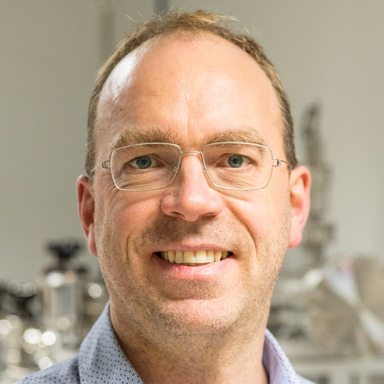
The Finnish Academy of Science and Letters invites new members annually. On April 25, 2025, they invited 33 distinguished scientists from various fields. One of the new members is Robin Ras, Professor and the Head of the Department of Applied Physics at Aalto University.
Ras’ research focuses on the qualities of surfaces, especially looking at how liquid droplets behave on them. He has achieved internationally significant results in the study and development of extremely water-repellent surfaces, known as superhydrophobic surfaces, with over 250 publications cited more than 15 000 times. He is also the recipient of a 2017 Consolidator Grant from the European Research Council and a Principal Investigator at the Center of Excellence in Life-Inspired Hybrid Materials (LIBER).
In addition to the prolific and cutting-edge Department of Applied Physics, Ras also heads his research group at Aalto that combines physicists and chemists to study functional soft materials and the wettability of surfaces.
Membership in the Finnish Academy of Science and Letters is strictly curated: a total of 845 members with only 333 of them below the of 65. Inclusion criteria is based on strong scientific merit.
The Finnish Academy of Science and Letters was founded in 1908 with the stated mission promoting scientific study and bring together scientists at the top of their field. The Academy organizes events, produces scientific publications and offers grants especially to young researchers every year.
More information:
Read more news

What is quantum tech?
Many of today’s devices would not exist without quantum technology, but the most exciting applications are still on the horizon
Is quantum the next AI? Behind the quantum hype
Doctoral researcher Christa Schauman explains how Finland and Europe are faring in a race everyone wants to join – despite its uncertainties.
Training available in AI use, research data management, open science + more – register now!
New topics included! Registrations for autumn 2026 are open.