






Measuring urban nature: new habitat types and criteria support the prevention of biodiversity loss

Nature in the built environment – parks, yards, novel meadows, and many other green areas – can now be classified uniformly and its ecological condition assessed using comparable indicators. A recent report presents a classification of anthropogenic habitat types in the built environment and habitat-specific guidelines that can be used to incorporate the ecological quality of urban nature more strongly into land use planning, environmental impact assessments, and the development of green infrastructure.
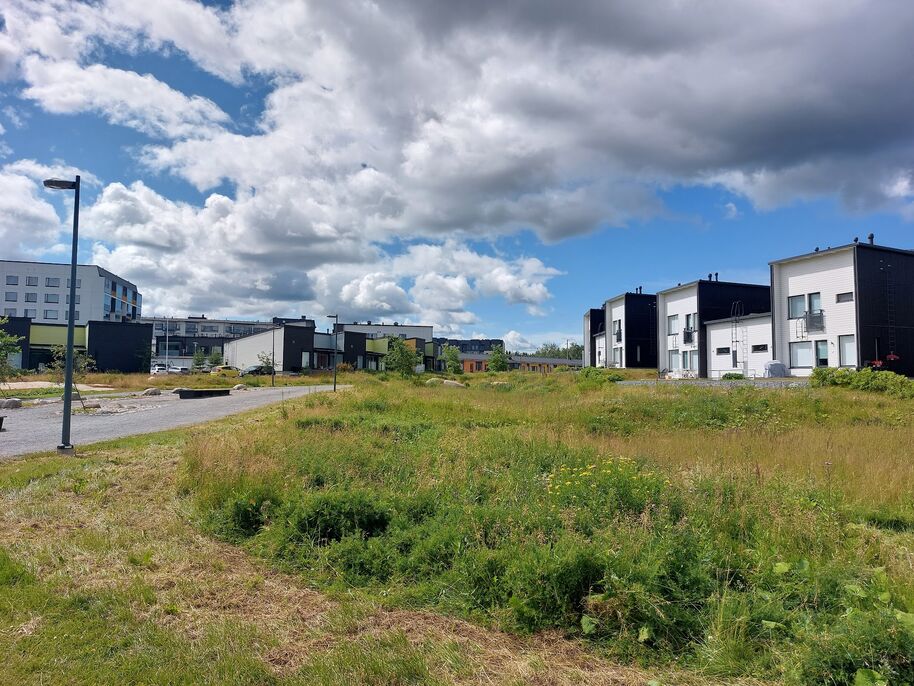
The report identifies 16 anthropogenic habitat types, such as wooded parks, ground-level yards, novel meadows, and ruderal areas. The assessment of ecological condition focuses on structural features and vegetation that are essential for biodiversity. However, the assessment does not cover the aesthetic, social, or cultural-historical values of green infrastructure.
"Classification and criteria help to identify ecologically unequal urban greenery in the built environment and make green infrastructure visible, measurable, and comparable in decision-making", says Associate Professor Elisa Lähde from Aalto University.
The report was prepared in broad interdisciplinary collaboration and supports, for example, work in cities to systematically improve the ecological quality of green structures and combat biodiversity loss.
What does the report bring to practice?
The report provides a uniform classification for vegetated areas in the built environment, as well as precise interpretation and inventory guidelines. In addition, the report enables the ecological condition to be assessed on a scale of 0.1–1.0 using habitat-specific indicators, allowing the quality of different sites to be compared. Habitat types in the built environment are assessed in terms of so-called habitat hectares.
"Habitat hectares were defined for natural habitats a year ago. Now, the nature values of the anthropogenic nature can also be included in the calculation of habitat hectares, for example in land use planning, monitoring the nature work of cities and companies, and possibly in the nature credit markets", says Joel Jalkanen, postdoctoral researcher at the Finnish Museum of Natural History.
The classification and assessment criteria were developed by experts in the ARVO and BOOST projects. A series of workshops was held between November 2024 and September 2025, and the method was piloted in the field in the summer of 2025. The report is published by Green Building Council Finland and the authors represent several organizations, including the University of Helsinki (Luomus), Aalto University, and the University of Jyväskylä. The guidelines will be updated as experience and knowledge accumulate.
Further information:
Assistant Professor Elisa Lähde, Aalto University, +358 50 471 9171, elisa.lahde@aalto.fi
Postdoctoral Researcher Joel Jalkanen, Natural History Museum, University of Helsinki, +358 50 478 788, joel.jalkanen@helsinki.fi
Report: Habitat types in the built environment and assessment of their ecological status (PDF), Green Building Council Finland. The report will be published in English during spring 2026.
Read more news

Recruitment to begin for position of Aalto University President
Aalto University is more than a workplace. It is an open community, building a sustainable future for the coming generations.
How can we reinvent ourselves in the face of uncertainty? Five things everyone should understand about embracing the new
In a rapidly changing world, we need the ability to think differently, question what is familiar and recognise new opportunities. Aalto University’s Professor of Practice Nando Malmelin, explains how anyone can develop their openness skills
Peatlands in the Northern Hemisphere are changing – satellite study reveals clear regional differences
The Northern Hemisphere’s peatlands are being reshaped not just by heat, but by moisture, says a unique study––the first to span two decades. Many areas have switched from greening to decline in the 2010s.