






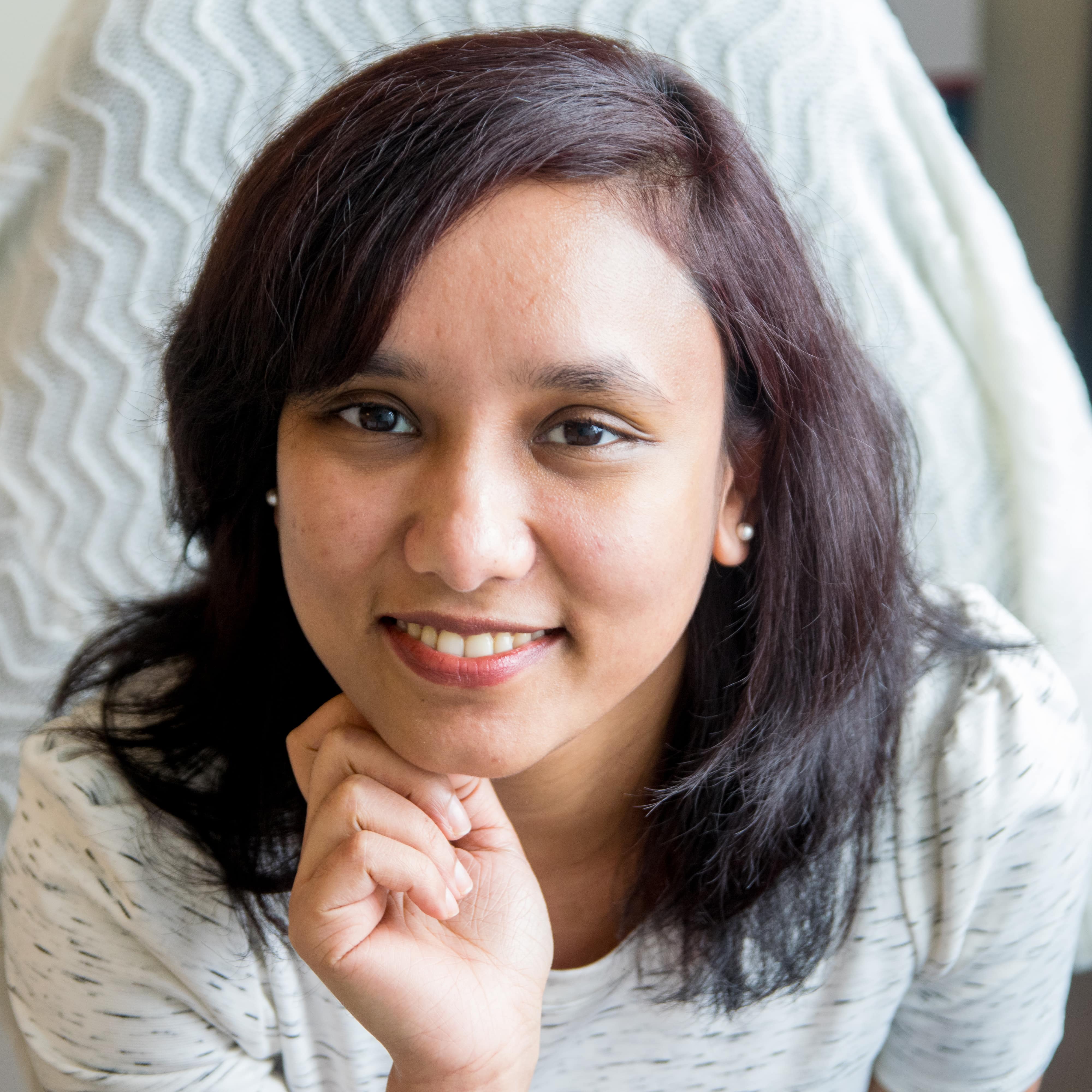
Mashrura Musharraf, Assistant Professor of Marine Technology, studies intelligent ships

The introduction of autonomous ships into maritime transport has shown that artificial intelligence will increasingly shape the maritime industry in the coming years.
Assistant Professor Mashrura Musharraf studies the application of interpretive knowledge mining, machine learning and artificial intelligence technologies on ships so that the systems and solutions are human-centered and secure.
She works at the Department of Mechanical Engineering where her first three-year term began on March 1, 2020. She received her doctorate in computer engineering in 2018 from Memorial University of Newfoundland, where she worked as a postdoctoral researcher before joining Aalto University.
What is the goal of your research? What do you want to achieve?
“I am researching artificial intelligence algorithms, and I want to show how important the interpretation and transparency of algorithms is in the development of autonomous ships when the crew of ships is replaced in whole or in part by automation,” Musharraf notes.
What is most challenging about applying artificial intelligence to ships?
“Decision-making in stand-alone systems is still quite simple in the operation of an individual, local vessel. On large ocean-going vessels that face harsh conditions, much more is required of the automated decision-making process.”
"Especially in ice conditions, systems require safety and reliability in addition to optimal performance."
“We can’t ensure safety and reliability of something that we don’t understand. Making the intelligent ships transparent and interpretable will allow us to create a marine industry where AI and human can coexist and co-operate.”
What kind of visions do you have for the ships of the future?
“I believe that the future ships will combine the best of the two worlds – humans and machines. Humans have been successfully carrying on marine operations for years. If we can connect that knowledge with the computational capabilities of machines, we can reach a level of intelligence that would open up a whole new world of possibilities.”
Why study marine technology?
By studying and working in the marine technology field you can make a direct impact. And that has been my biggest drive. I also loved the multidisciplinary nature of the field. During my master’s and PhD program, I worked with a team of very diverse expertise, starting from naval architects to computer engineers. It was fascinating how each of us contributed to ensuring safety at sea in our own unique way. I believe this is an ever-growing field, and there will be no shortage of exciting challenges and opportunities in the years to come.
Read more news

Yvonne Nygård appointed Adjunct Professor at the Department of Bioproducts and Biosystems
DSc (Tech) Yvonne Nygård has been appointed to a five-year fixed-term position as Adjunct Professor at the Department of Bioproducts and Biosystems at Aalto University School of Chemical Engineering. Her field of professorship is industrial biotechnology. Nygård will also contribute to teaching.
Recruitment to begin for position of Aalto University President
Aalto University is more than a workplace. It is an open community, building a sustainable future for the coming generations.
Joel Kallio joined Research Services as Information Specialist
Joel Kallio works in the Open Science and ACRIS team.