






Lappset Prize to Landscape Architect Johanna Tuokko

In urban planning, it is important that stakeholders in the region are involved in the design process. In this way, valuable information is obtained about the design area, which contributes to making the design solutions more user-oriented by considering the needs of the participants. However, plan drawings, maps, schematic drawings, visualizations and physical miniature models are not easily understood and read by all involved.
In her Master’s thesis ‘Participating in a Virtual Landscape’, landscape architect Johanna Tuokko explains how virtual modeling can be utilized in the involvement of spatial planning and how it can improve spatial perception ability.
According to the Lappset Committee, the thesis is topical. ‘The author has taken over a complex subject and made extensive use of international research literature and case study method. The work is a valuable opening for discussion about the virtual landscape’, the choice is reasoned.
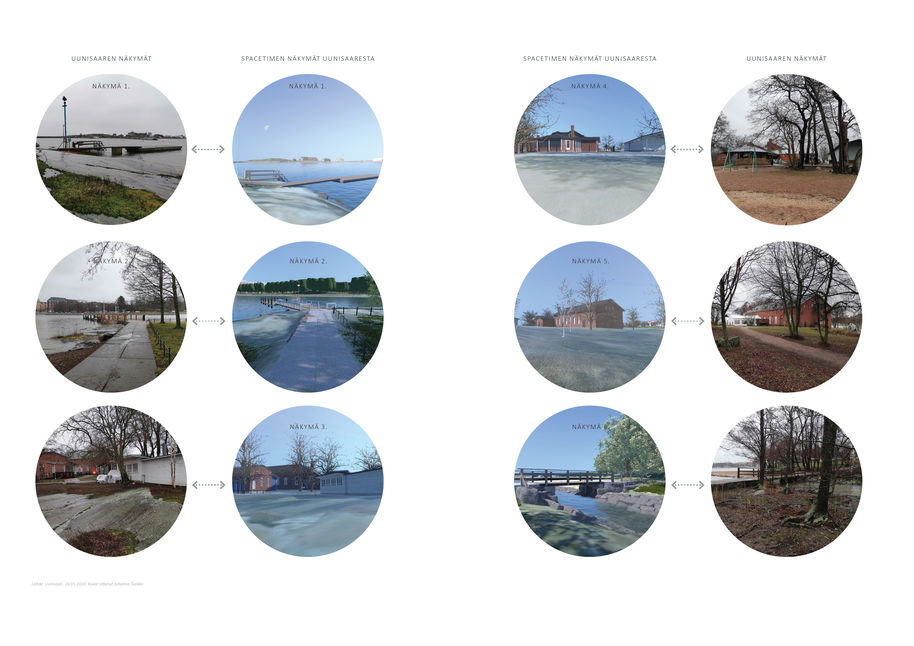

The findings of the thesis present that virtual modeling has a positive effect on participation, but more detailed research is required on what dynamic features and what kind of elements virtual landscape models should include in order to improve spatial perception ability and the experience of influencing.
Thus, Tuokko presents questionnaire research methods in which the dynamic properties of the virtual model would be divided into separate factors to be studied further. This would allow a closer examination of which features of the virtual landscape model could potentially contribute to the perceptibility of the plans and which in turn would not.
The Lappset prize is given to the best master’s thesis in landscape architecture and it is awarded each year to a meritorious student in the Landscape Architecture. The prize is 2,000 euros and is donated by Lappset Group Oy.
The supervisor of the work was professor Anssi Joutsiniemi and advisors Juanjo Galan, Lauri Lemmenlehti and Henna Fabritius.
More information:
Johanna Tuokko, johanna.tuokko@wsp.com
Professor Anssi Joutsiniemi, anssi.joutsiniemi@aalto.fi
Read more news

The State of Marketing survey: Performance monitoring and budgeting remain relatively weak
Markkinoinnin tila (The State of Marketing) survey opens up important perspectives to the Finnish marketing knowhow and areas for development in marketingInvitation to take part in the Students’ City 2026 study
What do you want from your place of residence, your campus, or student life? Take part in the Students’ City 2026 study
What is quantum tech?
Many of today’s devices would not exist without quantum technology, but the most exciting applications are still on the horizon