






Invited Talk: Swedish Expert Explores the Future of E-Textiles


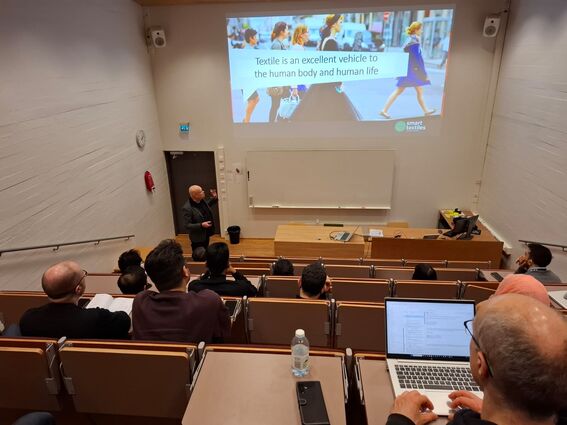
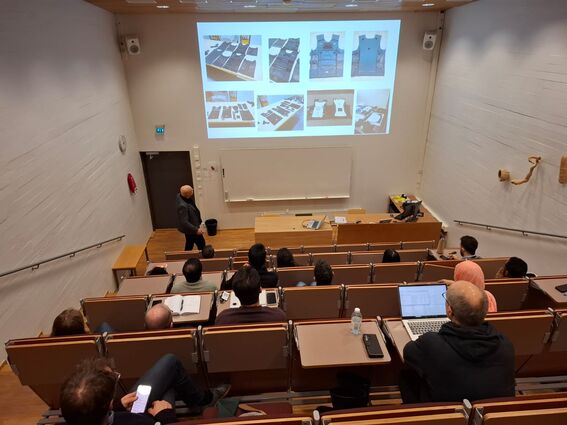
In his presentation titled “Merging Textiles and Electronics – and Beyond,” Prof. Persson, head of the Smart Textiles Technology Lab at the University of Borås, shared the latest developments and future directions in the fast-growing field of electronic textiles (e-textiles).
E-textiles, which integrate embedded electronic functionality into traditional fabrics, represent a major transformation in how materials are designed for human use. “Modern textile research is now blurring the line between material and device,” Prof. Persson noted, underscoring that textiles can now act as interactive systems rather than passive materials.
He highlighted how conductive fibers and embedded sensors enable fabrics to sense, respond, and even aid in medical applications. Examples ranged from wearable health monitoring systems and assistive textiles to innovations in soft robotics and adaptive materials. These advances promise to merge therapy, prevention, and comfort into continuous, textile-based healthcare solutions.
Prof. Persson, a pioneer in Sweden’s smart textile research, leads interdisciplinary work in fibretronics, ionotronics, medical and assistive textiles, soft actuators, and sustainable textile technologies. His research spans applications from textile-based pain management and rehabilitation systems to water purification and eco-friendly electronic materials.
The event showcased both the scientific innovation and human-centered potential of smart textiles, a field poised to reshape future healthcare, wellbeing, and material engineering.


Read more news

What is quantum tech?
Many of today’s devices would not exist without quantum technology, but the most exciting applications are still on the horizon
Is quantum the next AI? Behind the quantum hype
Doctoral researcher Christa Schauman explains how Finland and Europe are faring in a race everyone wants to join – despite its uncertainties.
Health x technology: Magnetic stimulation activates neurons to target depression
Brain stimulation has helped depression patients for years, yet only a small minority can access the therapy. Researchers are now making it easier, faster, and more personalised.