

News

Beyond the pitch: How designers helped Aalto startups stand out at Slush

Aalto ARTS design students have helped Aalto startups transform their ideas into tangible visualisations, allowing investors to see the potential behind each innovation.
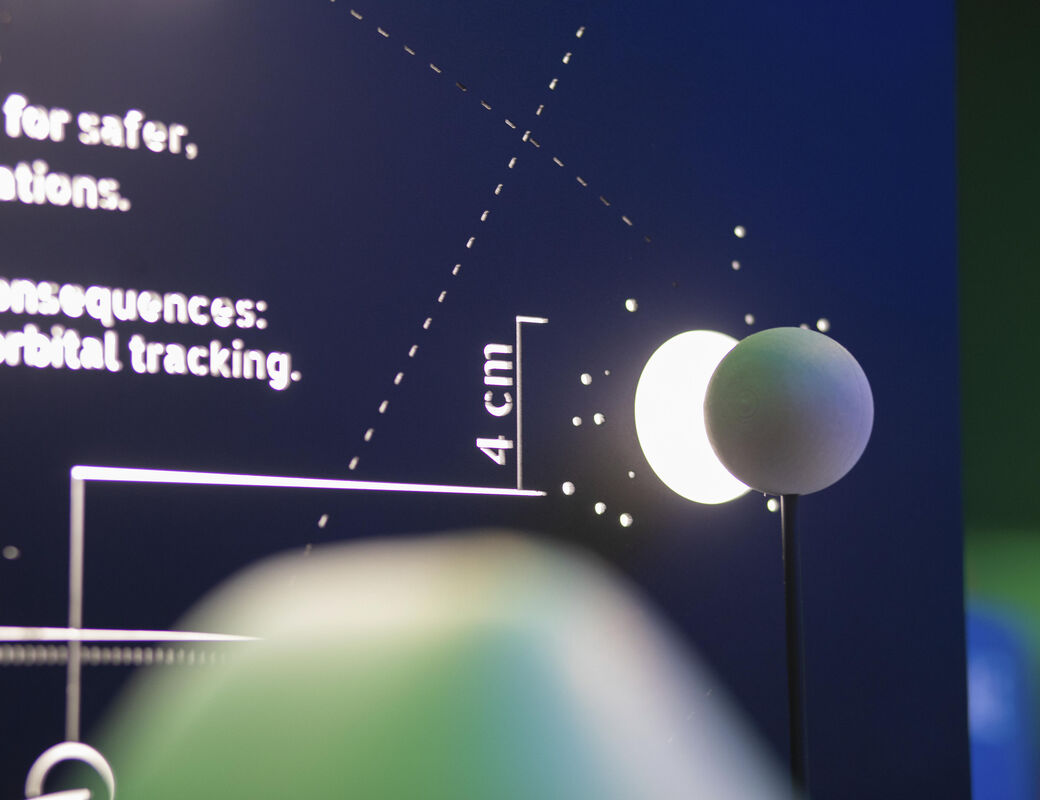
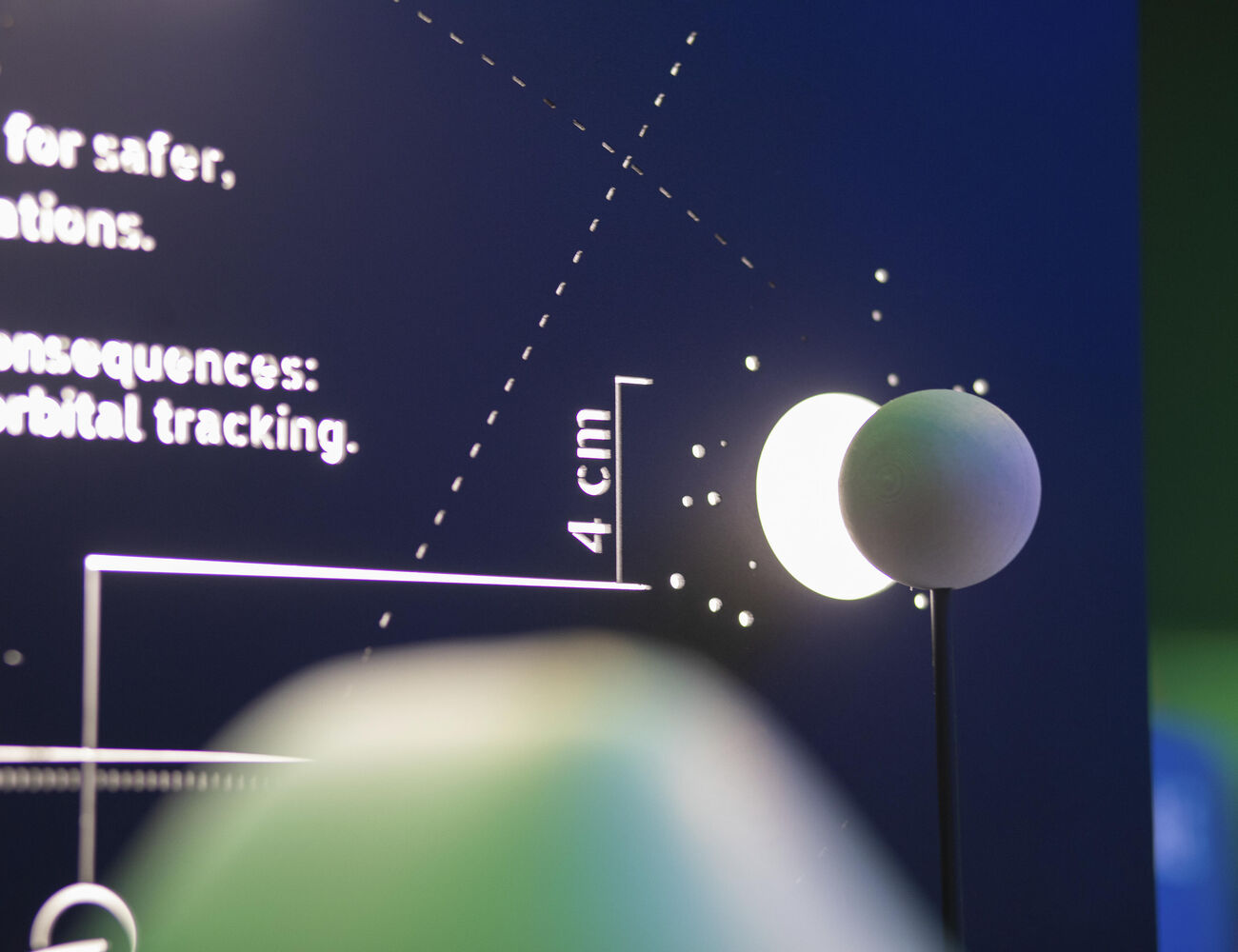
Close-up of space display with white text, 4 cm scale and small sphere lit against dark blue background
Photo: Matti Ahlgren

Slush 2026, Helsinki's internationally renowned startup and technology event, brought together thousands of entrepreneurs, investors and innovators from around the world. It is a place where ambitious ideas meet investment opportunities, and where startups compete not only to showcase their innovations but also to capture the attention of those who could help bring them to life.

In this environment, the design and visual communication of innovations and prototypes become particularly important. That's why this year, just as last year, Aalto ARTS design students have helped Aalto startups transform their ideas into tangible prototypes and visualisations, allowing investors to see the potential behind each innovation.

The work of our CoID students, led by Professor of Practice Miklu Silvanto, bridges the gap between an idea and its real-world application, giving founders a powerful tool to make their pitches stand out.

Below you will find four examples of this collaboration. 
Skywake

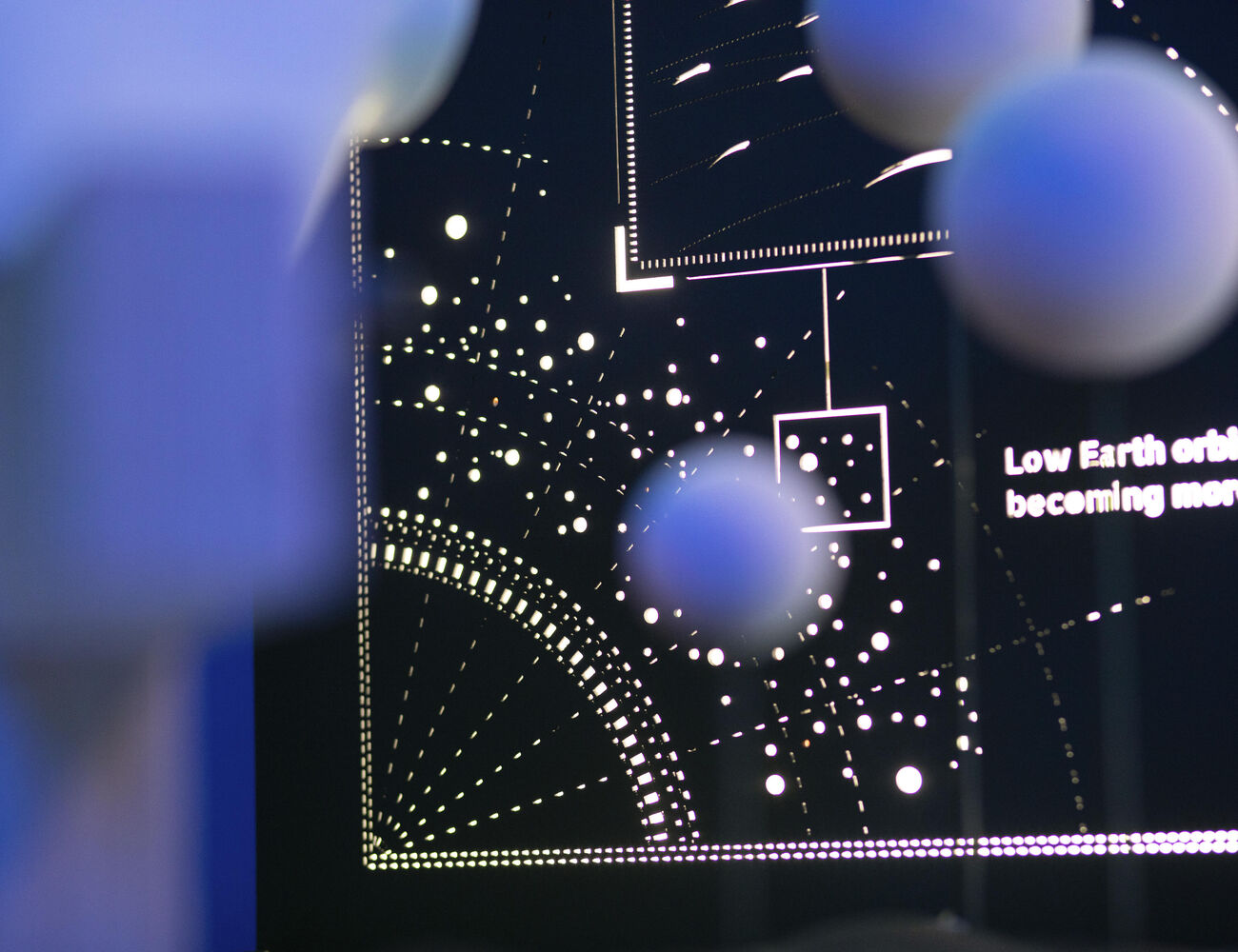
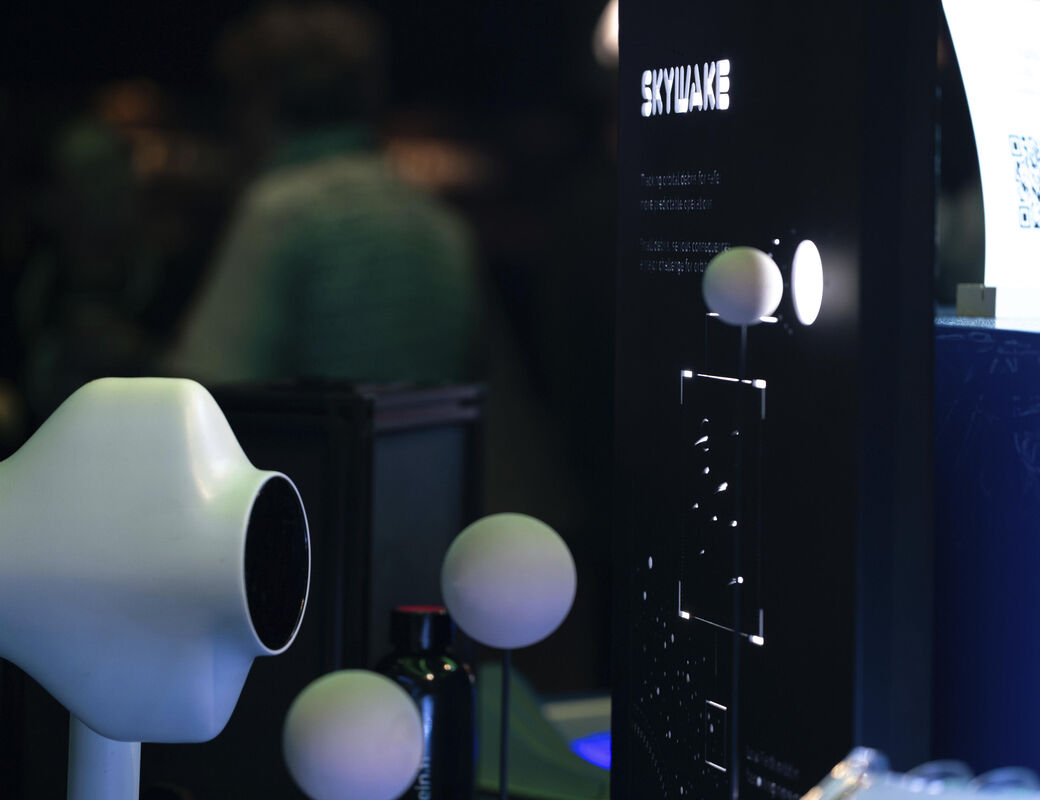
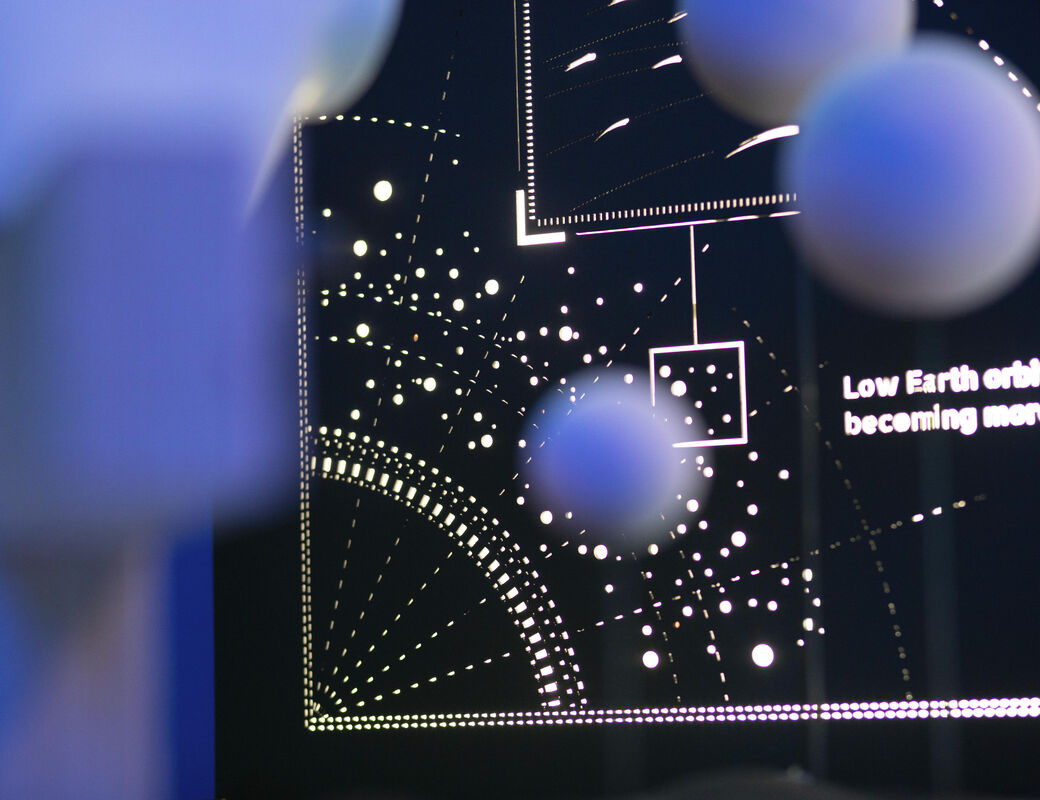
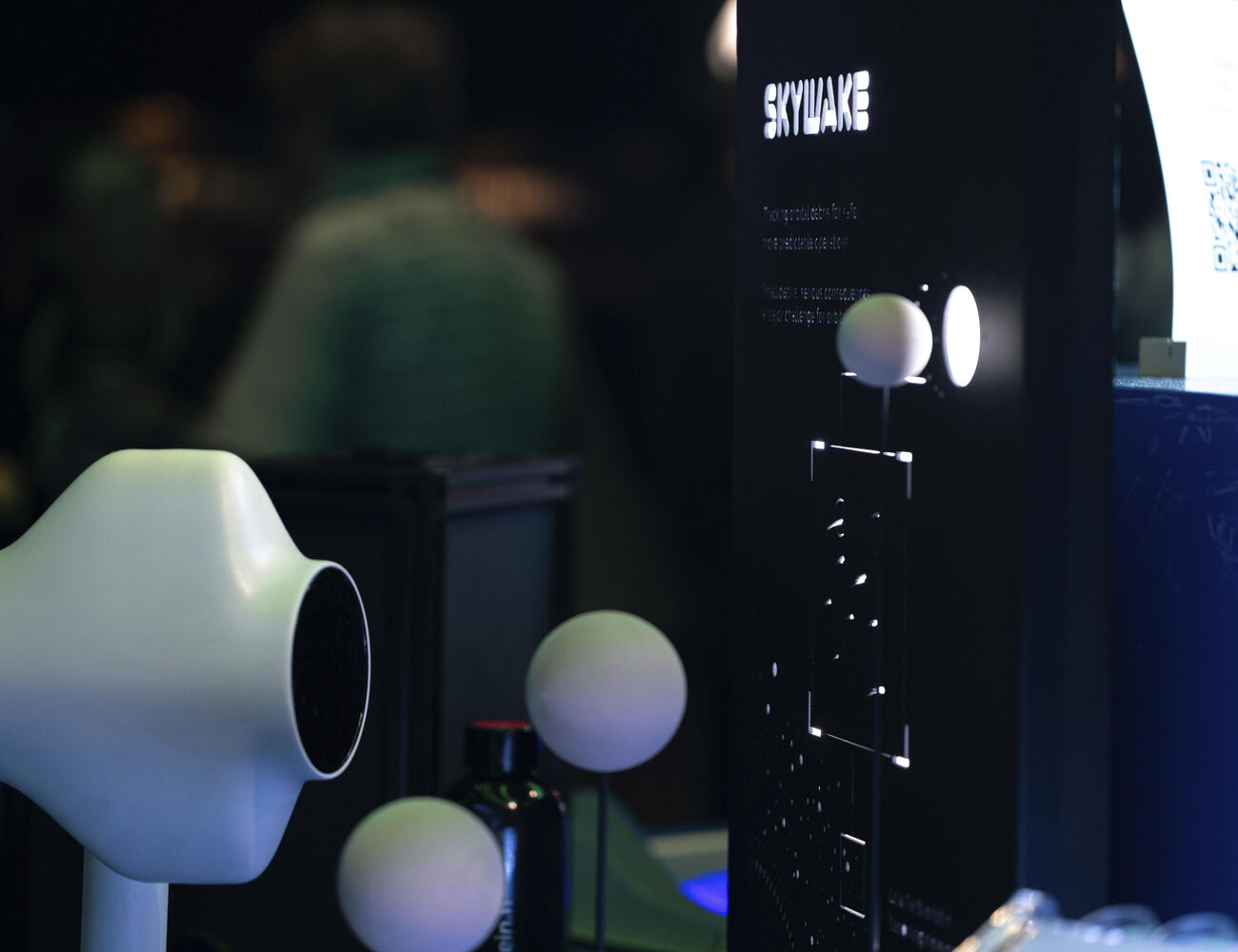
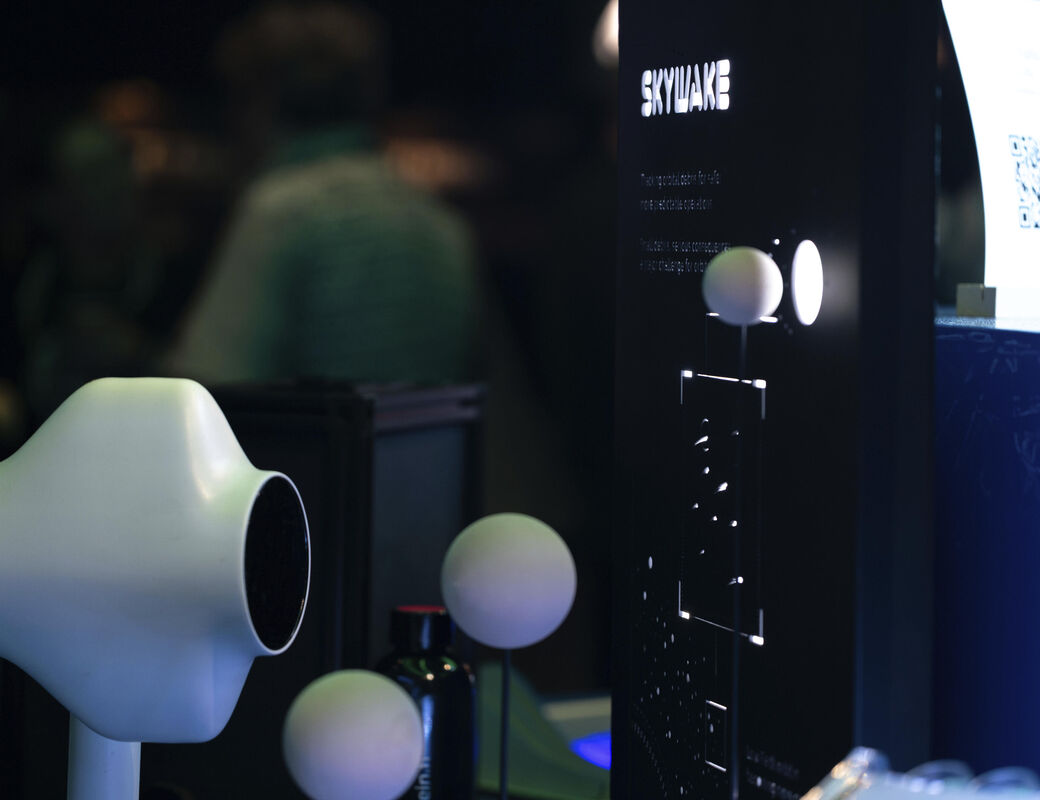
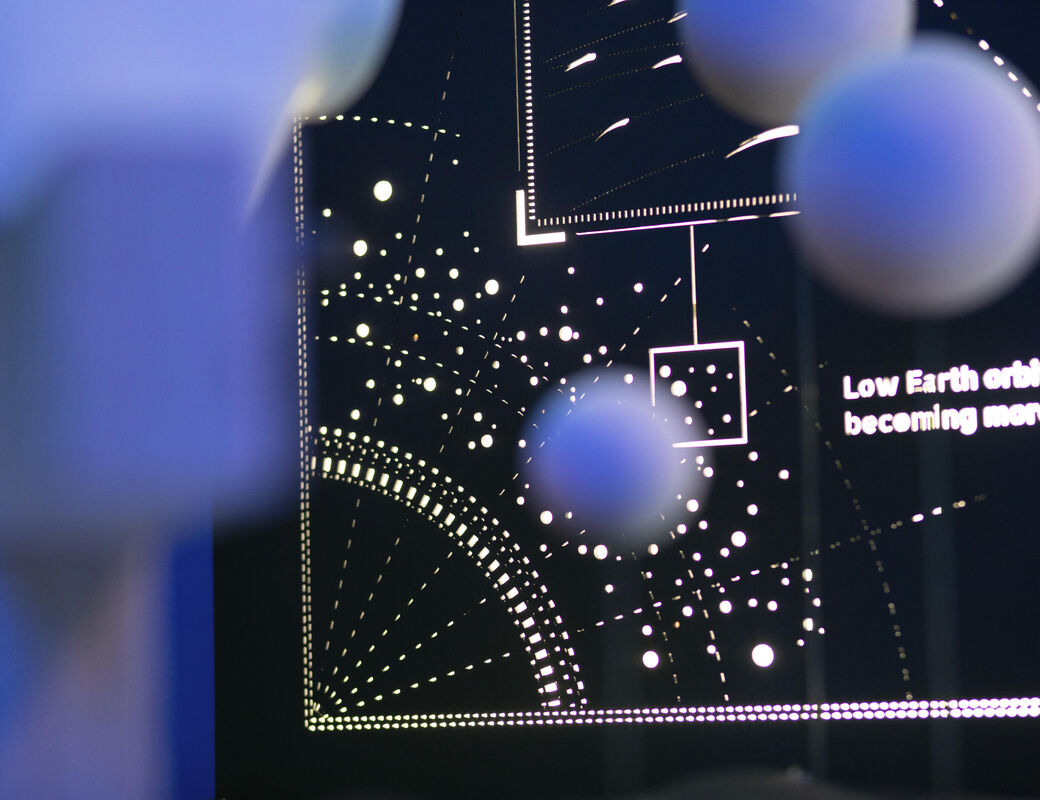
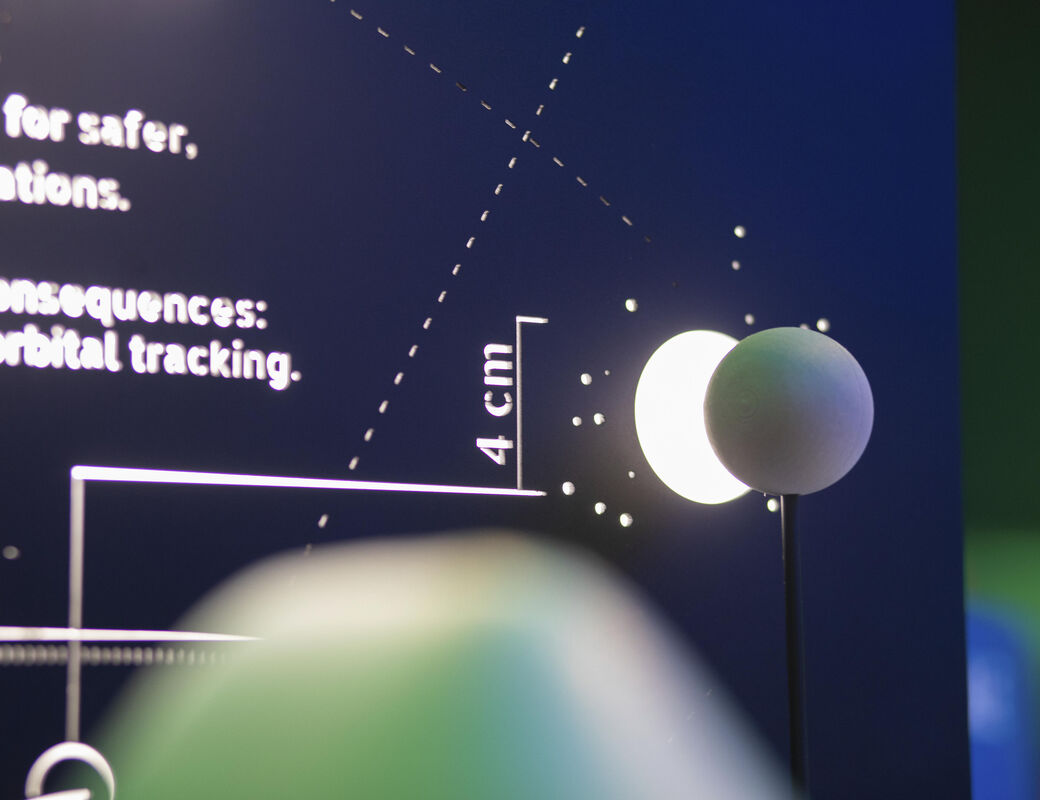
The Skywake project is developing a network of small, affordable telescopes that can track space debris and other small objects in orbit, some as tiny as 4–7 cm in diameter. Even objects this small can pose a serious threat to satellites. By tracking their movement and calculating their trajectories, the technology could help predict potential collisions and make space safer. The idea is to connect telescopes located in different parts of the world, working together like a global network of cameras to monitor objects orbiting Earth.

To help communicate the scale of the challenge, Aalto ARTS design student Ildikó Varga created a mockup illustrating just how small these objects can be. The visualisation gives investors a tangible sense of the technology's purpose and the importance of detecting even the tiniest pieces of space debris.

Business developer: Rauno Toivonen

Close-up of space display with white text, 4 cm scale and small sphere lit against dark blue background
Abstract dark space graphic with orbit lines, white dots and blurred blue spheres in front
Futuristic white device and glowing spheres on a dark display stand at a tech exhibition

Photo: Matti Ahlgren

Abstract dark space graphic with orbit lines, white dots and blurred blue spheres in front
Futuristic white device and glowing spheres on a dark display stand at a tech exhibition
Close-up of space display with white text, 4 cm scale and small sphere lit against dark blue background

Photo: Mikko Raskinen

Futuristic white device and glowing spheres on a dark display stand at a tech exhibition
Close-up of space display with white text, 4 cm scale and small sphere lit against dark blue background
Abstract dark space graphic with orbit lines, white dots and blurred blue spheres in front

Photo: Matti Ahlgren

Sillan

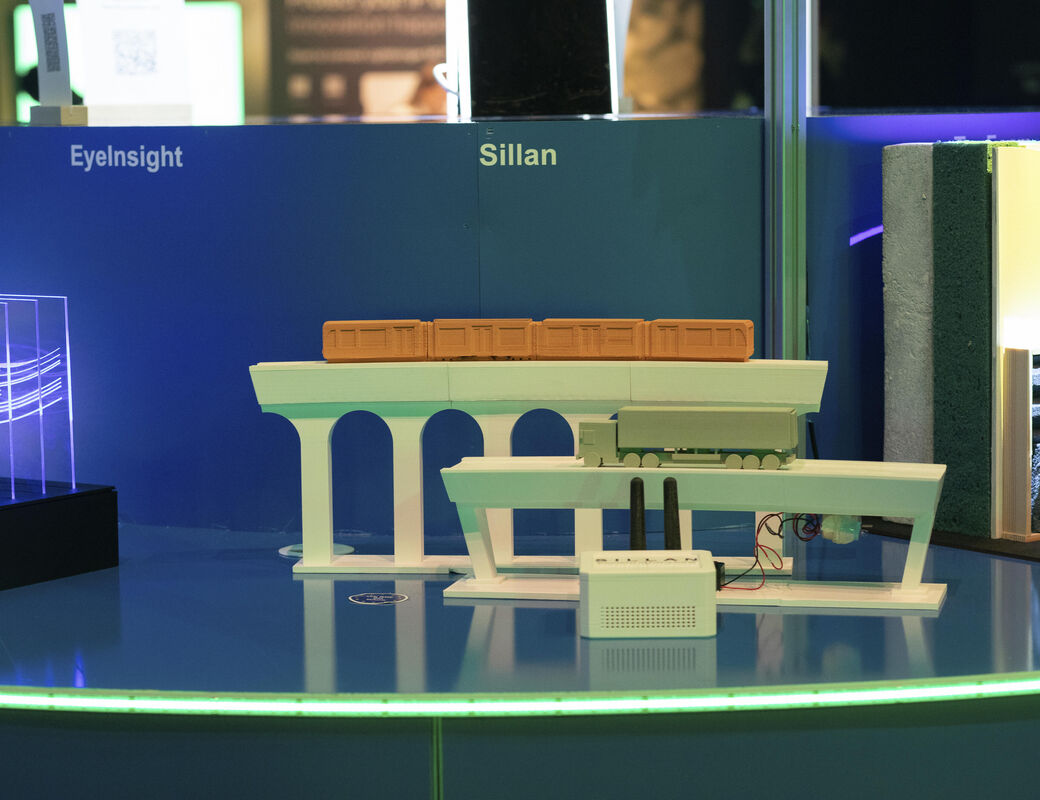
The Sillan project is developing a new way to monitor the condition of bridges using sensors carried by larger vehicles, such as trams, metro trains, trucks and trains. As these vehicles travel across bridges, the small device attached collect information about vibrations and movement, helping to identify possible structural problems or damage. The technology aims to make bridge inspections more efficient and affordable. It can also help pinpoint potential problems within an area of approximately five metres in diameter, making it easier to identify where further inspection may be needed.

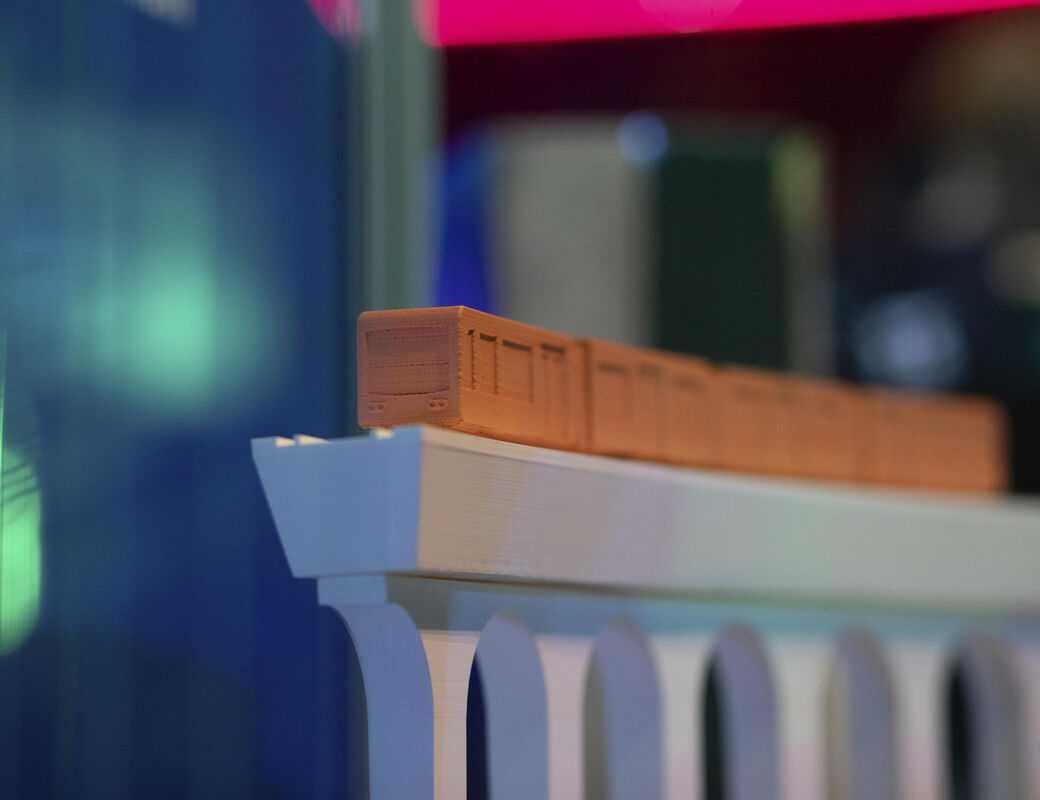
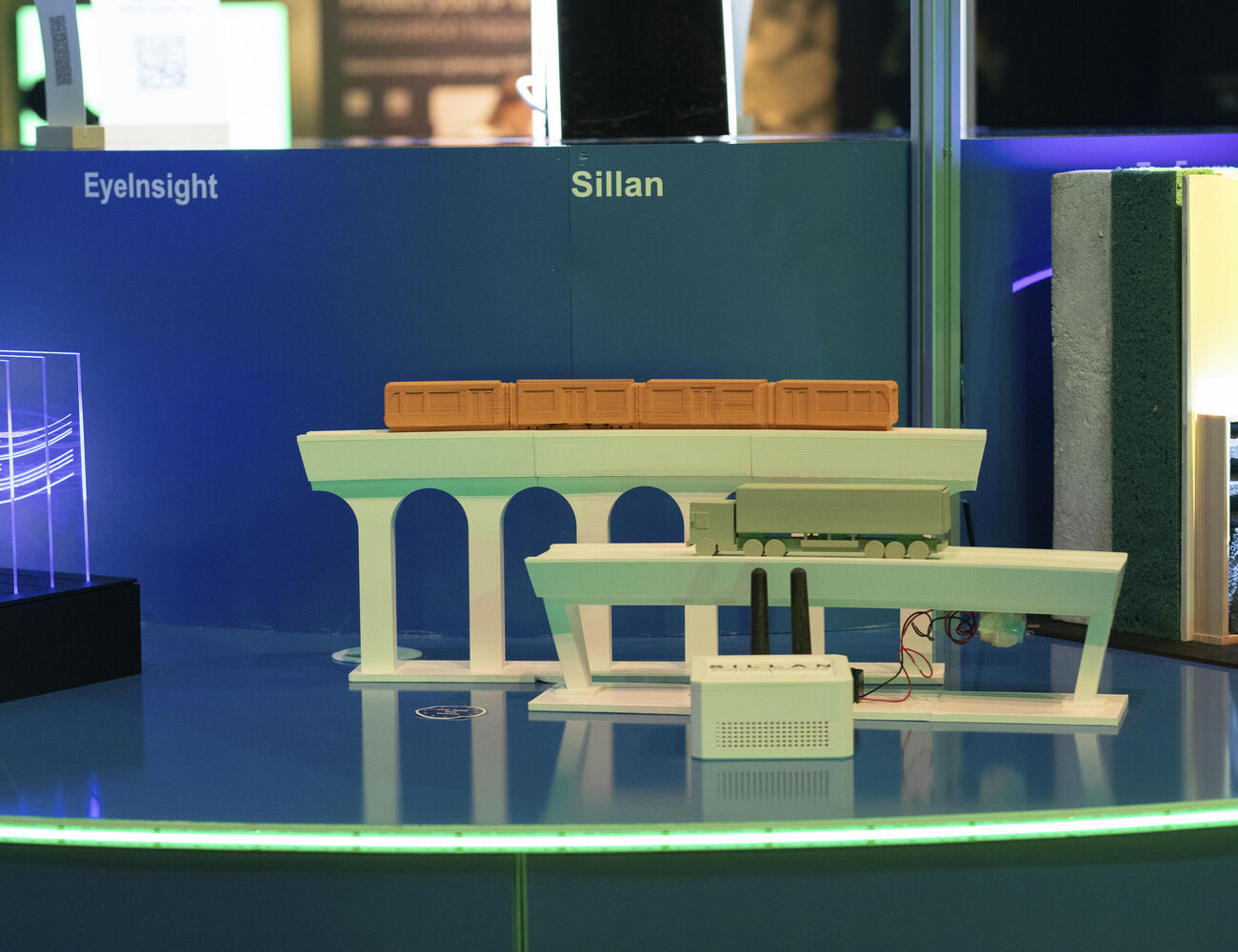
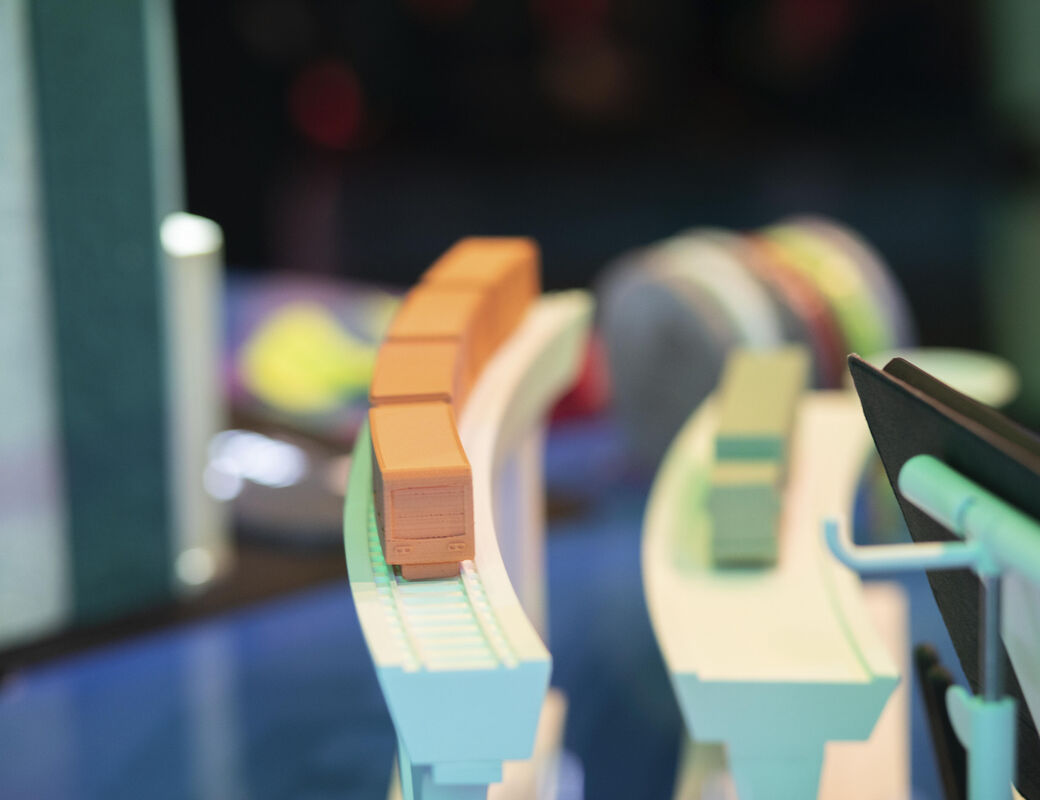
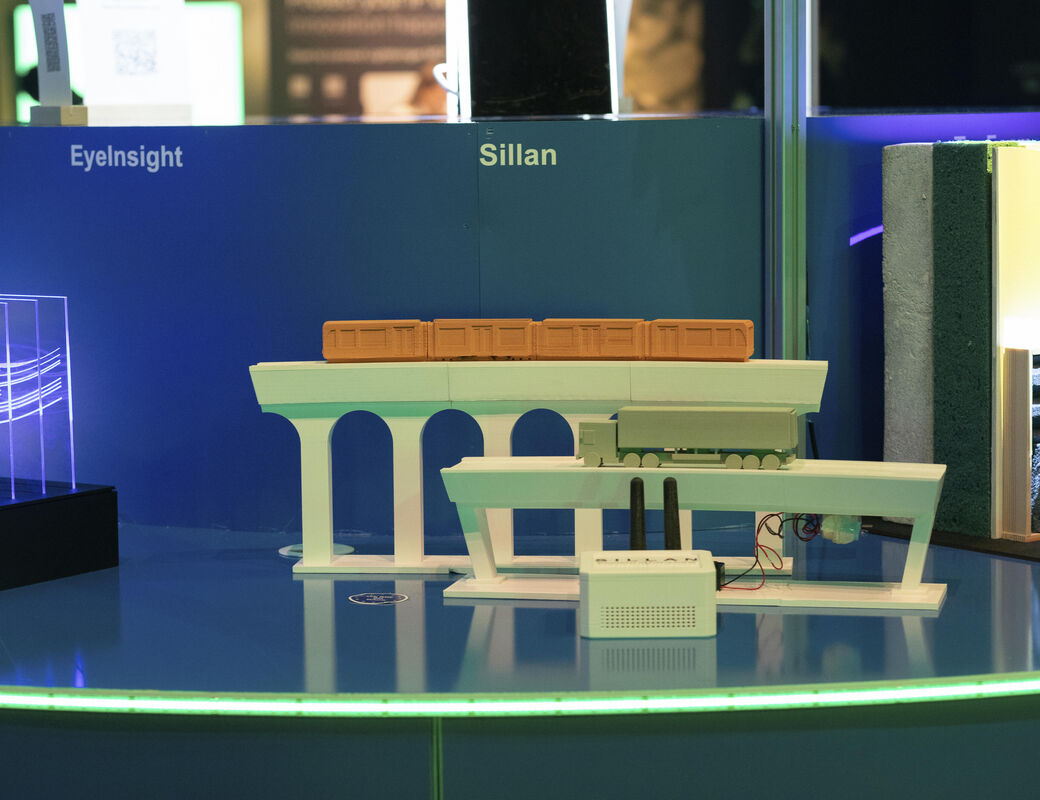
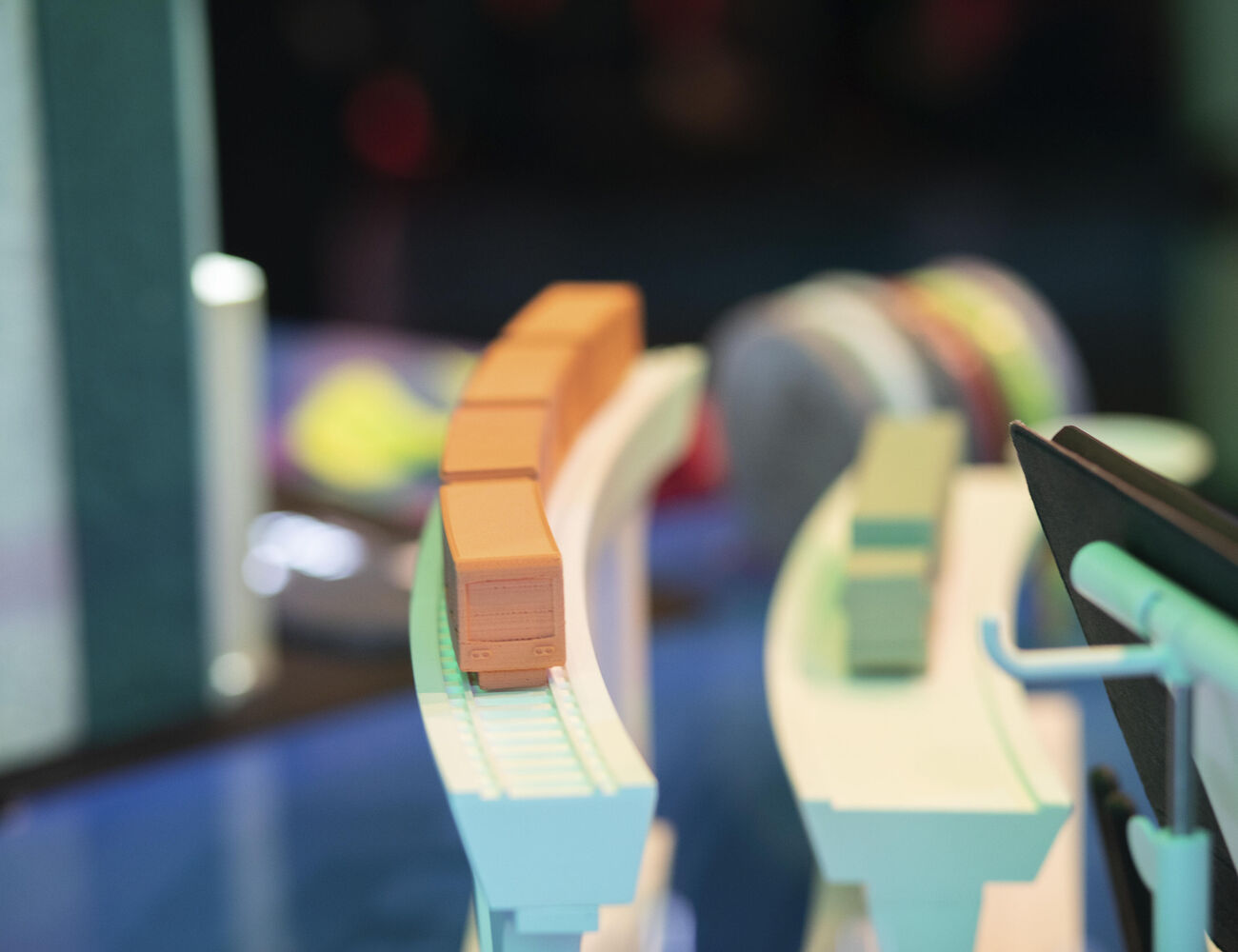
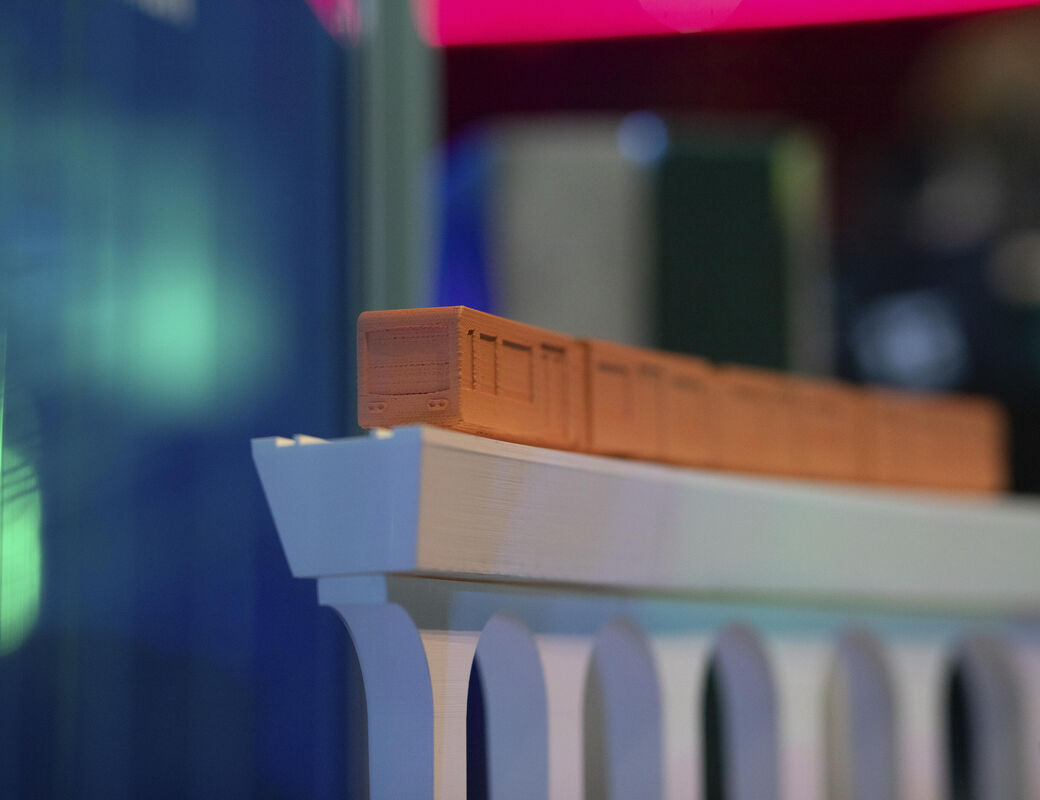
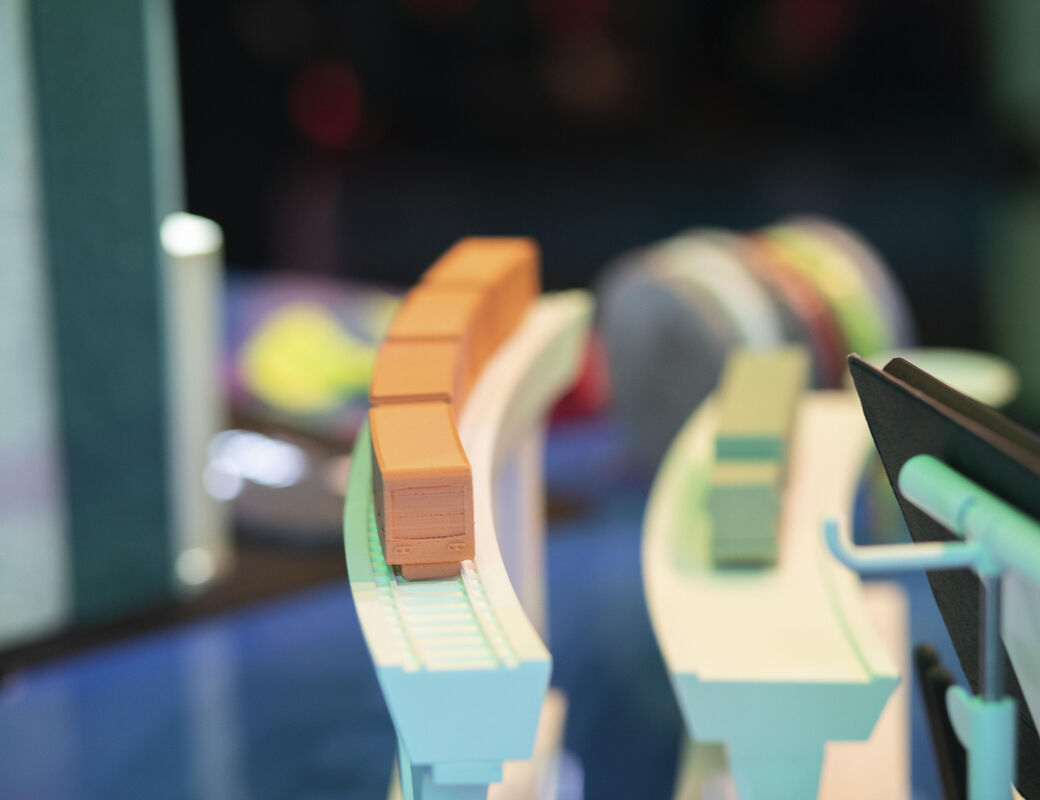
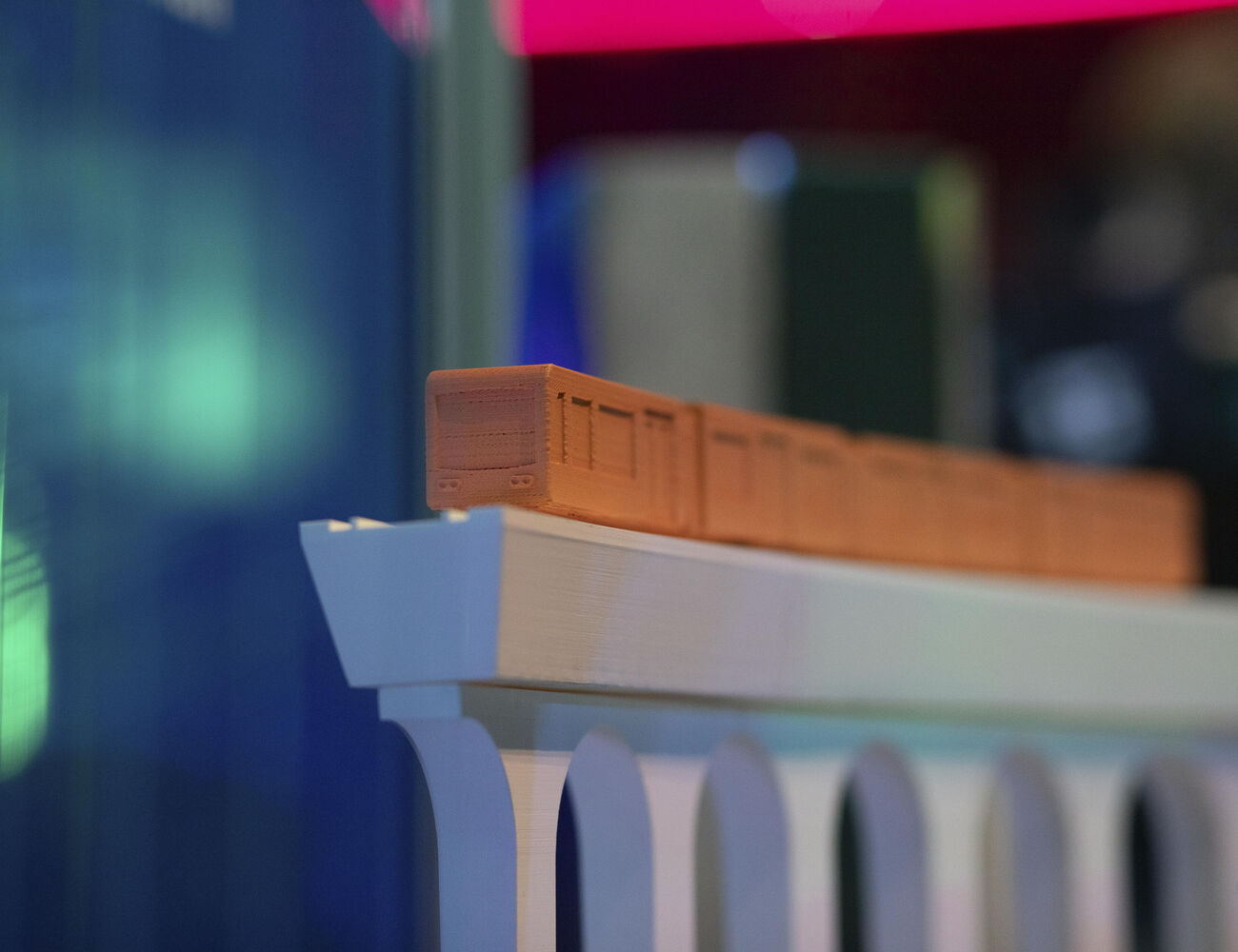
An important feature of the technology is its 3D visualisation within the monitoring system itself, created by Aalto ARTS design student Sakari Nurmi. It allows the structures of bridges to be examined from different angles. Sakari also helped bring this feature to life, creating a detailed miniature model consisting of bridges, trucks and a metro train to demonstrate how the monitoring system works and which vehicles can carry the sensors.

The innovation team: Sampo Hietanen, Teddy Tran

Small orange train model on a white arched bridge, with blurred colourful lights in the background
Scale model of a white bridge with orange train, electronics beneath, on a blue-lit exhibition stand
Close-up of a toy freight train on a curved light blue track, with blurred colourful shapes in the background.

Photo: Matti Ahlgren

Scale model of a white bridge with orange train, electronics beneath, on a blue-lit exhibition stand
Close-up of a toy freight train on a curved light blue track, with blurred colourful shapes in the background.
Small orange train model on a white arched bridge, with blurred colourful lights in the background

Photo: Matti Ahlgren

Close-up of a toy freight train on a curved light blue track, with blurred colourful shapes in the background.
Small orange train model on a white arched bridge, with blurred colourful lights in the background
Scale model of a white bridge with orange train, electronics beneath, on a blue-lit exhibition stand

Photo: Matti Ahlgren

Brain-Informed

The Brain-Informed project is developing a new approach to rehabilitation for people who have suffered a stroke and experience difficulties moving their hands and arms. The technology works by stimulating the brain's motor cortex – the area responsible for controlling movement – and observing how the muscles in the hand respond. This helps identify which muscles are still functioning and which are not responding, giving physical therapists a better understanding of the patient's remaining movement potential. Based on this information, therapists can develop more personalised rehabilitation plans, choosing exercises that best support each patient's recovery.

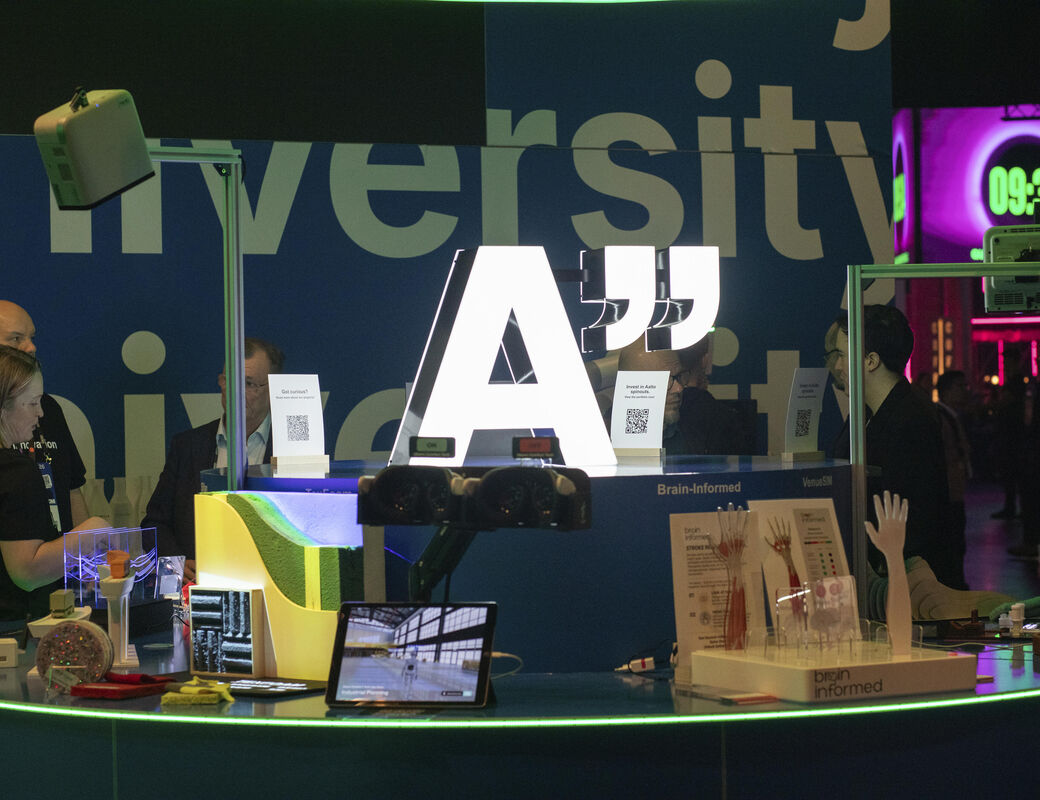
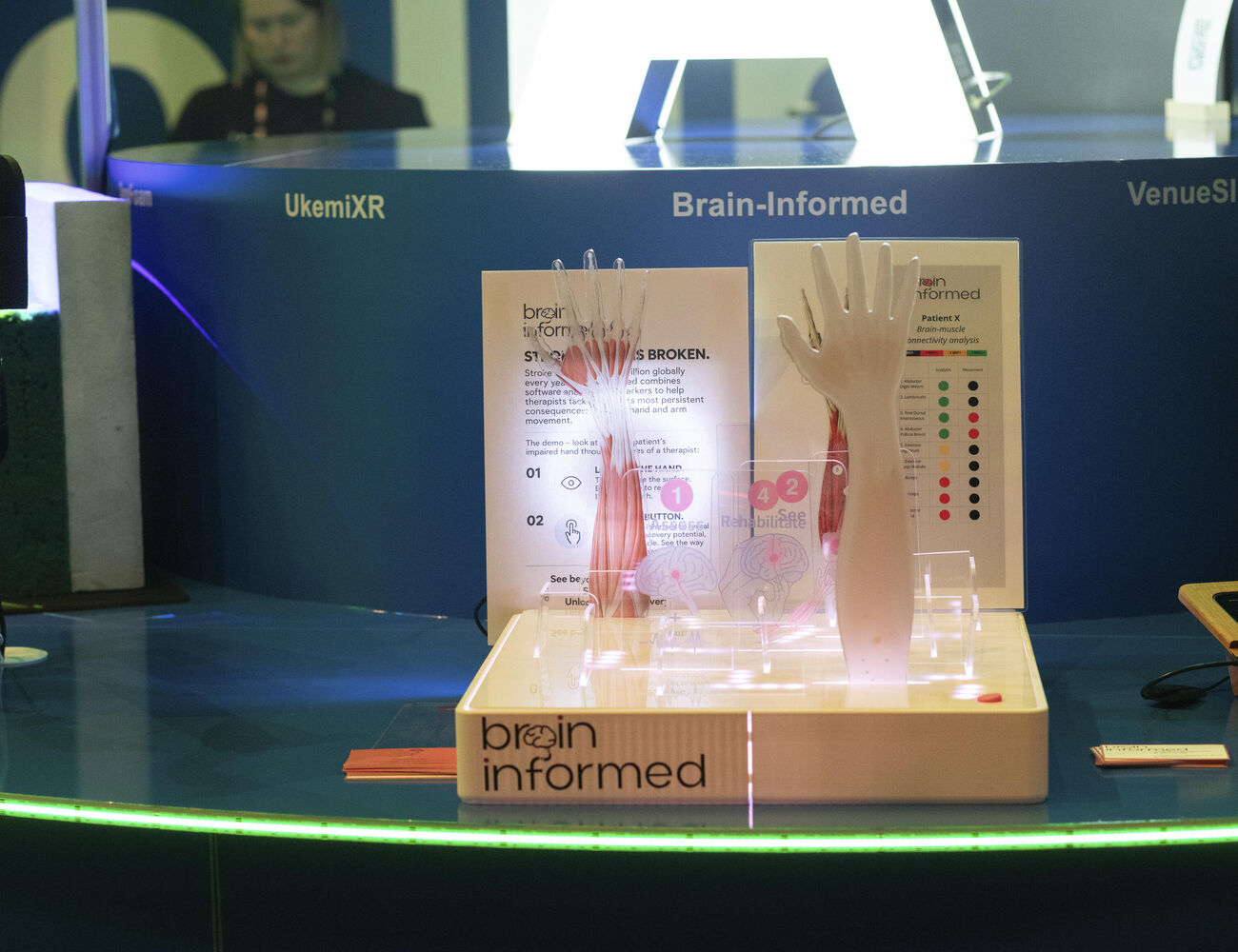
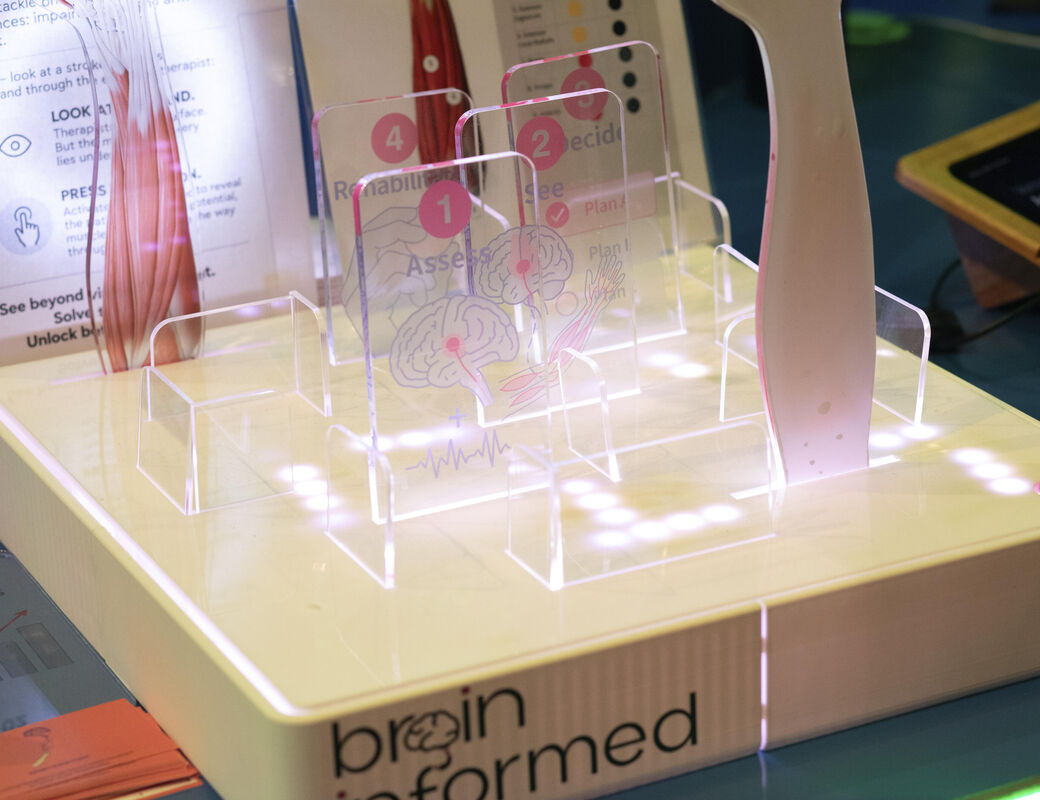
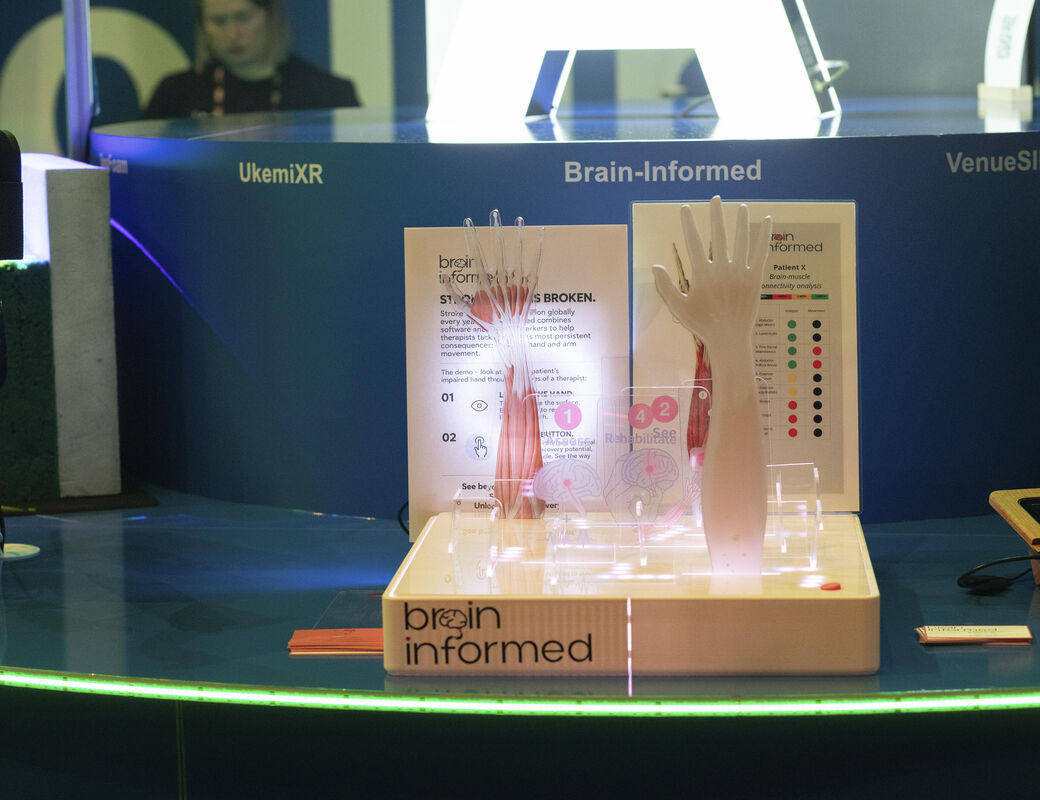
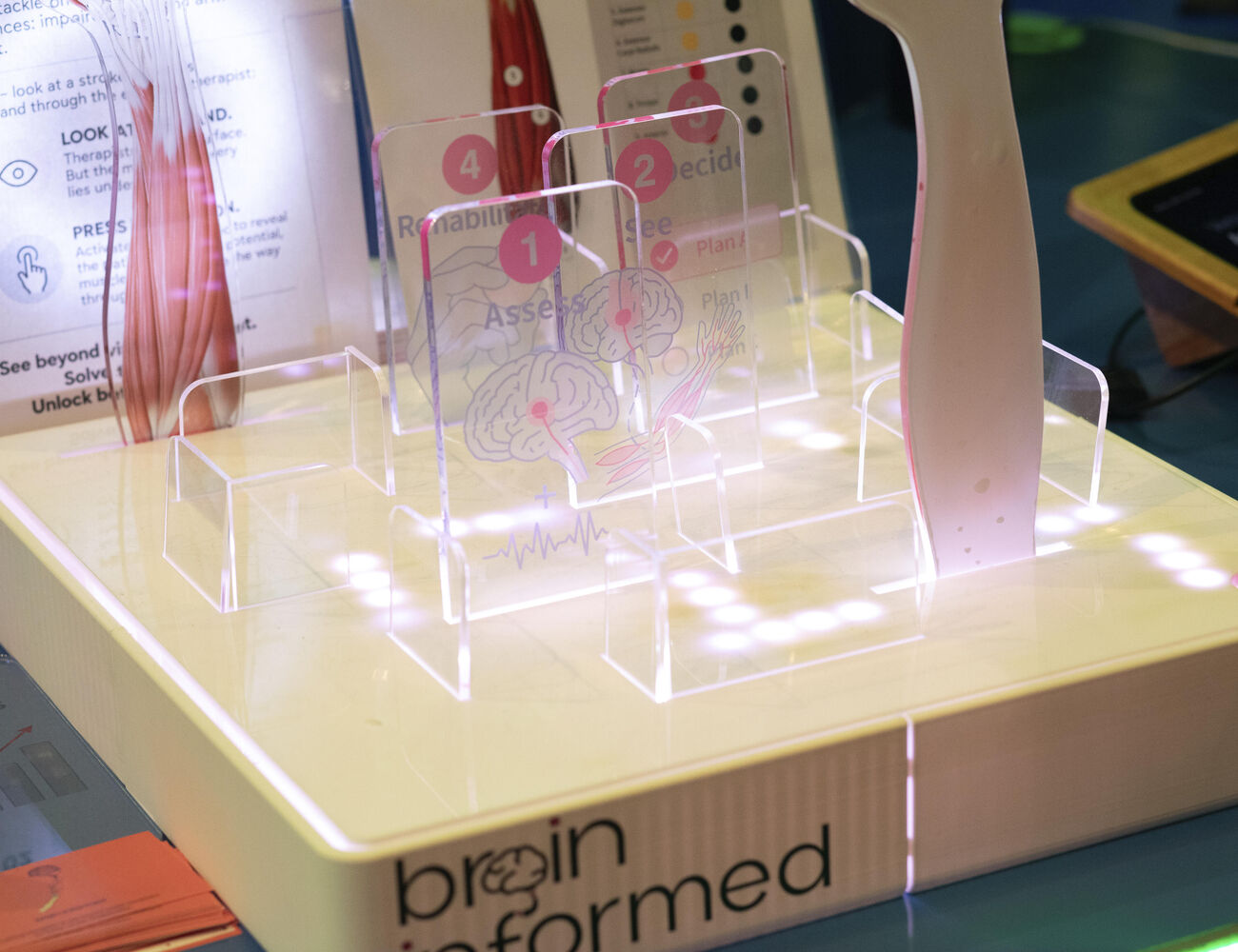
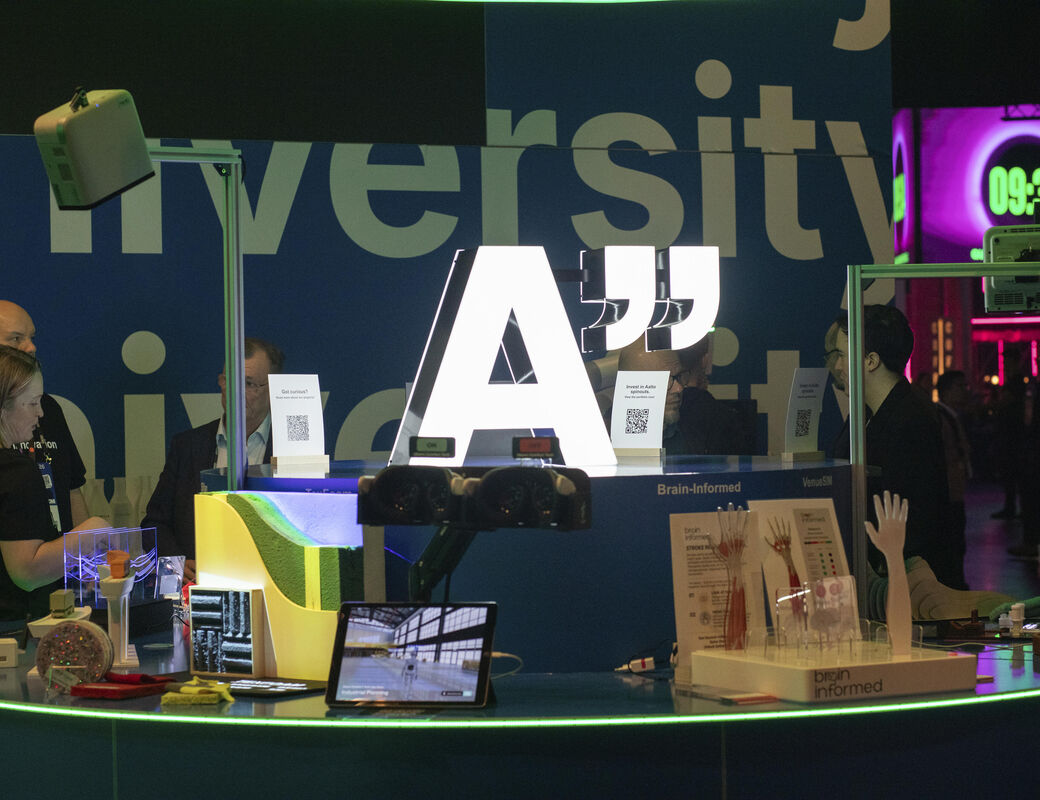
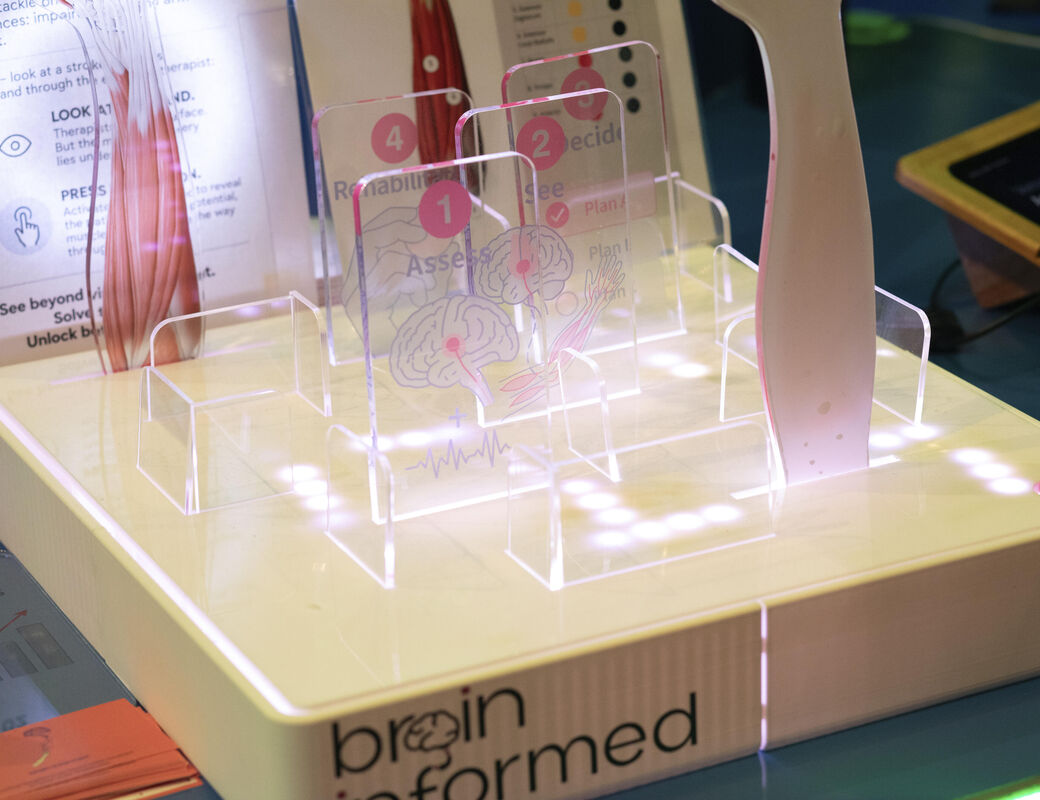
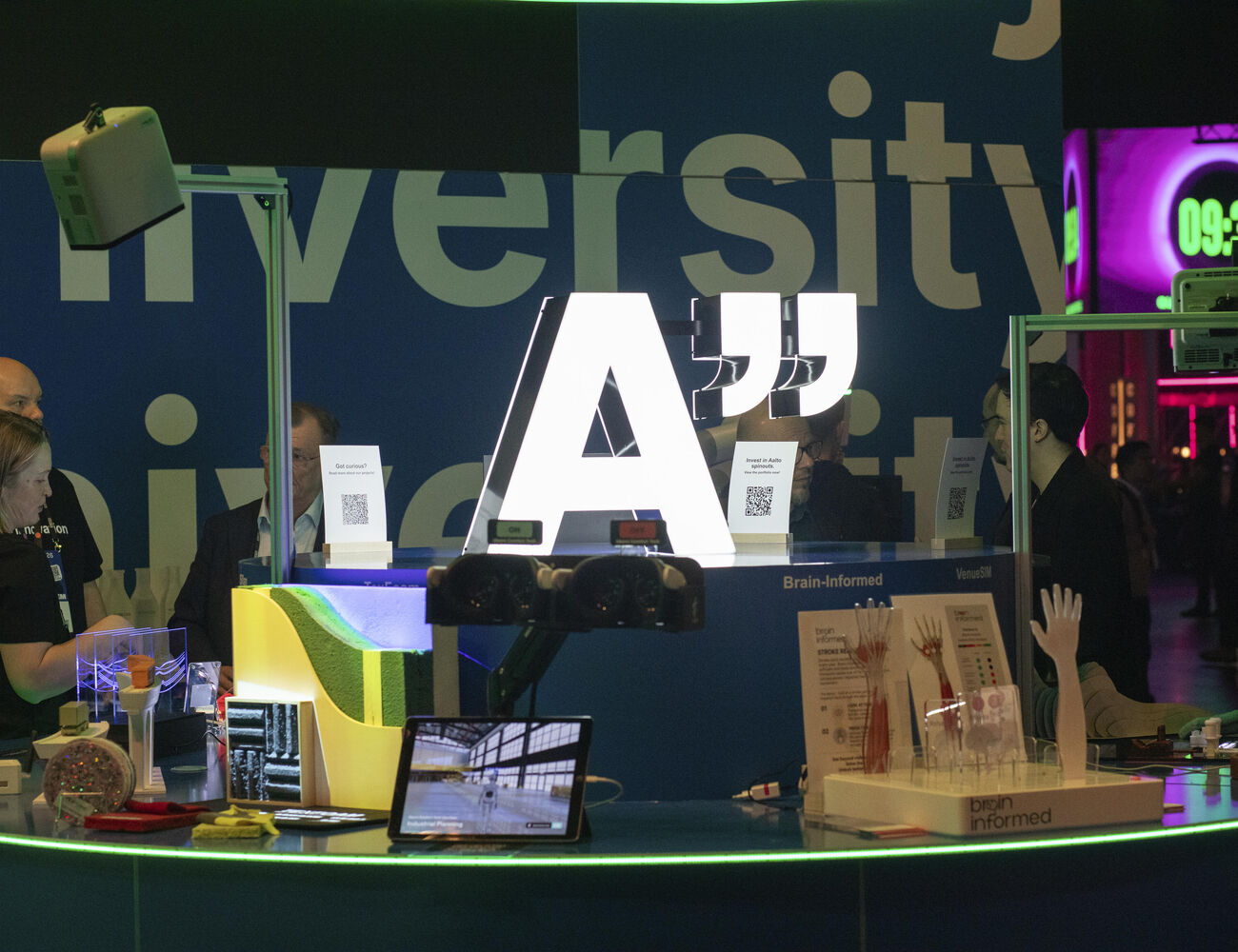
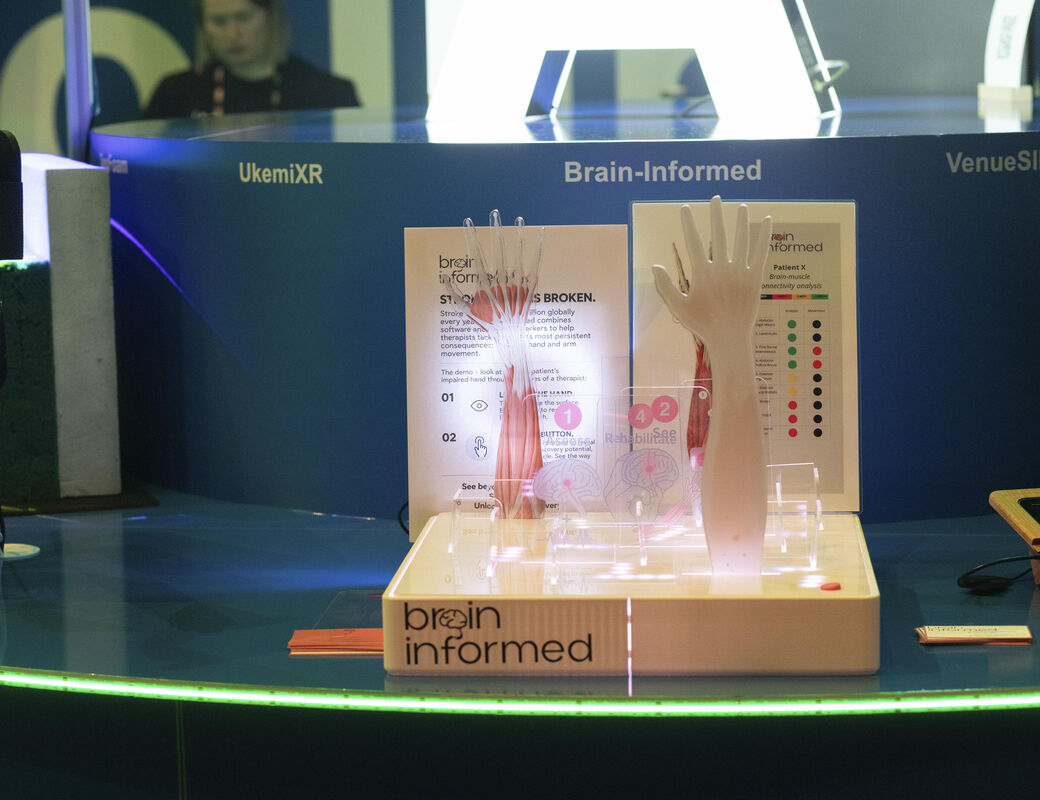
To present this complex process, Aalto ARTS design student Na Wang created an interactive, board-game-inspired visualisation. A light-marked path, accompanied by information cards, guides viewers through the different stages of a patient's assessment and rehabilitation planning. The process is designed as a continuous loop: once one rehabilitation plan has been completed, the patient's progress can be assessed again and a new, improved plan developed. This allows rehabilitation to evolve gradually as the patient makes progress towards better recovery. 
The innovation team: Miikkael Salmi, Maria Nazarova and Macy Hickton

Tech fair booth with glowing white A logo, people discussing around interactive devices and models
Exhibition stand with translucent hand models on a lit blue counter, branded Brain-Informed.
Interactive brain therapy display with glowing acrylic cards and diagrams on a lit white base

Photo: Matti Ahlgren

Exhibition stand with translucent hand models on a lit blue counter, branded Brain-Informed.
Interactive brain therapy display with glowing acrylic cards and diagrams on a lit white base
Tech fair booth with glowing white A logo, people discussing around interactive devices and models

Photo: Matti Ahlgren

Interactive brain therapy display with glowing acrylic cards and diagrams on a lit white base
Tech fair booth with glowing white A logo, people discussing around interactive devices and models
Exhibition stand with translucent hand models on a lit blue counter, branded Brain-Informed.

Photo: Matti Ahlgren

Vesti

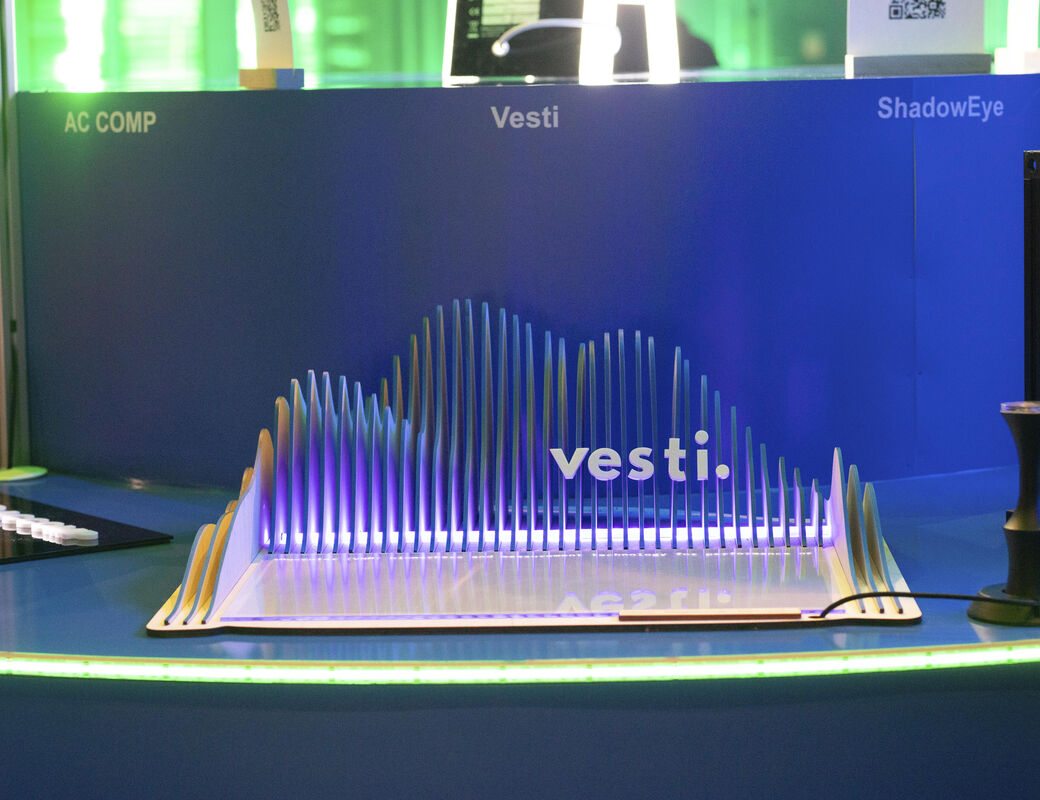
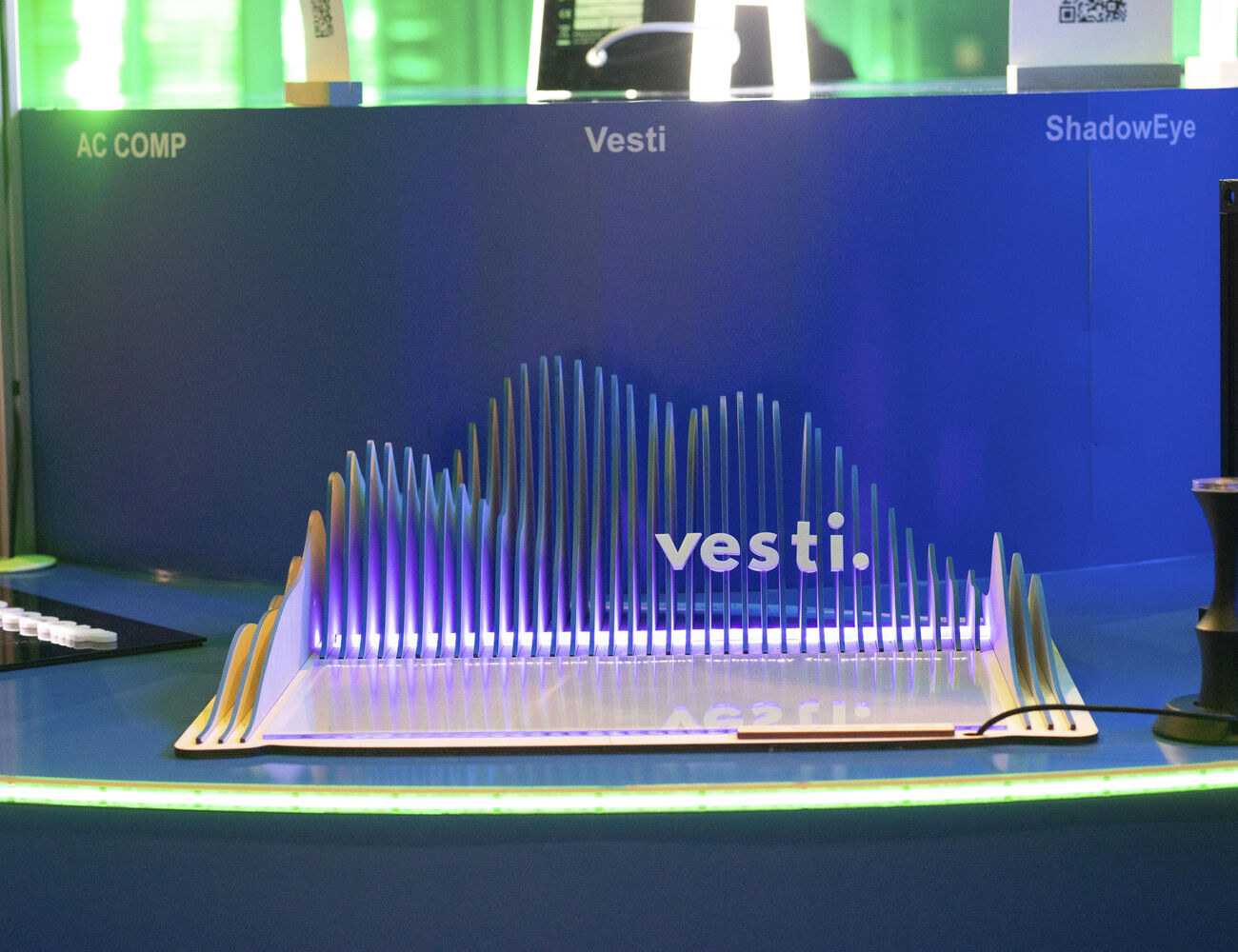
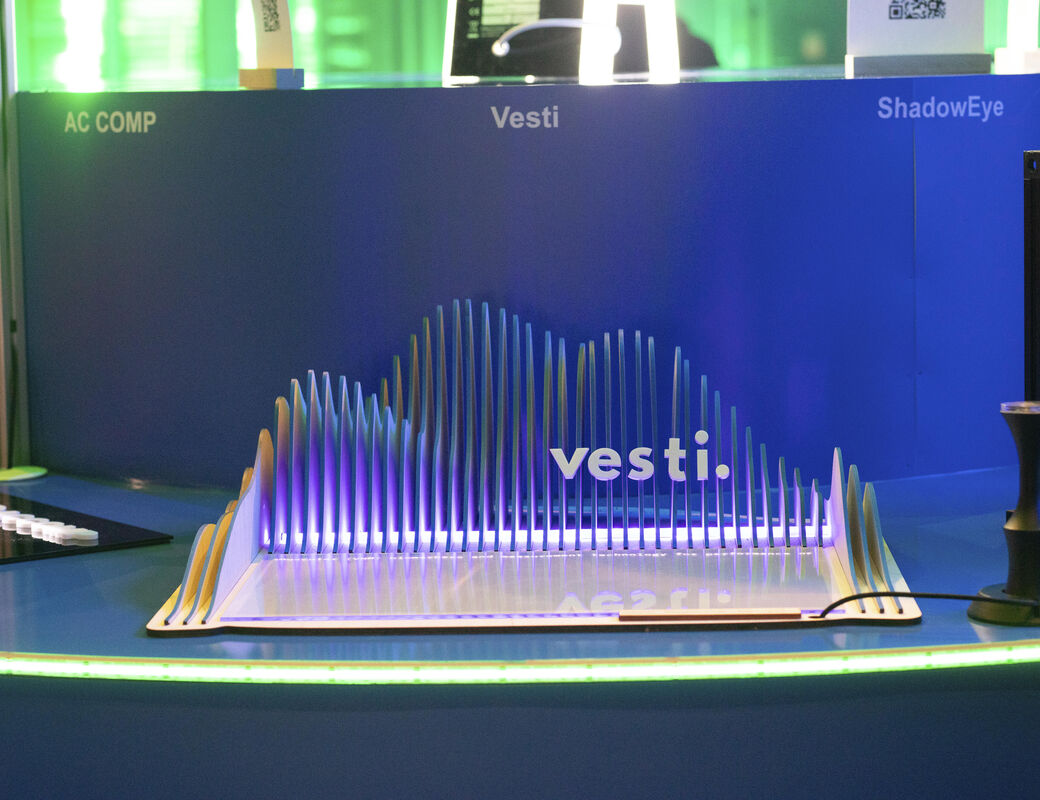
The Vesti project is developing technology to measure and better understand the body's balance responses. By studying how the nervous system and muscles react to stimulation of the balance system in the inner ear, the technology can provide valuable information about an individual's balance and physical responses. The aim is to help better understand and potentially improve the balance and performance of for example athletes. In the future, the technology could also find applications in medical rehabilitation and in supporting older people who experience balance difficulties. 

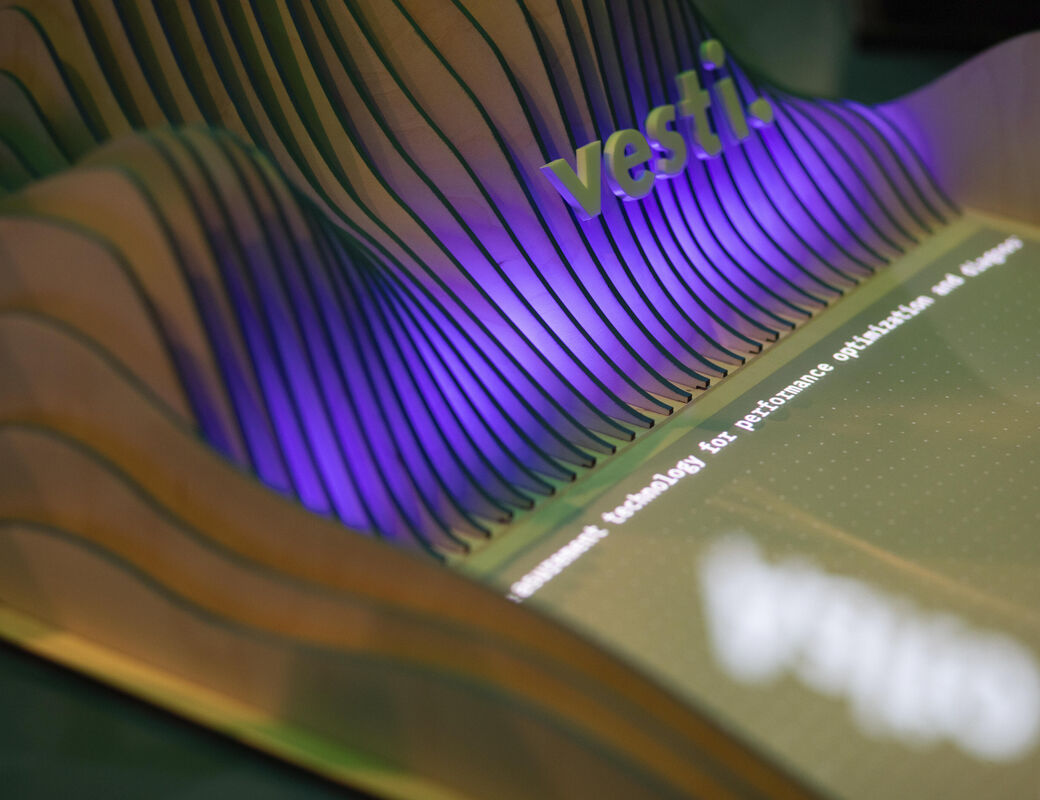
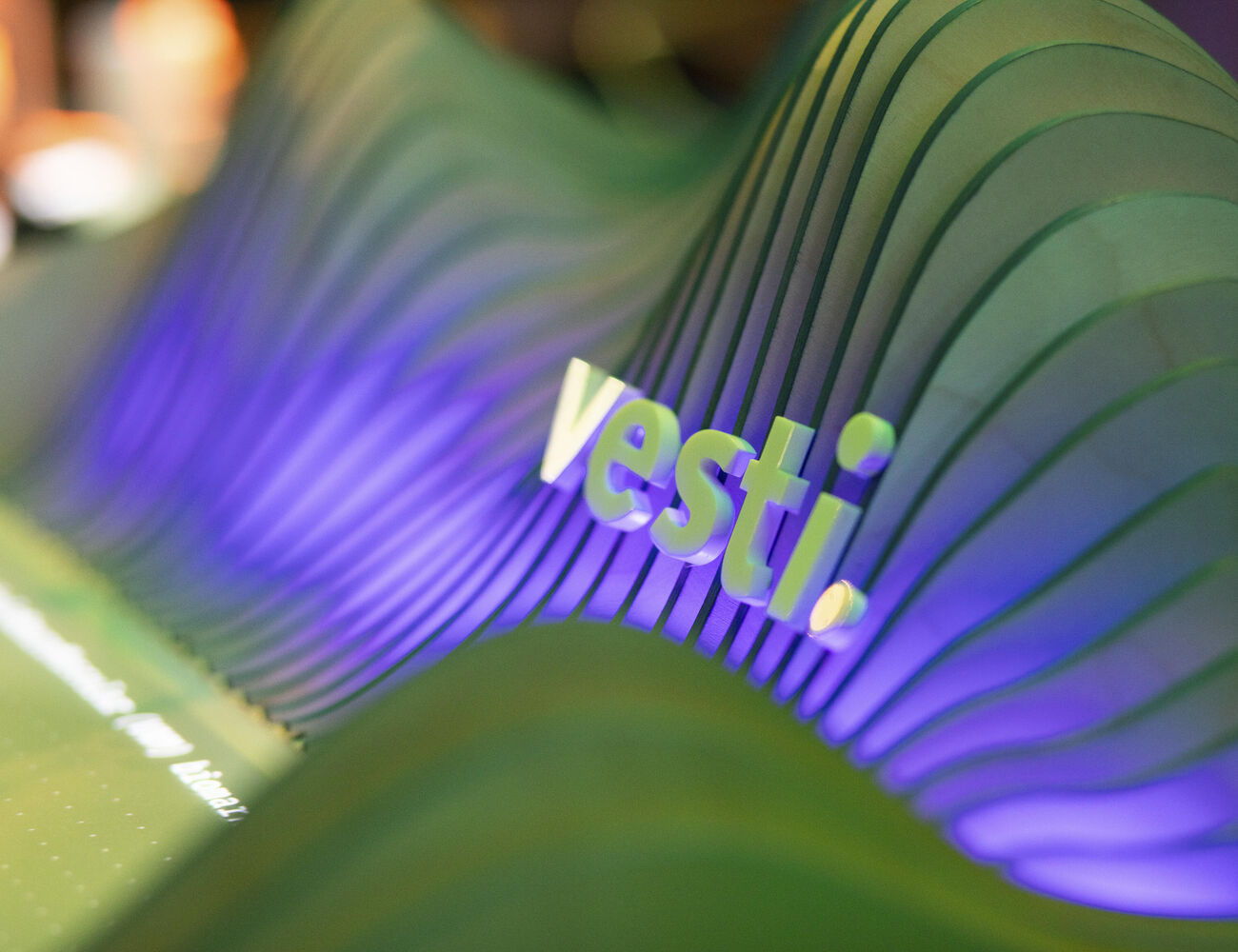
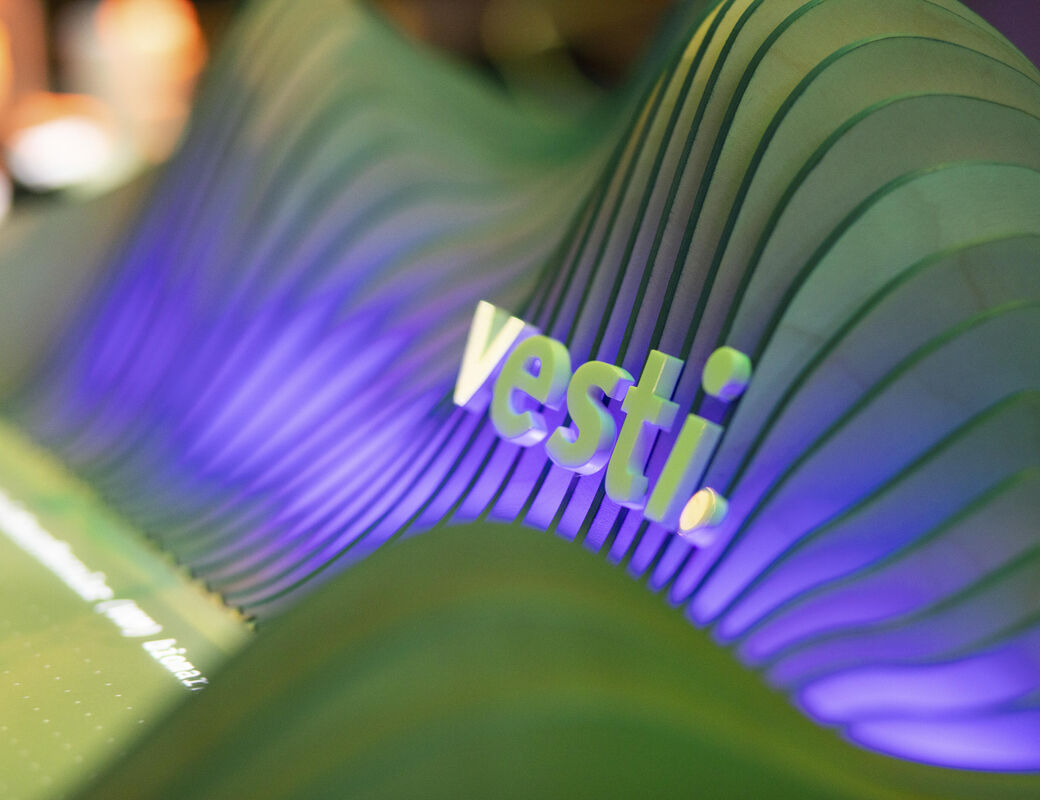
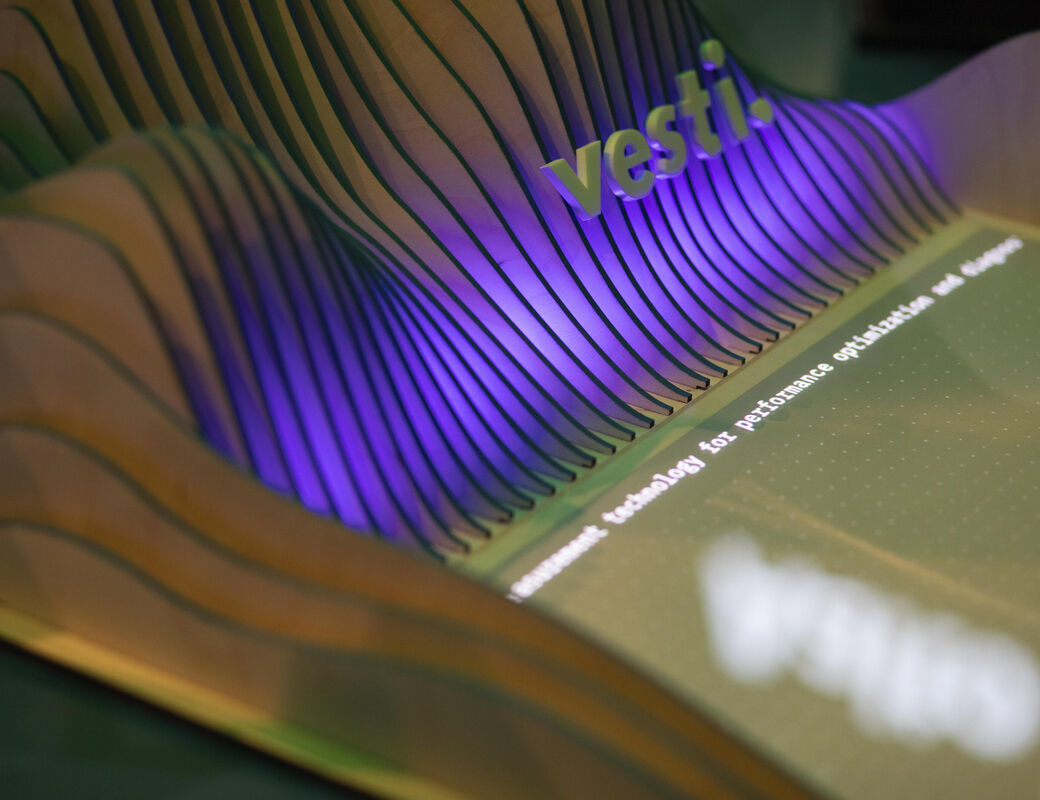
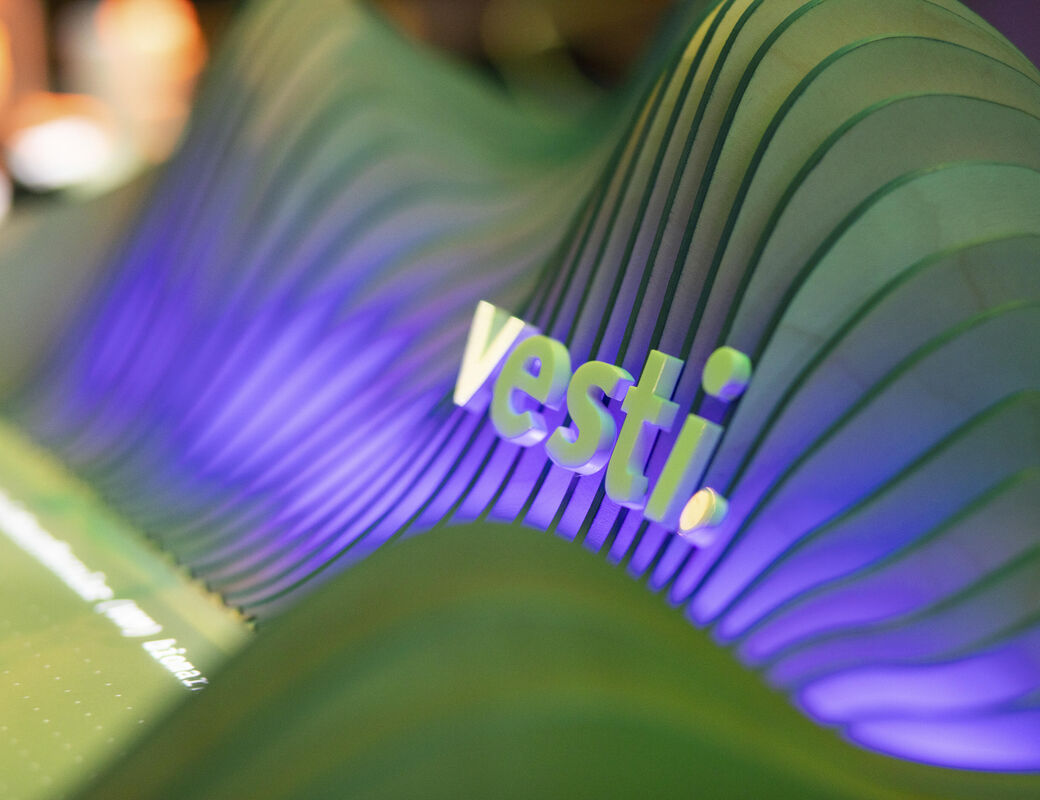
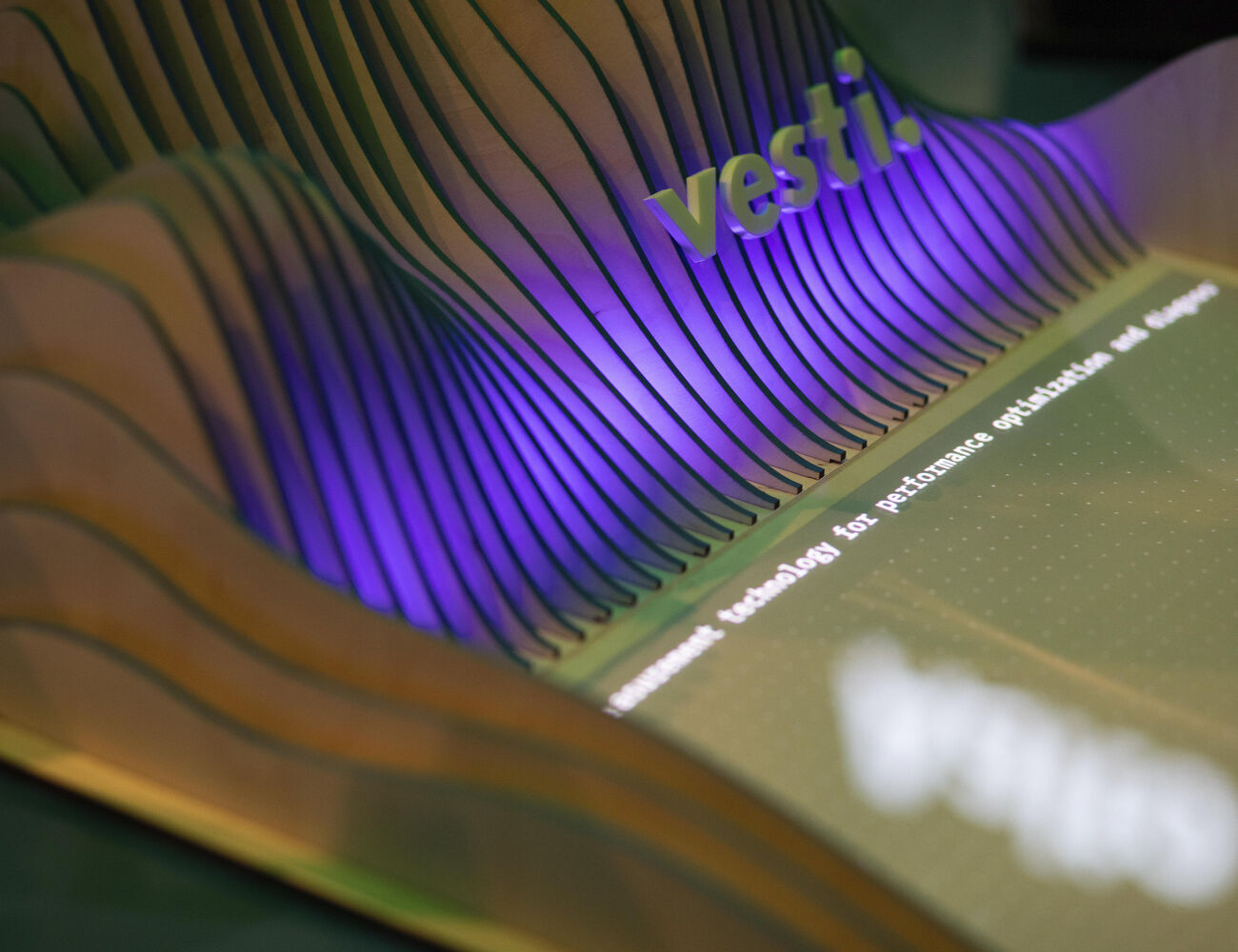
To bring this technology to life, Aalto ARTS design student Nikita Piekutowski created an interactive digital visualisation in which balance data moves across a screen as tiny pixels, forming flowing, wave-like patterns. The presentation also includes a headpiece which demonstrates how the technology delivers impulses to stimulate the balance system. Together, these elements offer visitors a more tangible and engaging way to experience how the technology works, without requiring them to undergo the actual electrical stimulation.
The innovation team: Kai Kronström, Otto Kangasmaa

Curved wooden display with vertical slats, purple lighting and the word “vesti.” glowing above a dotted screen.
Glowing layered wave sculpture with the word “vesti.” lit in white amid green and purple light.
Blue exhibition stand with vertical lighted rods spelling vesti., surrounded by tech displays

Photo: Matti Ahlgren

Glowing layered wave sculpture with the word “vesti.” lit in white amid green and purple light.
Blue exhibition stand with vertical lighted rods spelling vesti., surrounded by tech displays
Curved wooden display with vertical slats, purple lighting and the word “vesti.” glowing above a dotted screen.

Photo: Matti Ahlgren

Blue exhibition stand with vertical lighted rods spelling vesti., surrounded by tech displays
Curved wooden display with vertical slats, purple lighting and the word “vesti.” glowing above a dotted screen.
Glowing layered wave sculpture with the word “vesti.” lit in white amid green and purple light.

Photo: Matti Ahlgren

  • Updated:
  • Published:
Share
URL copied!

Read more news

Two people laughing
Studies Published:

Applications for Mentoring Programme ends 23 Nov - still 100 mentors available

Mentors still available across all fields at Aalto. Apply by 23 Nov, 23.59!
Ulisses 7th edition banner: plastic bag and fish underwater, text on blue, deadline 15 December 2026
Studies Published:

Interdisciplinary course in Lisbon on plastic-free oceans- apply by 15 December

The course takes place online from January to April 2027 and face-to-face in Lisbon, Portugal, in July 2027.
Text ‘DESIGN UNDER PRESSURE’ over soft blurred brown and beige vertical shapes
Cooperation, Research & Art, Studies Published:

Aalto ARTS launches a new online course on a sustainable future

This free online course brings together lessons from international summer schools on building a sustainable future.
Aryan Mehta
Studies Published:

'I got a summer research project growing quantum materials, atom layer by atom layer'

Quantum Technology student Aryan Mehta explains what it’s like to study a field that could change the world.