






Traces of Care: Exhibition by the students of the ‘Personal Exploration’ Course
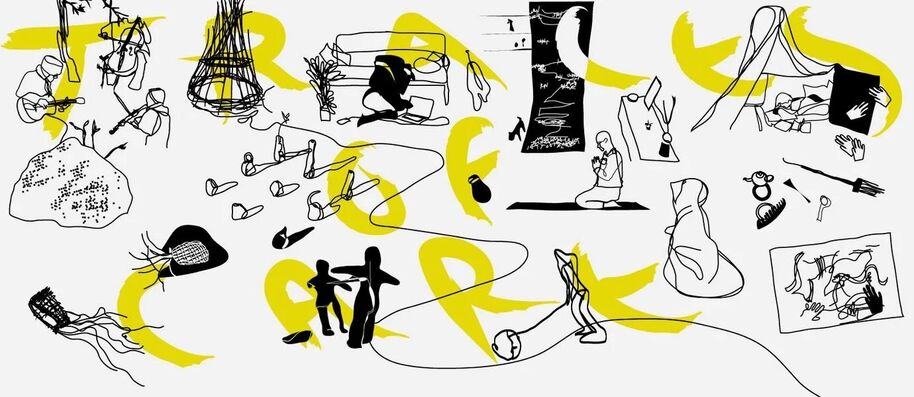
Traces of Care is a virtual exhibition of 15 Master’s students of the Aalto ARTS Contemporary Design program under the course Personal Exploration. The presented works were made using different techniques from various viewpoints under the subject of care.
We started off with an inspirational trip to Koli in March 2020. During these five days, students did quick-and-dirty exercises, had discussions, heard lectures and wrote diary reflections around the theme ’care’. The most memorable experiences for the group were witnessing the winter during a year when thermic winter did not arrive to Helsinki at all, enjoying the silence of nature as well as the calm atmosphere among peer students, and playing with our companion dog Cookie. Care was present all the time: in baking Karelian pies to go with evening tea and rolling-in-the-snows together during the sauna.
When we arrived back to Helsinki, absurd times were ahead. The Covid-19 pandemic affected everyone’s lives in general, and the content of our course changed radically. The contrast of the carefree trip from Koli to the middle of the corona-panic was huge. The situation forced us to work from our homes without the use of our studios in Aalto. Needless to say, this affected the final work we chose to make. Many of us shifted from our material-oriented ideas to completely new mediums. However, our theme, care, was still visible all the time, as we cared about other beings by isolating ourselves inside our homes.
All of us were affected by our trip to Koli and its landscape, and many chose to explore the relationship between humans and non-humans in our final work. Some of the key questions were how can we take care of nature in return when it gives so much to us, and what kinds of traces do we leave from our care?
Another central theme was identity, and how it related to our theme of care. Questions of security and protection also arose from the current situation of the world, and many were thinking about the fragility of humankind in the face of disaster. How can we shelter ourselves from these events and what are the things we hold dear?
Students:
Chen Tzuyu, Guridi Sotomayor Sofia, Henttu Sini, Kilpi Linnea, Latva-Somppi Aura, Levander Joel, Luhtasela Salla, Lötjönen Miia, Niemelä Iines, Nieminen Sirena, Purasachit Irene, Rinne Julius, Shenyer Jenna, Strand Julia, Virasjoki Vertti
Teachers:
Krista Kosonen and Maarit Mäkelä
Forms of Care, Irene Purasachit
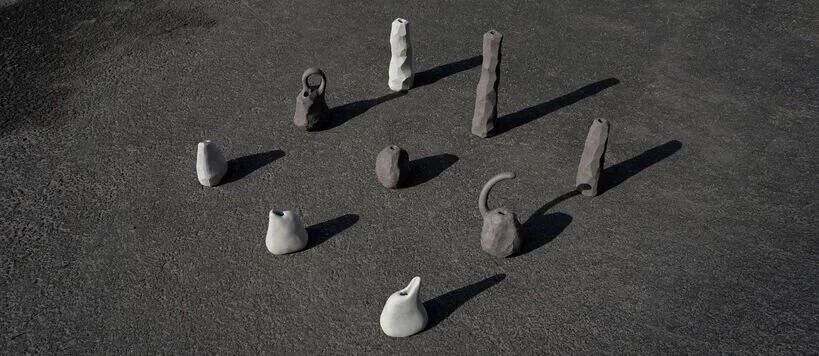
Forms of Care is a collection of care in the form of vases. In contrast to human-centric design, these pieces are formed by having flowers in the centre of the making. As the flowers continue growing, their postures are constantly changing. The same vase they were comfortable in yesterday might not be the right one tomorrow. By observing and caring for the same tulip, alstroemeria and freesia throughout the course of two weeks, the eight vases in the collection were made in dialogue with the flowers, responding to their needs for support in each stage.
Cocoon, Iines Niemelä
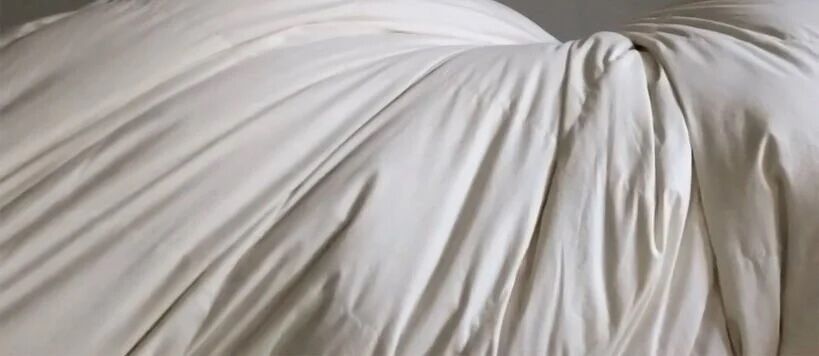
When a caterpillar coils a silky covering over itself it surrenders to a process of breaking apart and arising as a new beautiful being. The current situation of the world has forced us to curl up into our own cocoons and question our ways of living. So how about us humans? Are we willing to transform?
I’m always happiest alone, Sini Henttu
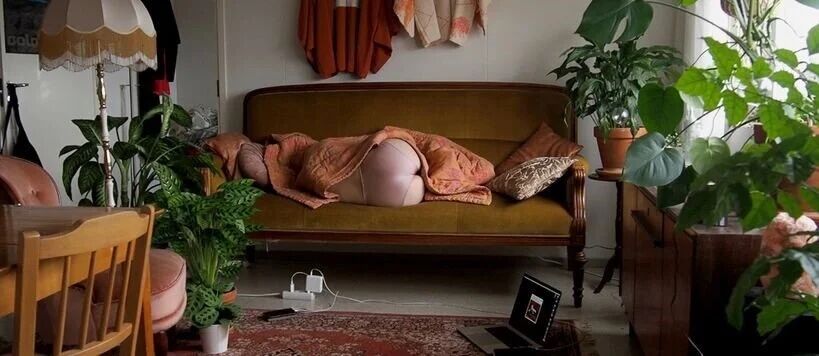
“I’m always happiest alone” reflects on loneliness in a society that pressures us into sociality. Everyone feels an individual need for loneliness and each of us is alone in a different way. The desire to be alone is also a privilege that can be safely felt, when social networks and relationships are plentiful and healthy. It’s easy to want to be alone, when you don’t feel lonely.
Underwater traces, Julia Strand
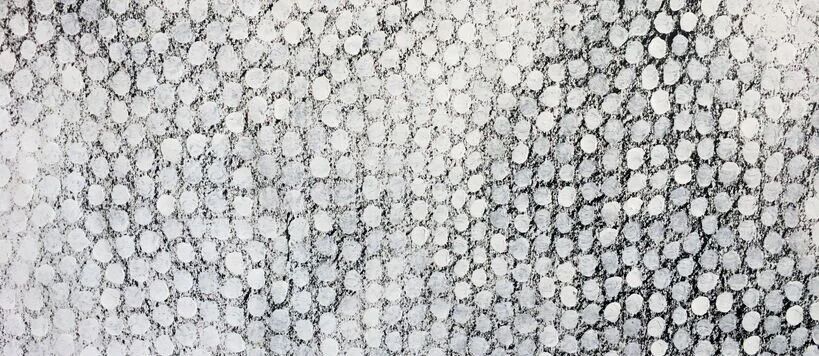
It clears the sea by eating plankton but it is not native to our ecosystem and causes harm by attaching to any surface. What is left from it is the small round traces and beautiful details. It is not always clear what is best for nature, but most important is that we care for and pay attention also to the smallest details of the world.
Threads, Forces, Web of Entanglements, Tzuyu Chen
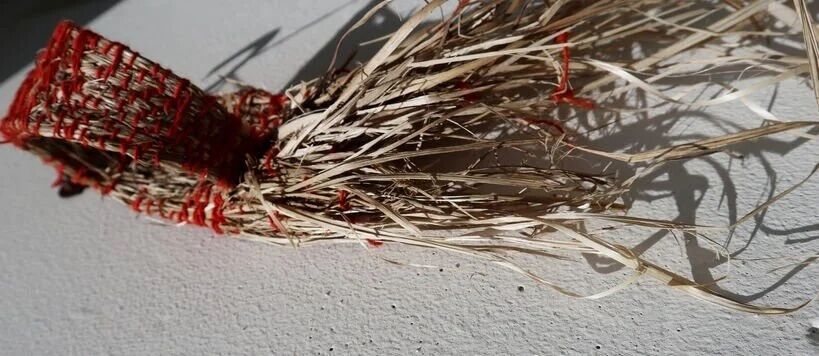
This video explores the intertwined relationship between human and non-human forces involved in a conceptual care network. Red threads are used to point out three different concepts that co-exist within this entangled relational web; its unforeseen forces, its tension of co-dependence, and its convergence that interweaves the living and non-living into other forms of being. By following these threads and forces, I want to express care as relational thinking. If our lives are tangling with many other forces, how would it affect the way we care for many non-human others?
A Manifesto in my room, Aura Latva-Somppi
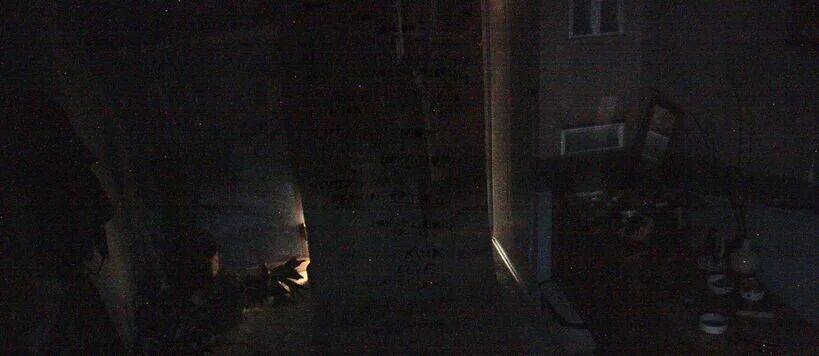
This is a manifesto for myself, to be presented in my own room with the dust and hair lying in the corners, next to my messy bed and piles of clothes, letters and drawings, with the houseplants and fruit-peels and the smell of my biodegradable. It is not still or silent; there is light reflecting from a window of a neighbor house, the shadows of trees of the nearby forest and the sounds of buses and dogs and bicycle bells skipping around the neighborhood. This manifesto is born from within myself but also from the outside, readings and discussions and perceptions, and it is to be presented and projected from and to all these directions.
Place to be, Sirena Nieminen
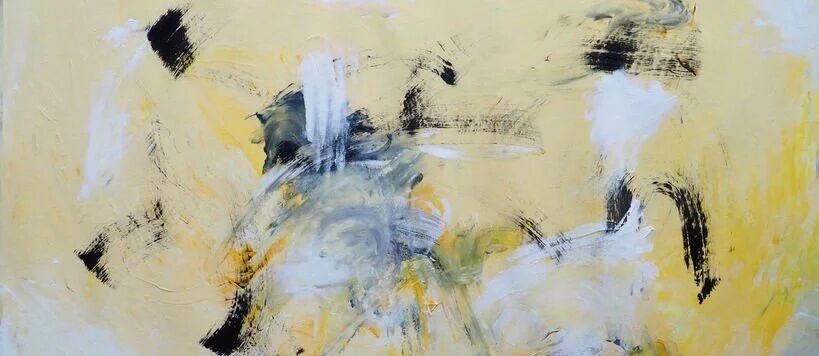
Place to be is an experimental painting process, in which the journey is more important than the final artefact. The main thing was to paint mostly blindfolded, to get deeper in touch with paper and paint to forget rationalisation and overthinking. I mind-travelled to the places and freedom of my childhood to let go of the stress and control of adult-me.
Weight lifting, Jenna Lee Shenyer
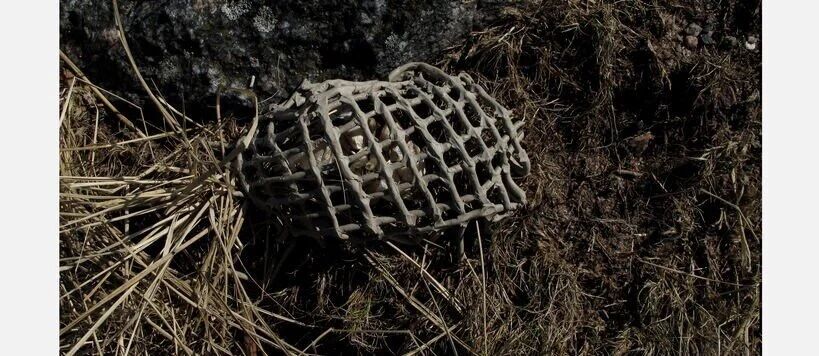
Weight lifting is an ongoing process between human and nature and the weight we put on the land. By walking through memorable islands, finding objects of affection that don’t belong to the landscape, and doing an exchange between the land.
I’ve taken the objects back where they belong, replaced their form in unfired clay and left it for the land to absorb in its natural way. In this process the land gives me an opportunity to ground myself, to study and enjoy everything it has to offer, and in exchange I thank the ground by helping it recover from the trash that doesn’t belong there.
Earthly bonds, Linnea Kilpi
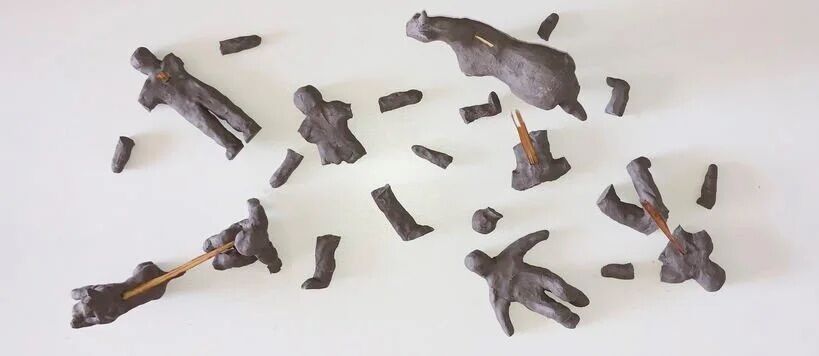
Earthly bonds is a series of sculptural vignettes studying relational dynamics and the complexity of care. Each scene depicts a relationship inevitably compromised by notions such as power, trust, and dependency. Their varying stages of decomposition question if and how the relationships function without tension holding them together. Who is dependent on whom?
Maja, Julius Rinne
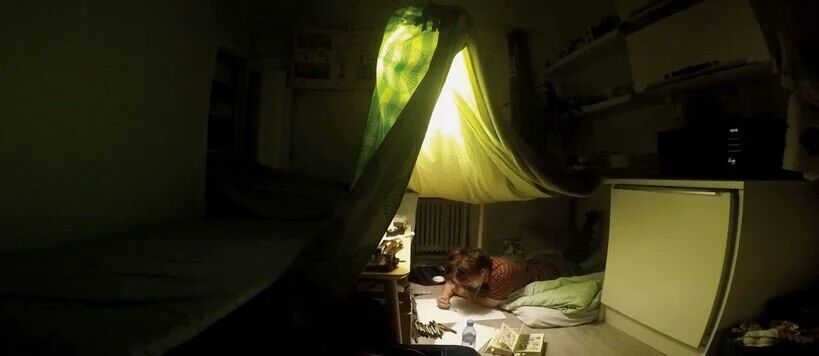
“Maja” in Finnish means “shelter” or “blanket fort.” A shelter is a place to feel safety and care. In my project I wanted to fulfill a childhood dream of living in a self-made fort. I built a blanket fort in my apartment from materials I already owned and spent a week there taking care of myself, by doing things I have not had time to do in a long time. Maja offered me a safe place to be relaxed, creative and playful.
How can I unsubscribe from patriarchy?, Vertti Virasjoki
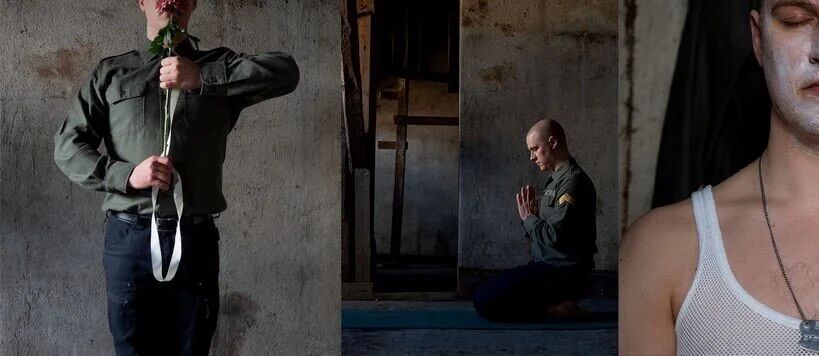
We at war.
We at war with racism, sexism, but most of all we at war with ourselves. In this complex situation the enemy is invisible and the weapons we use are not made of steel.
Through exploration into the past environments, emotional atmospheres and cultures I’ve lived in I’ve tried to make sense of how they have shaped me as a person and how to accept the fact that it has not always changed me for the better.
Objects of Care, Sofia Guridi
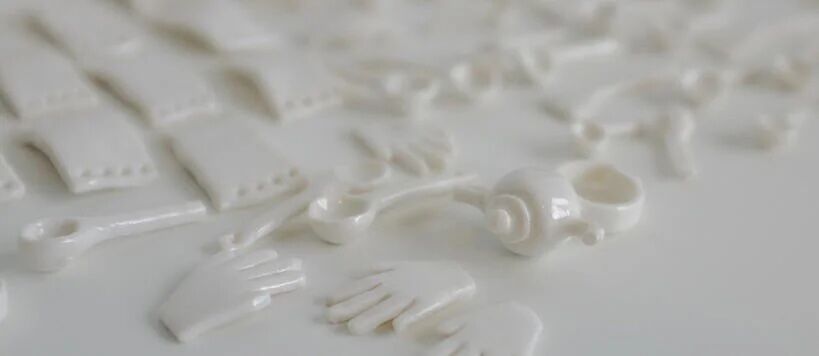
Our days are full of silent care. Care for others expressed through small gestures and actions like combing a child`s hair or cooking for the family, which are accompanied by objects normally considered trivial. This collection explores the beauty of these everyday objects and the relevance of this invisible care that is usually taken for granted, but that is so fundamental for everyone’s wellbeing. Through the repetition of small hand made porcelain items, jewelery pieces are created to show the value of these marginalized actions usually associated with feminine care, while being in contact with our bodies.
Crown of Thoughts, Joel Levander
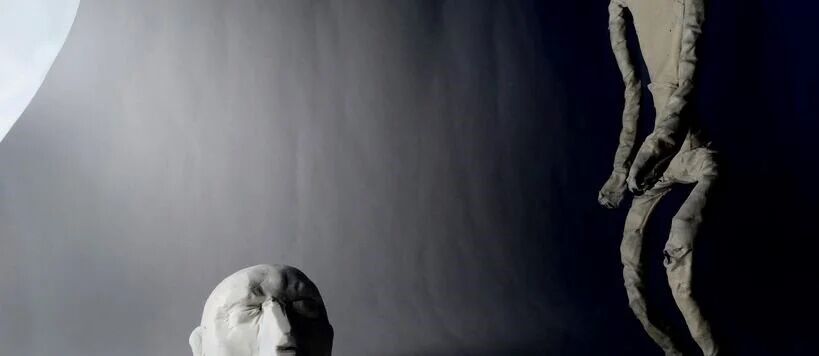
Crown of Thoughts is animated short film made with stop motion technique. It follows a figure created from various materials and its encounter with a humanlike head. Through a coalescence, the head changes the figures perception of time and their surroundings.
Kuuleeko metsä?, Miia Lötjönen
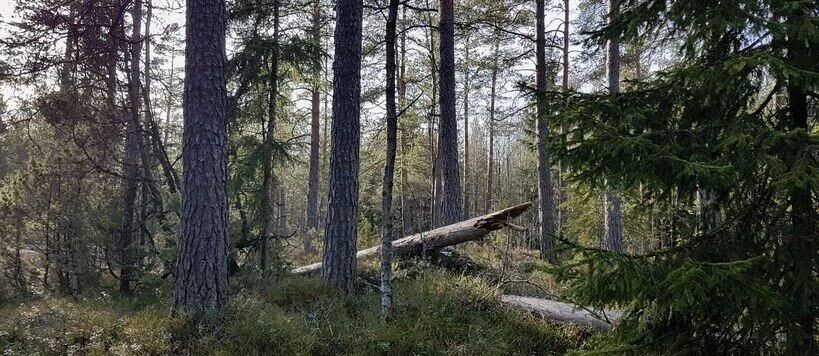
“As we humans are big beneficiaries in our relationship with nature, my goal was to give something back in return. I wanted to use music to help the spring forest grow. Studies have shown that music affects the growth of plants as it is enjoyed by humans in general. Could we use music as a way to re-connect and coexist with nature.
Twig Lady, Salla Luhtasela
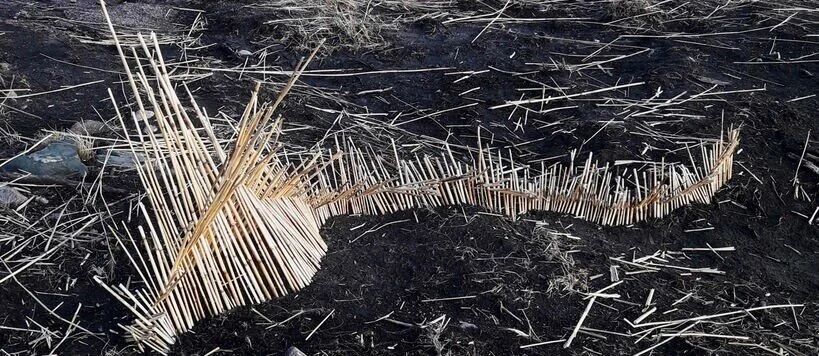
Twig Lady is a series of ongoing works executed outdoors as a way of taking care of myself through the repetitive and meditative action of making by hand. Working with new materials, mainly twigs and reeds, forced me to really get in tune with them, feel their will in my fingertips, and forget my own designerly ambitions – and just have fun.
Read more news

The State of Marketing survey: Performance monitoring and budgeting remain relatively weak
Markkinoinnin tila (The State of Marketing) survey opens up important perspectives to the Finnish marketing knowhow and areas for development in marketing
What is quantum tech?
Many of today’s devices would not exist without quantum technology, but the most exciting applications are still on the horizon
Is quantum the next AI? Behind the quantum hype
Doctoral researcher Christa Schauman explains how Finland and Europe are faring in a race everyone wants to join – despite its uncertainties.