






Sustainable solutions can transform textile waste to new possibilities: Shubhajit Dutta

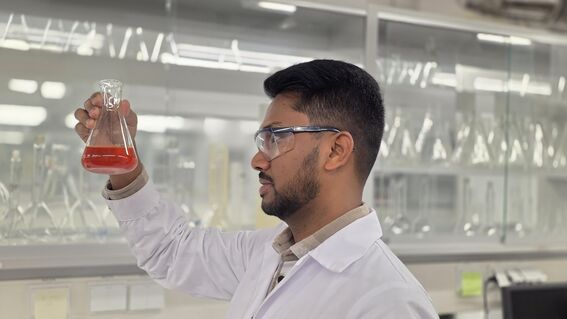
Working within the Textile Chemistry Group, Shubhajit is contributing to the TexirC (Tackling Textile Circularity Challenges) Project funded by Business Finland, focusing on developing innovative solutions to deal with textile waste. He is working under the supervision of Prof. Ali Tehrani, Head of Textile Chemistry group.

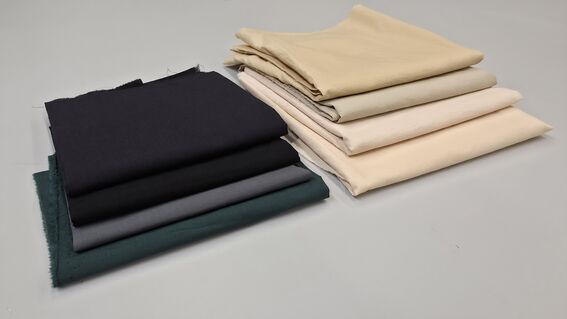
Shubhajit’s research is centered on creating an efficient color-stripping process that removes stubborn reactive dyes from textile waste—particularly cellulose-based fabrics such as cotton. By doing so, the fabrics can be effectively recycled through mechanical or chemical processes, reducing the need for virgin raw materials and minimizing waste disposal.

“Each year, a huge amount of textiles ends up as waste. Only a small fraction of these are truly recycled due to the lack of effective processes to handle the composite and multi-material nature of clothes,” Shubhajit explained. “I am addressing this pressing issue by developing techniques that can strip colors from fabrics, producing suitable feedstock for new textiles while promoting a circular economy.”

His approach involves testing common pulp-bleaching agents for color stripping and optimizing treatment conditions to maximize efficiency while ensuring sustainability. The aim is to create a scalable method that the industry can adopt, enabling textiles to be reused rather than discarded.

Shubhajit Dutta, who holds an M.Sc. (Tech) in Chemical Engineering from Aalto University, completed his master’s thesis under the FinnFiberColor Project, which focused on sustainable coloration methods. He has conducted his M. Sc. thesis under the supervision of Prof. Ali Tehrani, Head of Textile Chemistry group. His academic journey and ongoing research highlight a consistent dedication to tackling textile sustainability challenges.

By advancing techniques in color stripping, Shubhajit’s work is paving the way for innovative recycling practices that transform textile waste into a valuable resource. His research not only addresses environmental concerns but also contributes to reshaping the future of the fashion and textile industries toward circularity and sustainability.

Read more news

What is quantum tech?
Many of today’s devices would not exist without quantum technology, but the most exciting applications are still on the horizon
Is quantum the next AI? Behind the quantum hype
Doctoral researcher Christa Schauman explains how Finland and Europe are faring in a race everyone wants to join – despite its uncertainties.
Health x technology: Magnetic stimulation activates neurons to target depression
Brain stimulation has helped depression patients for years, yet only a small minority can access the therapy. Researchers are now making it easier, faster, and more personalised.