






Soil Laboratory: Exploring a dialog between human and land in Utsjoki
Many indigenous cultures believe in earth as a sacred environment and regard themselves as an integral part of this holistic living landscape. They belong to the land and are in unison with plants, animals, and ancestors whose spirits inhabit these places, whereas westernised society has been distancing itself from nature, creating a point where re-connection is needed.
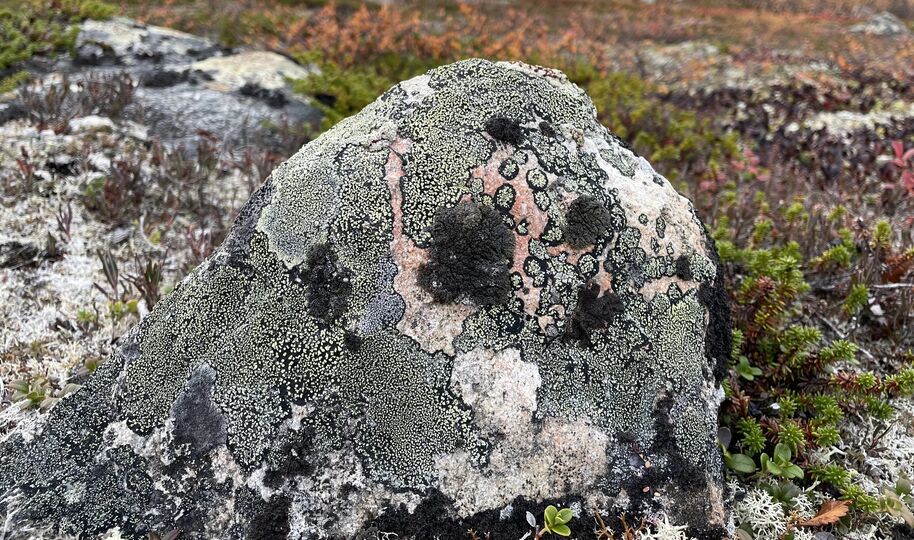
Current work
The current exploration done in the Soil Laboratory aims to understand through lived experience what does a living landscape mean. We set out to challenge the Western ways of conceiving the land as a material asset that can be consumed by humans. The exploration takes place in two places: Lapland and Southern Finland. The current team includes EMPIRICA researchers Maarit Mäkelä and Priska Falin, and Contemporary Design alumni Mira Niittymäki and Vertti Virasjoki.
One of the group members, Maarit Mäkelä, lives the academic year 2023-2024 in Utsjoki. Her temporary studio home is used as a base camp for the project. The artistic research takes place in the Utsjoki and Nuorgam areas, especially around the Teno River. Another line of the study is realised in Espoo, on the Otaniemi campus, where the gathered materials are prepared further in a studio context.


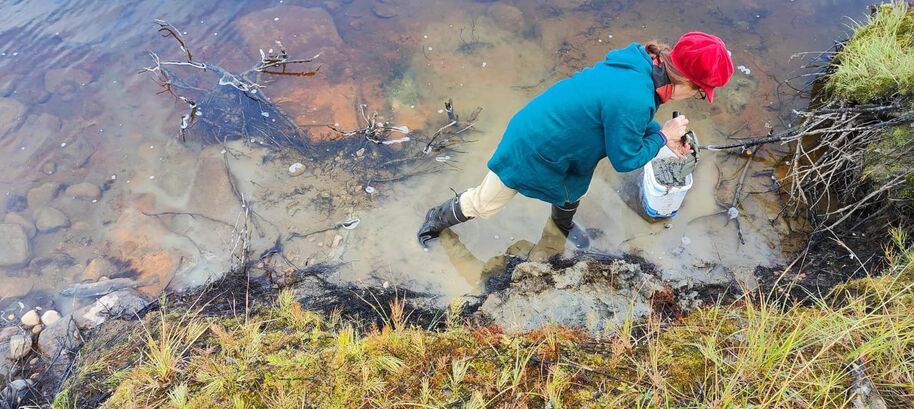
During autumn 2023 the members of the team familiarise themselves with the northmost environment in Finland by walking. The walks are documented by maps, photos, videos, and diary notes. During the walks, small amounts of materials are gathered from the local environment including soil and stones.
The collected materials are processed in the base camp. Some materials are transported to the Aalto Ceramics Studio for further analysis and experimentation.
There, the soil is processed to slips to see how the gathered soils behave when fired, for example, what colors they can provide for ceramics.
1. Collecting sand in Vuollegeavƞƞis
2. Snowfall in Vuollegeavƞƞis
3. Processing collected soil samples in the Njavijohka base camp
Photos: Vertti Virasjoki
The created slips are used as paints for hand-built vases and other objects made from local earthenware. After firing, the vases are placed in local rivers in Lapland, where flowing water is invited to make up a dialogue with the objects. The result is a series of vases done in a dialogue between the human, soil, water, and the forces of the land.


To understand the material and immaterial features and the land, the team also familiarise themselves with relevant literature and historical documents. Accordingly, locals are interviewed to deepen the team’s understanding of the meaning and use of a specific place.


Read more news

The State of Marketing survey: Performance monitoring and budgeting remain relatively weak
Markkinoinnin tila (The State of Marketing) survey opens up important perspectives to the Finnish marketing knowhow and areas for development in marketing
What is quantum tech?
Many of today’s devices would not exist without quantum technology, but the most exciting applications are still on the horizon
Is quantum the next AI? Behind the quantum hype
Doctoral researcher Christa Schauman explains how Finland and Europe are faring in a race everyone wants to join – despite its uncertainties.