






'Social welfare and healthcare reform should be implemented in stages'

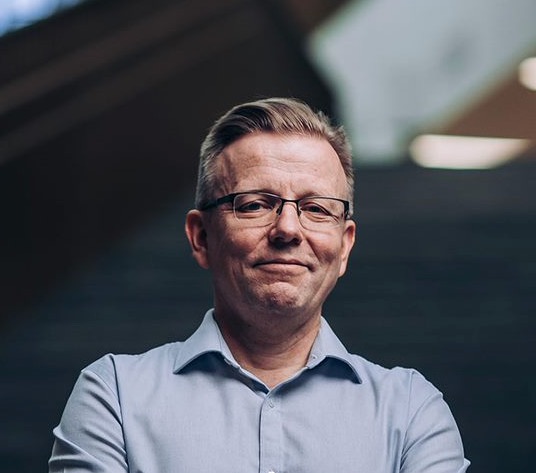
Juuso Välimäki, Professor of Economics and Head of the Department of Economics:
I study the effect of economic institutions ― the different ways that economic activity can be organised ― on the economic outcomes that can be achieved. I am an economic theorist by training, and my primary research focus is the effect of information on economic outcomes.
Although my own research is classified as theoretical basic research, it intersects directly with the development of practical solutions to large societal challenges. A good example is the transition of services provided by public authorities, such as social welfare and healthcare services, towards a more market-based model.
As is common for economists, I believe in the efficiency of competitive procurement methods, such as auctions, in situations where the services and products to be procured are easily definable. I have participated in the planning of the 4G bandwidth auction, together with the Finnish Communications Regulatory Authority, and in conditions like these markets function well.
When the quality of the service to be procured is less easily defined― for instance, care services for the elderly ― introducing competition to markets is much harder. In such cases, it is also more difficult to verify the benefits gained through competition. Without clear rules about service quality or the selection of customers eligible for the service, the pursuit of profit by private companies may be in conflict with the social good.
It is clear that political pressure to provide public services privately and fund these services from outside the public budget will increase for future governments. When dealing with large-scale reforms that change social structures and activities, it is vital to accumulate information and experience on impact.
In this context, a theoretical model like a flight simulator in the development of a new airplane. By analysing the model we can predict the behavioural impacts on service providers and customers that the reforms will bring. If reforms are implemented in stages, valuable information from the initial stages can be used for planning later steps. For example, the social welfare and healthcare reform in Finland, should be implemented in stages, as the country did with basic education reform in the 1970s.
Sensible decision-making requires thoroughly researched information. Procurements and competition are at the heart of both the theoretical and empirical research carried out in my department. Finnish data on procurements is unique and opens up possibilities for comparing and assessing different forms of competitive procurement. This benefits both service users and society, which ultimately funds service provision.
Societal decisions are formed under the pressures and tensions of conflicting objectives. Good decision-making recognises these conflicts and uses available knowledge and data to find good compromises. Aalto Economic Institute, based in our department, helps public and private operators to conceptualise their operations within a broader economic framework and provides concrete advice on finding good solutions.
In my own teaching, I seek to train students to value and respect others, have a broad understanding of the social impacts of economic activities, and gather and use data to support their own decision-making.
From clean energy to personalized medicine – a book about the power of the university
The Aalto Effect is a tribute to the ambitious and uncompromising work of dozens of researchers.

Read more news

VTT, Aalto University and GTK: How to ensure Finland captures the multi‑billion growth potential of mineral economy
Finland is rising to the forefront of the mineral economy through new research initiatives and closer collaboration
Significant donation to boost pavement engineering research and education
Companies and associations in the field have donated €400,000 to the School of Engineering.
Design strengthens industrial competitiveness – human-centered factory work at the core
Factory work is undergoing a transformation: new technologies and artificial intelligence are changing the content and roles of work. Aalto University’s Department of Design is studying this change from a human-centered perspective in the HiFive project.