






Research Council of Finland establishes a Center of Excellence in Quantum Materials

Centres of Excellence are a competitive and prestigious scientific programme by the Research Council of Finland. The Centres represent the very cutting-edge of science in their fields, carving out new avenues for research, developing creative research environments and innovations and training new talented researchers for Finnish research and industry.
Now the Council has granted funding for the Center of Excellence in Quantum Materials, or QMAT, for short. QMAT’s mission is to design and establish new forms of quantum matter, creating quantum materials that power the technologies of coming decades.
QMAT brings together four Finnish institutions (Aalto University, University of Jyväskylä, Tampere University and VTT) and eight leading principal investigators across Finland, including four from Aalto (Professors Pertti Hakonen, Päivi Törmä, Zhipei Sun and Jose Lado). In addition, QMAT includes Professor Teemu Ojanen from Tampere University, Associate Professor Shawulienu Kezilebieke from the University of Jyväskylä and Research Professor Mika Prunnila from VTT. The Centre, running from 2026 to 2033, is led by Professor Tero Heikkilä from the University of Jyväskylä as director with Lado as vice-director.
“All of our individual goals are truly challenging and ambitious, and achieving them requires a cooperation structure that is based on long-term funding, such as a Center of Excellence,” Heikkilä says.
Combining theory and experimentation
To accomplish its mission, QMAT unites an interdisciplinary team of experimental and theory principal investigators. Their research topics include van der Waals materials, atomic-scale physics, nanoelectronics, optics, many-body physics, quantum geometry, machine learning and quantum computing.
QMAT harnesses quantum entanglement and quantum many-body interactions to create tunable and controllable macroscopic quantum states in quantum materials. To achieve that, the Centre leverages quantum materials like multiferroics, ferroelectrics, superconductors, quantum spin liquids, fractional Chern insulators and atom-scale engineered materials. In addition, the Centre makes use of new design strategies based on quantum geometry, machine learning and quantum computing.
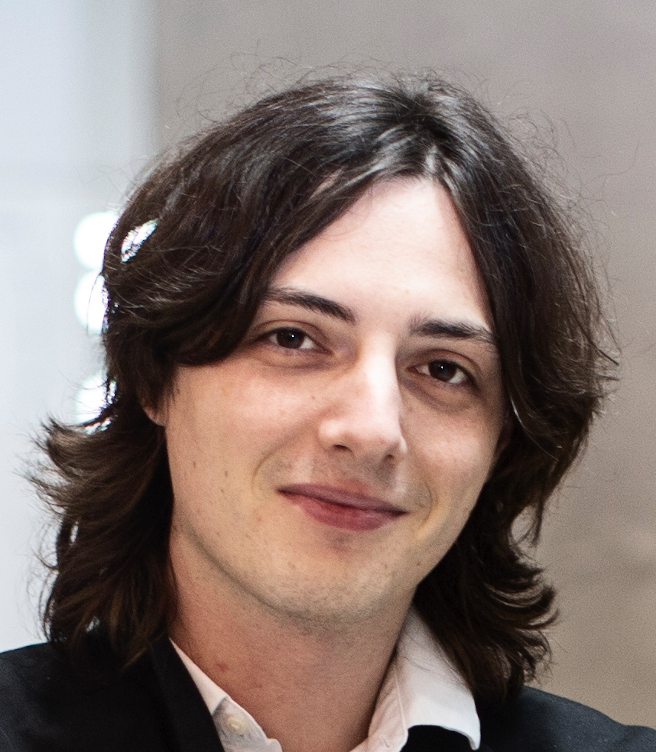
“The QMAT Centre focuses on creating hybrid quantum states that emerge when combining and engineering quantum materials. This makes it possible to create new emergent phases of quantum matter that do not exist in naturally occurring compounds,” Lado says.
Such quantum materials could help usher in significant technological leaps like cutting energy costs in the IT sector, enabling 6G technologies in the 2030s and introducing universal fault-tolerant topological quantum computers.
Professor Jose LadoThe QMAT Centre focuses on creating hybrid quantum states that emerge when combining and engineering quantum materials. This makes it possible to create new emergent phases of quantum matter that do not exist in naturally occurring compounds
Building on Finnish strengths
QMAT’s strategy builds upon the unique, existing strengths of the Finnish quantum ecosystem. The experimental activities of the Centre utilise the Finnish national research infrastructure OtaNano, particularly its infrastructure for microfabrication (NanoFab), materials characterization (Nanomicroscopy Centre) and ultrasensitive measurements (Low Temperature Laboratory). Furthermore, QMAT leverages the Jyväskylä Nanoscience Center and other intermediate-scale infrastructure maintained by individual member groups.
QMAT uses the LUMI Euro-HPC supercomputer for quantum many-body simulations and machine learning quantum materials in classical simulation and the Finnish quantum computing infrastructure FiQCI for quantum simulation, especially for emulating and solving virtual quantum materials.
QMAT collaborates with similar-scale quantum centers around the world. These include the Munich Center for Quantum Science and Technology, the Dutch QuMat collaboration, Quantum Taiwan, and the Princeton Quantum Initiative.
The newest addition to a 30-year tradition
QMAT is an important step forward in the Finnish strategy for quantum technologies following the mission coordinated by InstituteQ, led by acting director and Aalto Professor Jukka Pekola. InstituteQ plays a central role in Finland’s national quantum strategy, and its goal is to raise the readiness of Finnish society for the disruptive potential and implications that quantum technologies will have for society and the economy at large.
Moreover, QMAT leverages and bolsters key synergies enabled by the Finnish Quantum Flagship (FQF), led by Professor Peter Liljeroth, and the Quantum Doctoral Pilot (QDOC), led by Professor Adam Foster—both housed inside InstituteQ. FQF’s mission is to codify Finland’s role as a global quantum technology powerhouse for years to come and QDOC’s is to train the next line of quantum technology experts as part of the FQF’s eight-year master plan.
As the newest Centre of Excellence, QMAT follows the Quantum Technology Finland Centre of Excellence (2018–2025), which played an instrumental role in establishing InstituteQ. Finnish quantum research has continually had a Centre funded through the extremely competitive funding call since the instrument was established in 1995. QMAT is the newest entry in this 30-year-long tradition, and in particular for QMAT PI Hakonen at Aalto, it marks the 30th year of belonging to a quantum Centre of Excellence.
More information:
Read more news

How can we reinvent ourselves in the face of uncertainty? Five things everyone should understand about embracing the new
In a rapidly changing world, we need the ability to think differently, question what is familiar and recognise new opportunities. Aalto University’s Professor of Practice Nando Malmelin, explains how anyone can develop their openness skills
The State of Marketing survey: Performance monitoring and budgeting remain relatively weak
Markkinoinnin tila (The State of Marketing) survey opens up important perspectives to the Finnish marketing knowhow and areas for development in marketing
What is quantum tech?
Many of today’s devices would not exist without quantum technology, but the most exciting applications are still on the horizon