




Studying vision in pitch-darkness shines light on how a mammal’s brain drives behaviour
Neuroscientists link mammalian behaviour to its underlying neural code at the unprecedented resolution of individual nerve impulses for the first time.

The Brain Research Society of Finland have awarded their biennial Distinguished Neuroscientist of the Year award to Professor Petri Ala-Laurila at the department of Neuroscience and Biomedical Engineering, at Aalto University.
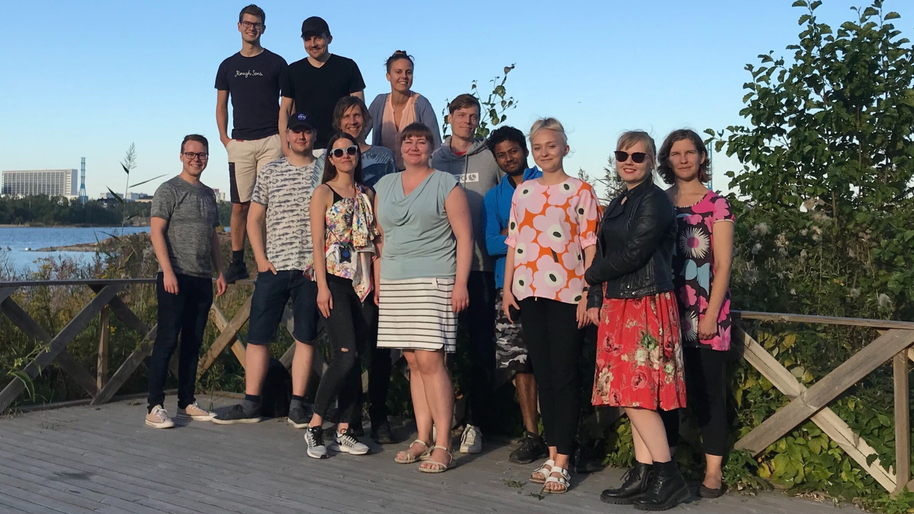
Prof. Ala-Laurila’s two laboratories at Aalto University and at the University of Helsinki focus on highly demanding and interdisciplinary neuroscience by bridging behavioral decisions of animals to their underlying neural activity using the visual system in dim light. They have built an ensemble of state-of-the art tools from cellular-level electrophysiology and imaging tools to deep-learning-based behavioral tracking of animals. In the past year, his team have published several high-impact, landmark papers, including work in Neuron that linked mammalian behaviour to individual neural impulses and another, published in Current Biology, that linked the sensitivity of mammalian vision to the “circadian clock”. Additionally, Prof. Ala-Laurila was able to attract the world's foremost retina specialists to Helsinki in 2019, when his team organized the European Retina Meeting 2019.
‘I am really excited to have my team’s work recognised by the BRSF,’ said Ala-Laurila, ‘We have been very lucky to find a group of passionate people to work with me in getting to understand how the body senses weak light signals and how this affects animal behavior’
‘But these first papers only represent the starting phase. We are just about to get really going with the new tools that we’ve built!’ Ala-Laurila continues, ‘There is an avalanche of exciting things we’ve got coming up, even more exciting than what is out there now’. I’m looking forward to working with my peers in Finland and around the world as we push the frontiers of understanding how the brain and the eye works’
Contact:
Petri Ala-Laurila
petri.ala-laurila@aalto.fi
http://ala-laurila.biosci.helsinki.fi/

Neuroscientists link mammalian behaviour to its underlying neural code at the unprecedented resolution of individual nerve impulses for the first time.

Surprising results show how circadian rhythm changes the way mammals can see


