






Developing Lumilyhty

Lumilyhty requires much work before it will be a buildable design. We started the process by identifying the pros and cons to determine what to prioritise, using a SWOT analysis:
|
Strengths:
|
Opportunities:
|
|
Weaknesses:
|
Threats:
|

The main findings of the analysis were that priority was to develop a roof for weather protection of both the structure and the users. Simultaneously studying which parts of the proposal we wanted to keep and which ones should be changed, students individually and in groups developed design solutions and proposals at various scales.


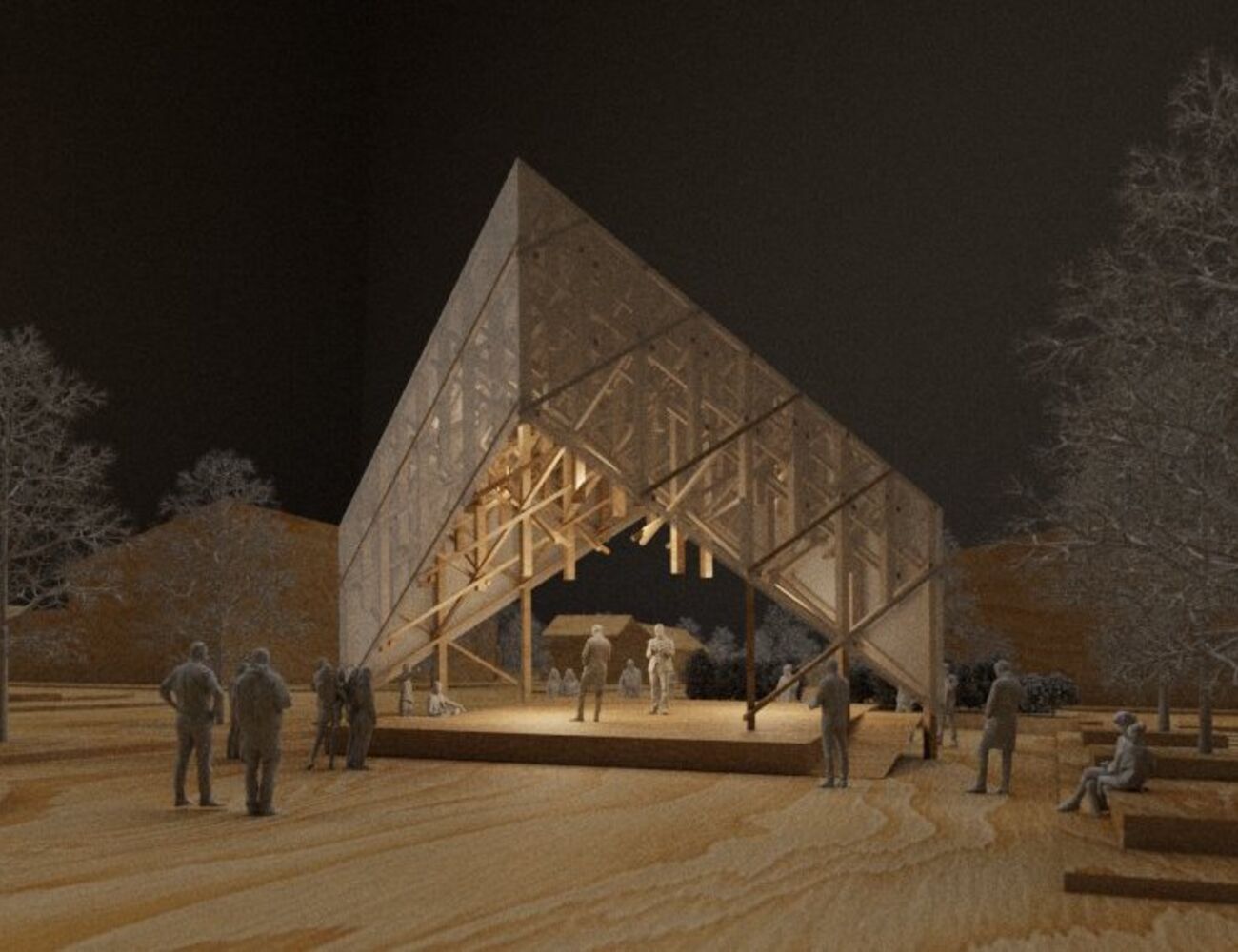
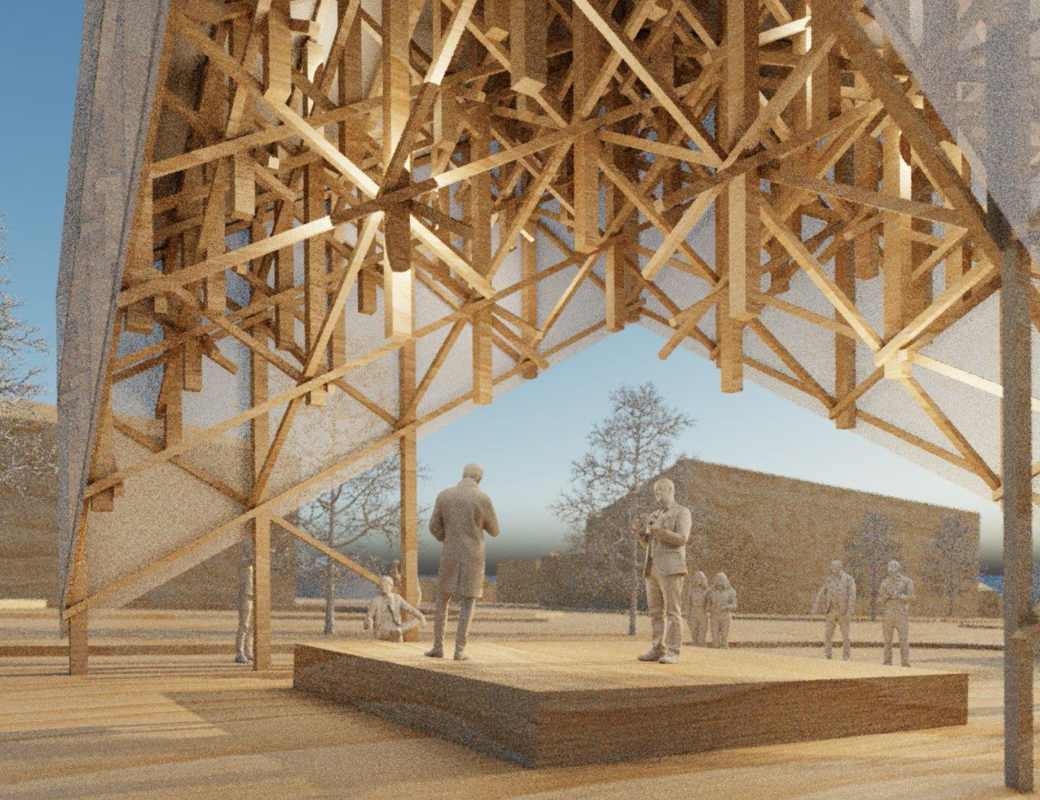
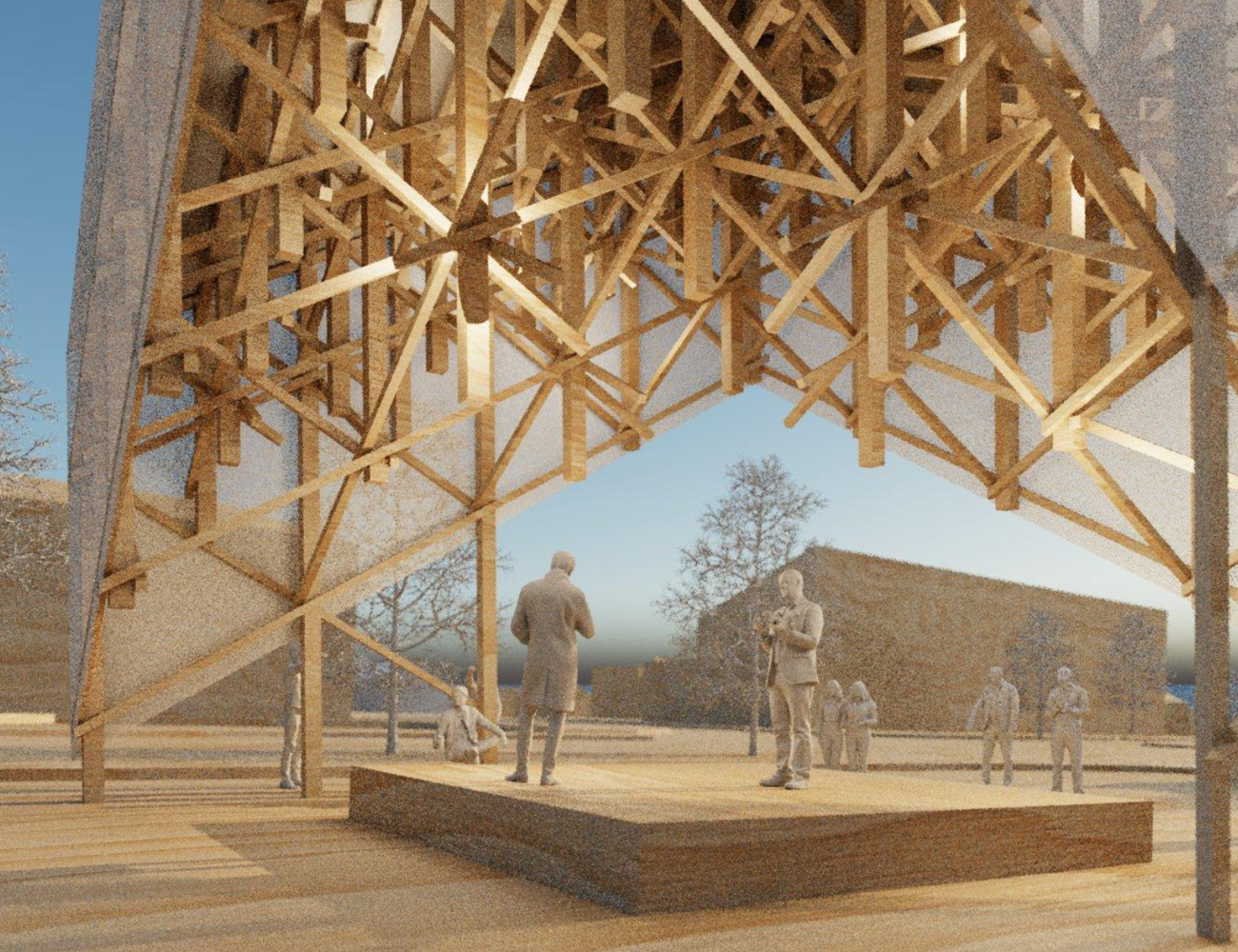
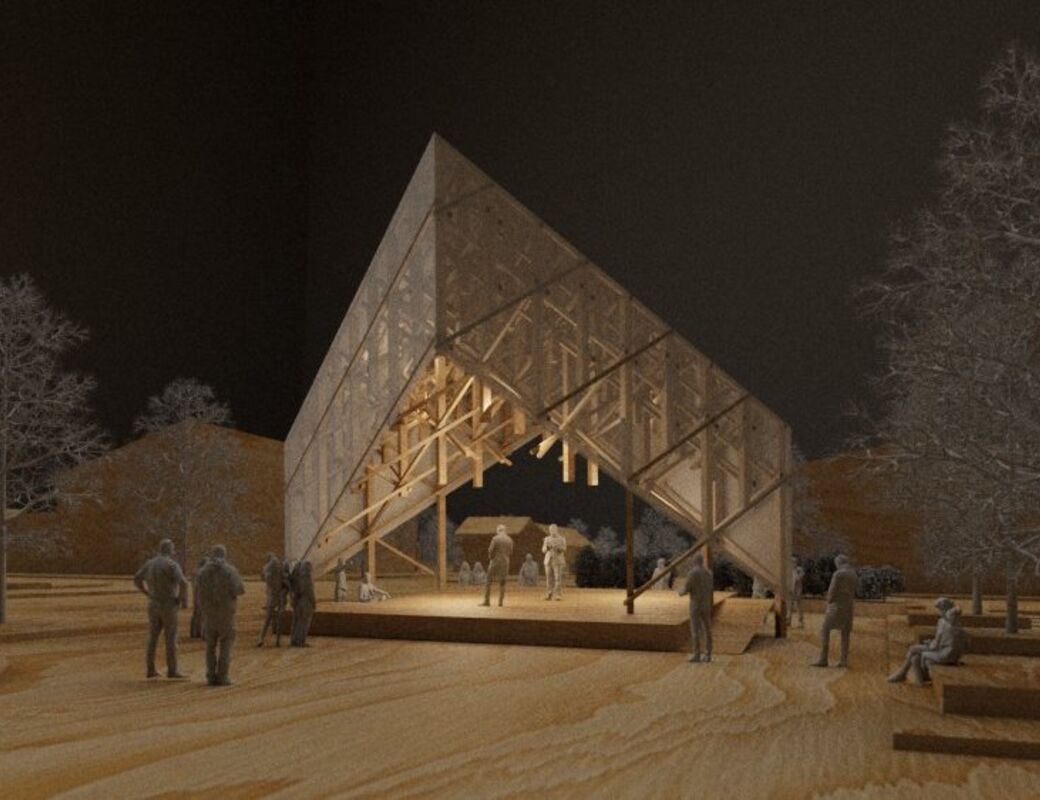
After this initial exploration we developed some more developed ideas, where the contours of Kide started to be visible. It became clear that the main components of Lumilyhty we wanted to conserve, were the angled linear timber pieces, the 'snowflake' joint, and the general lightness and transparency of the timber structure.
Aspects that were studied included:
- Effectiveness of roof
- Robustness and structural logic of design
- Clarity of concept and design intention
- Scale and relation to site
- Possibility to prefabricate and optimise for short assembly time.


After a month of development, which included intermediate presentations to the client, we settled on the shape that basically is Kide now. It features a square plan with a diagonal roof ridge. This arrangement allows us to align all structure and other components with the 30° angled facades. The strong roof line and pointed elevation are a distinctive addition to the square and the open front and back sides allow the rich timber structure to be visible from outside.
Read more news

Every Step Brings You Closer to the Summit – Join UniSport’s Mount Everest Challenge in HeiaHeia
Students and staff of Aalto University celebrate this year’s Stair Days with a shared journey towards the summit of Mount Everest. UniSport’s new HeiaHeia wellbeing app inspires everyday physical activity, makes wellbeing actions visible and brings the whole community into a shared challenge.
New guidance on the use of AI in thesis work
New guidance on AI in bachelor’s and master’s theses: students must agree AI use in advance with their supervisor and document how it was used.
Mind & Study - toolbox for being well in studies (3cr) coming up
Popular course "Mind & Study - toolbox for being well in studies" will be organized in Finnish, English and Swedish in the 2nd and 4th period!