






Climate change is serious business

The recent COP26 climate conference has been justifiably described by many as disappointing in certain respects, and two important points for business emerge from this observation.
First, because of the disappointments, it is more important than ever that businesses take climate change seriously. Businesses are to a large extent the vehicles that translate climate policies into action, and they can also implement measures that go beyond those agreed in international climate negotiations. From a sustainability perspective, it is crucial that businesses continue to set targets to make sure their operations are in line with a 1.5 °C trajectory. What is more, they need to ensure the implementation of those targets to achieve rapid and real emission reductions.
Second, despite the disappointments, the COP26 nevertheless firmly signposts the direction where the world is heading. From a pure business perspective, companies need to align themselves with those imperatives. They need to take climate change seriously and engage in impactful climate actions for a number of business reasons alongside the sustainability reasons.
One such business reason is simply to remain a viable business partner. As more and more firms make net-zero commitments, they will want to work only with those suppliers and partners who can help them deliver on those commitments. This is a powerful constraint with obvious and immediate business impacts. Supply chains and networks have in the past proven to be very effective in spreading various requirements to all kinds of sectors and all sizes of companies. Climate-related requirements are no exception as the need for companies to incorporate Scope 3 emissions in their climate targets extends the sphere of consideration to cover also upstream and downstream actors.
There are also many other stakeholders whose behaviour is changing due to climate concerns. Investors are divesting from carbon-intensive assets. Consumers shy away from climate-damaging products, especially if the consumption can be observed by others and hence can make the consumer susceptible to social pressure. Employees – particularly the best ones who can afford to choose – want to work for companies that are part of the solution rather than part of the problem. The climate expectations of all these stakeholders need to be satisfied to avoid unwanted effects.
In addition to responding to changing stakeholder behaviour, firms need to anticipate and adjust to a changing cost structure. With increasing carbon prices, and with carbon (and other greenhouse gases) increasingly subject to emission trading schemes or border adjustment mechanisms in the future, firms need to re-examine their products and processes to identify where greenhouse gas emissions arise. This way they can also learn where there is scope for direct cost savings by reducing those emissions.
It is also important to realise that for many companies, business-as-usual is not possible in a world with a changed climate. Adverse climate effects can threaten the very basis on which the business operates in sectors such as food or tourism, or bring about major changes in the business environment in sectors such as construction or insurance, for example. Businesses need to take action in the face of climate change in any case: the choice is between prevention and adaptation, not between action and non-action.
Finally, taking climate change seriously as a business issue is not only about avoiding risks but it is also about tapping into opportunities. When a major transformation such as decarbonisation takes place in the economy, new opportunities open up for those who are alert and prepared. New knowledge, technology, and business models are needed and can become new sources of income. Constraints can spark innovation.
To sum up, there are both compelling sustainability reasons and compelling business reasons for companies to pay attention to climate issues. Climate change – and its prevention – is serious business, in every sense.
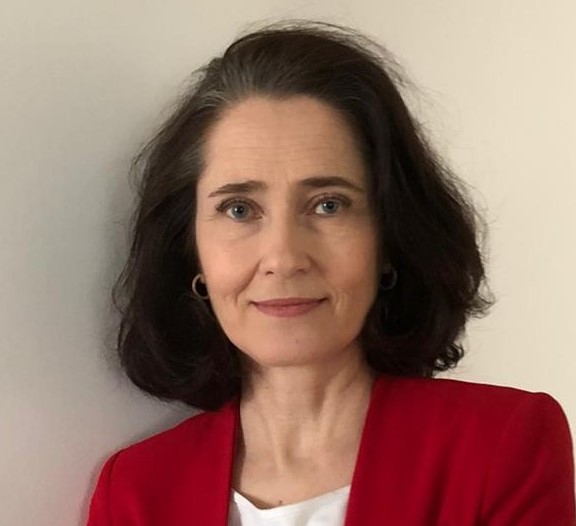
The author Leena Lankoski has been working in corporate responsibility and sustainability for 30 years in the private sector, at the UN, and in academia. She has carried out consulting work for several ministries as well as for the OECD. Dr. Lankoski is currently a Senior University Lecturer in Sustainability in Business at Aalto University School of Business and a Visiting Scholar at INSEAD.
The text was first published in The European Magazine:
https://the-european.eu/story-26089/climate-change-is-serious-business.html
Read more news

How can we reinvent ourselves in the face of uncertainty? Five things everyone should understand about embracing the new
In a rapidly changing world, we need the ability to think differently, question what is familiar and recognise new opportunities. Aalto University’s Professor of Practice Nando Malmelin, explains how anyone can develop their openness skills
The State of Marketing survey: Performance monitoring and budgeting remain relatively weak
Markkinoinnin tila (The State of Marketing) survey opens up important perspectives to the Finnish marketing knowhow and areas for development in marketing
Meadows don’t happen by chance – thoughtful design for campus nature
Each meadow is tailored to its specific location, taking into account factors such as soil conditions, the history of the landscape and how the area is currently used.