Designed for Deconstruction - Design for Deconstruction as the Enabler of Flexibility and Resource Reuse

The work was awarded the Wuorio Prize in the spring of 2024.
Abstract:
The role of the built environment in the depletion of virgin natural resources, as well as in solving this problem, is critical. Transition to a circular economy is inevitable. This diploma thesis contributes to the discussion by studying design for deconstruction as the enabler of a buildings flexibility and reuse of its resources. Design for deconstruction is a way to build in a resource wise manner. It's also a crucial part in implementing the circular economy: it is impossible to reuse building parts if it is impossible to deconstruct resources intact. On the other hand, the careful deconstruction is pointless if the resources are not reusable.
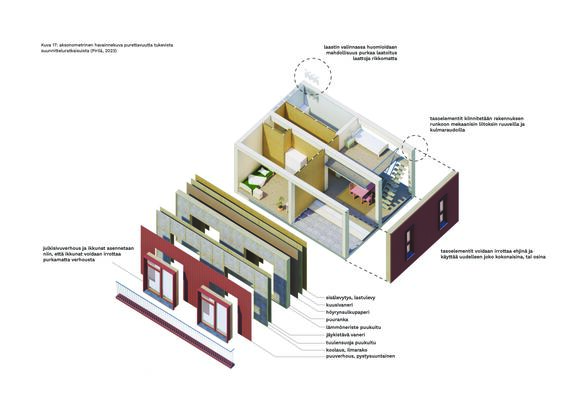
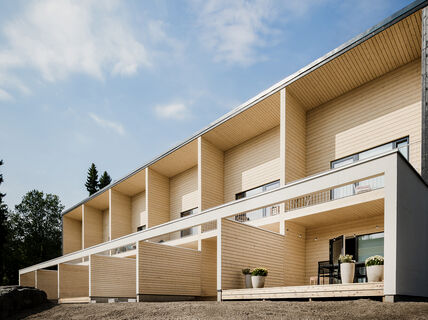
The aim of this thesis was to map the background of reversible design and study the methods that support flexibility and reuse. The thesis consists of four parts: context, design methods, the design and reflection. The first part studied the background and concept of design for deconstruction. The second part deepens into the design strategies that support intact deconstruction, resource reuse and both versatile and adaptive use of a building. The third part of the thesis is a design proposal of a hybrid block that includes housing, offices and business premises in Linnanniemi, Turku. The design aimed to embody the strategies mentioned in previous parts in practice. The fourth and final part of the thesis draws the previous parts together and reflects the design process and outcome.
The work showed that design for deconstruction does not only aim for effective reclamation of resources when the building reaches the end of its life cycle. Ultimately, design for deconstruction aims in longevity considering both the building as a whole and as a sum of its resources. Therefore, design for deconstruction and flexibility appear in different temporal levels. The thesis showed that design strategies that support intact deconstruction have been successfully studied and identified, yet they are not a standard method of construction in other than temporary architecture. In order to make design for deconstruction the new norm in built environment, the legislation must be sufficiently strict, more education and experts are needed and the reuse of building parts needs to be as easy and economically attractive as possible. The design work showed, that by implementing design for deconstruction it is possible to achieve high quality architecture that does not appear temporary. However, the work demonstrated that some principles of design for deconstruction can lead into a certain type of aesthetics. Ultimately, the importance of design for deconstruction culminates in its role as a means by which we directly influence the possibilities of future designers and builders to implement the circular economy.