






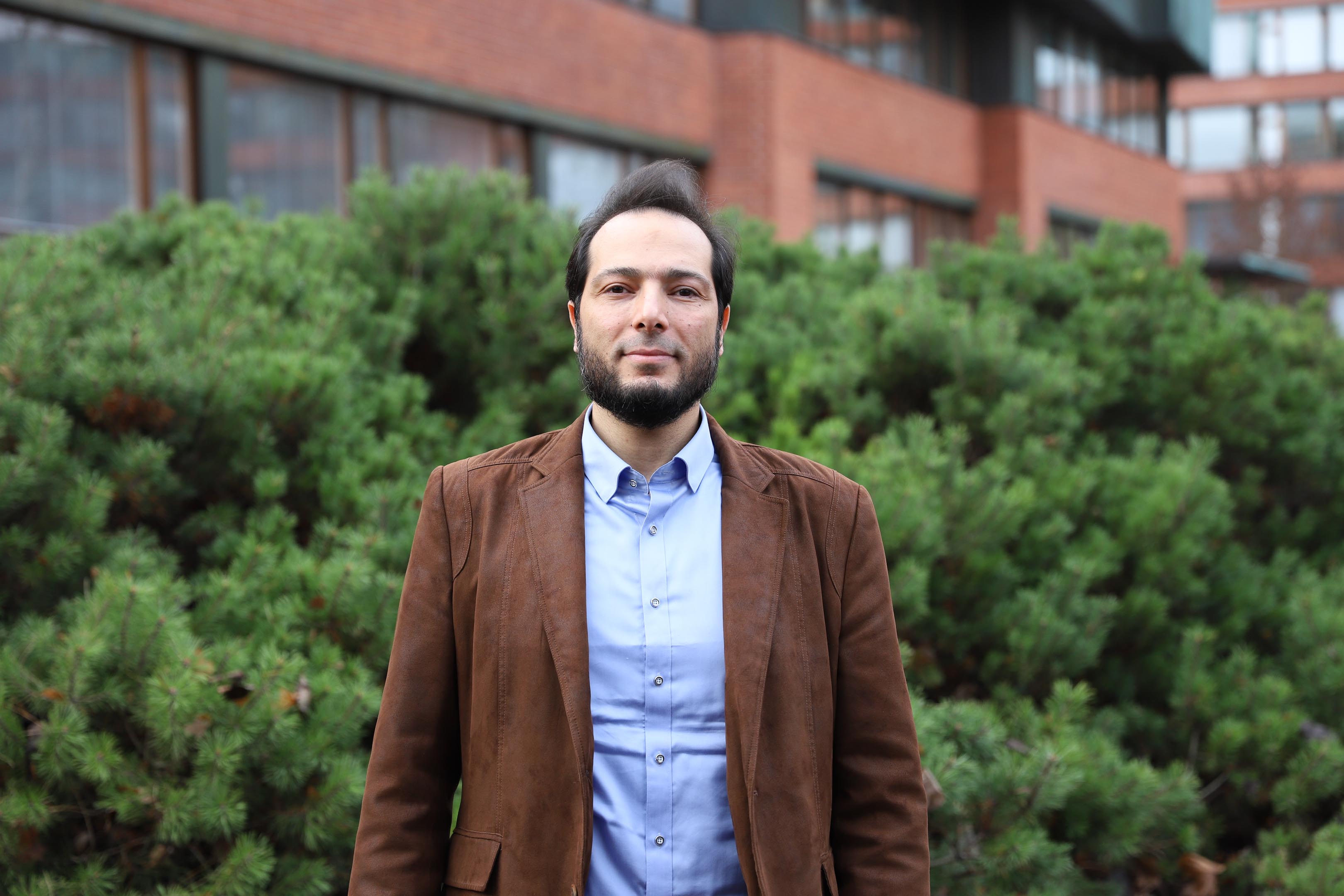
Mohamed Noureldin
>>Research Areas & Scientific Expertise
My research focuses on the AI-driven digital transformation of structural engineering, integrating advanced artificial intelligence with structural lifecycle engineering. The work combines industrial and academic experience and is structured around four interconnected research lines that collectively advance intelligent, resilient, and sustainable structural systems.
1. Agentic & Trustworthy AI in Engineering (Agentic RAG, ,Explainable machine learning; Intelligent Control)
Developing autonomous and reliability-aware artificial intelligence systems for structural engineering applications. This research integrates Explainable and Interpretable AI (XAI) methods to enhance transparency, traceability, and engineering reliability in safety-critical tasks such as structural design, assessment, and decision support.
2. Structural Digital Twins & Physics-Based Machine Learning (PINN, SPAI-DT Project)
Developing high-fidelity structural digital twins for infrastructure systems and smart cities. This research integrates Structural Health Monitoring (SHM) with physics-based machine learning approaches, including physics-informed and probabilistic learning methods, to improve durability assessment, structural performance evaluation, and long-term reliability prediction.
3. Intelligent Control & Structural Resilience (XAI retrofit, Probabilistic XAI)
Developing intelligent optimization and control frameworks to enhance the resilience of structural systems subjected to extreme loading conditions. A holistic resilience perspective is adopted, integrating Soil–Structure Interaction (SSI), Performance-Based Structural Design (PBSD), and data-driven optimization techniques to improve structural reliability, adaptability, and retrofit effectiveness.
4. AI-Driven Sustainability & Circular Economy (AI sustainability, XAI for RC buildings)
Developing automated methodologies for Life Cycle Assessment (LCA) and Life Cycle Costing (LCC) to quantify environmental and economic performance of structural systems. This research supports sustainability-driven decision-making during early-stage structural design and promotes circular economy principles in infrastructure development.
>>Current Research Work
1. Agentic, Trustworthy & Interpretable AI (Agentic AI RAG MSc thesis)
I lead research on agentic artificial intelligence systems designed to support structured reasoning and engineering decision-making in structural applications. This research focuses on the development of trustworthy and interpretable AI frameworks that ensure model predictions remain transparent, verifiable, and consistent with engineering principles. Particular emphasis is placed on reliability-aware workflows that support safety-critical tasks such as structural design evaluation, structural assessment, and engineering decision support under uncertainty.
2. Structural Digital Twins & Physics-Based Machine Learning (PINN, SPAI-DT Project)
This research line focuses on the development of high-fidelity structural digital twins to support monitoring and resilience assessment of infrastructure systems. Structural Health Monitoring (SHM) data are integrated with physics-based machine learning models to improve structural durability prediction and performance evaluation. Current work includes the use of probabilistic and generative learning approaches to model deterioration processes, as well as physics-informed learning methods to enhance non-destructive testing (NDT) and long-term structural reliability prediction.
3. Intelligent Control & Structural Resilience (XAI retrofit, Probabilistic XAI)
My team develops intelligent optimization and control frameworks aimed at improving the resilience of structural systems subjected to extreme loading conditions. Hybrid methodologies combining reinforcement learning, evolutionary optimization, and supervised learning are used to support retrofit strategy development and structural performance enhancement. A holistic resilience framework is adopted, integrating Soil–Structure Interaction (SSI), Performance-Based Structural Design (PBSD), and data-driven optimization techniques to enhance structural reliability, adaptability, and retrofit effectiveness.
4. Automated Sustainability & Early-Stage Design Optimization (AI sustainability, XAI for RC buildings)
This research focuses on the automation of Life Cycle Assessment (LCA) and Life Cycle Costing (LCC) workflows to support sustainability-driven structural design. AI-based tools are developed to quantify environmental impacts, including carbon footprint and embodied energy, alongside long-term economic performance indicators. The primary objective is to enable data-informed decision-making during early-stage design, supporting circular economy strategies and the long-term sustainability of infrastructure systems.
>>Digital Tools & Open Science
To strengthen the connection between research and engineering practice, my team develops and maintains open-access AI-powered tools that support data-driven decision-making in structural engineering. These platforms are designed to translate research outcomes into usable solutions for researchers, engineers, and industry stakeholders.
ASEA — AI-Based Sustainability & Economic Assessment of structural systems [https://asea-structures.aalto.fi/]
AI Dynamics — Structural Response & Seismic Analysis Platform [https://ai-dynamics.org.aalto.fi/]
CngrAI — Concrete Durability & Deterioration Prediction [Access the platform →]
>>Professional Journey & Industrial Expertise
My professional background integrates extensive industrial practice with academic research, providing a strong foundation for developing AI-enabled solutions that address real-world structural engineering challenges. With over 17 years of experience across major international engineering projects, my work spans offshore structures, industrial facilities, and large-scale reinforced concrete and steel systems.
Industrial Leadership & Engineering Practice
Hyundai Heavy Industries (Seoul, South Korea)
Lead Structural Engineer — Offshore Structures
Led structural design and integrity assessment of offshore structural systems, contributing to the development of high-performance solutions under demanding environmental and operational conditions.
Samsung Engineering (Seoul, South Korea)
Engineering Manager — Onshore Industrial & Petrochemical Facilities
Managed structural engineering teams responsible for the design and coordination of major industrial and petrochemical facilities, ensuring compliance with international standards and project performance requirements.
Arab-Swiss Engineering Company (ASEC) — Middle East
Structural Engineer — Steel Structures
Contributed to the design and analysis of steel structural systems for large-scale industrial and infrastructure projects.
Zuhair Fayez Partnership (ZFP) — Middle East
Structural Engineer — Reinforced Concrete Structures
Participated in the design and detailing of reinforced concrete structures across multiple infrastructure and building projects, supporting multidisciplinary engineering coordination.
This industrial experience continues to shape my research philosophy, emphasizing reliability, scalability, and practical applicability of AI-based structural engineering solutions. It provides a strong foundation for translating advanced computational methods into deployable engineering workflows.
>>Academic Experience
My academic work centers on advancing structural engineering education through the integration of modern computational methods and artificial intelligence into engineering workflows. My teaching and mentoring activities emphasize the development of analytical skills, engineering judgment, and the practical use of emerging digital technologies in structural engineering practice.
Academic Appointments
Aalto University (Finland)
Associate Professor, Structural Engineering (2022–Present)
Teaching and mentoring in core structural engineering subjects, including solid mechanics, reinforced concrete structures, and prestressed concrete systems. Contributing to curriculum development and supervising undergraduate, MSc, and doctoral students in structural engineering, with particular focus on AI-enabled structural engineering, digital twins, and agentic AI in engineering workflows.
Sungkyunkwan University (South Korea)
Assistant Professor, Structural Engineering (2015–2022)
Delivered undergraduate and graduate-level teaching in structural mechanics, structural dynamics, and earthquake engineering. Supervised student research projects in seismic design, structural analysis, and data-driven structural engineering methodologies.
Teaching Areas & Educational Focus
My teaching activities cover both fundamental and advanced topics in structural engineering, including:
- Fundamental Mechanics: Solid Mechanics, Mechanics of Materials, Structural Analysis
- Advanced Structural Design: Reinforced Concrete Structures, Prestressed Concrete Systems
- Structural Dynamics & Resilient Design: Structural Dynamics, Earthquake-Resistant Design, performance-based structural design
- Computational & AI-Enabled Engineering: Digital twins, data-driven structural analysis, and agentic AI-supported engineering workflows
My teaching philosophy emphasizes the integration of computational tools and artificial intelligence into structural engineering education, preparing students to address emerging challenges in digital and data-driven engineering environments.
>>Student Supervision & Mentorship
I actively supervise undergraduate, MSc, and doctoral students working on advanced topics at the intersection of structural engineering and artificial intelligence. I supervise multiple MSc and doctoral theses annually in areas related to AI-driven structural engineering and digital infrastructure systems. Typical research topics include:
- Agentic AI systems for engineering workflows and decision support
- Structural digital twins and structural health monitoring (SHM)
- Physics-based and data-driven modeling of structural performance
- Performance-based structural design and structural resilience using machine learning and deep learning approaches
- AI-driven sustainability assessment using Life Cycle Assessment (LCA) and Life Cycle Costing (LCC)
Professional Training & Educational Outreach
In addition to university teaching, I have delivered professional-level training in structural analysis and computational engineering tools. These activities support practicing engineers and students in applying advanced structural analysis methods and digital technologies in real-world engineering projects.
>>Research & Educational Platforms
To support knowledge dissemination and open learning, I actively maintain digital platforms that provide educational content, research insights, and computational resources for students, researchers, and practicing engineers.
Structural Design AI Laboratory: Lab Webpage: (SDAI Lab):
The laboratory platform presents ongoing research activities, student projects, and collaborative initiatives related to AI-driven structural engineering, structural digital twins, structural health monitoring, and resilient infrastructure systems.
Educational YouTube Channel for Structural Engineering:
Channel Link: Dr. Noureldin YouTube Channel
The channel provides structured technical lectures and educational content in structural engineering.
Currently, the platform includes:
- 199+ technical videos
- 20,000+ subscribers
- Over 1.3 million cumulative views
These resources support self-paced learning and are widely used by students and practicing engineers internationally.
Professional Online Courses (Udemy)
Mechanics of Materials: Fundamentals Course: Course Link
This course provides structured learning materials covering fundamental mechanics concepts, supporting both undergraduate students and practicing engineers seeking to strengthen their theoretical foundations.
>>Looking Forward
My research aims to advance AI-driven structural engineering through the integration of agentic AI, digital twins, and lifecycle-based design methodologies for resilient and sustainable infrastructure. I welcome collaboration with academic and industry partners and encourage motivated MSc and PhD students interested in AI-enabled structural engineering to get in touch regarding research opportunities.
Kompetensområde
Forskningsgrupp
- Structures – Structural Engineering, Mechanics and Computation, Professor (Associate Professor)