






No more plastic wrap? Students create novel biobased packaging for cucumbers

Packaging protects fruits and vegetables from damage and contaminants keeping them fresh longer, but it also produces a hefty amount of plastic waste. What if there could be a renewable and biodegradable alternative for the millions of pieces of plastic wrap thrown away every day?
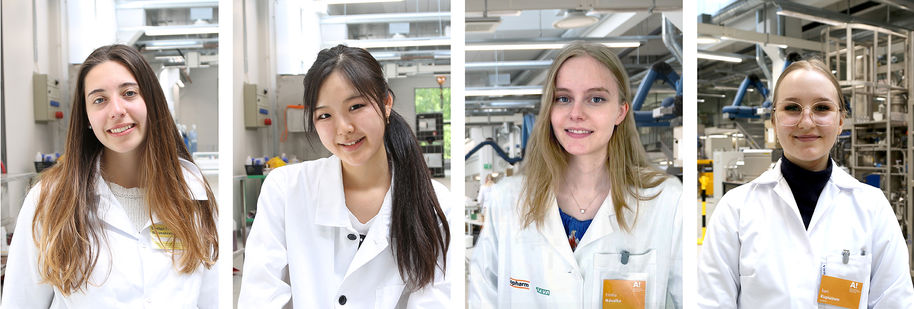
This real-world problem sparked a creative solution from four Aalto students taking part in the Design Meets Biomaterials course, Ena Naito, Louise Kallai, Emilia Ikävalko, and Sari Kupiainen. They have designed a completely new way of packaging cucumbers – a biobased liquid solution in which cucumbers are dipped. It forms a transparent film that dries up in a few seconds. The film can be washed off as a whole.
Later in June, the team will present their idea -- called DipWrap -- in the international Biodesign Challenge Summit. Over 50 student teams across the globe will present their projects combining biotechnology and design to a panel of leaders in academia, industry, art, and design.

The dip mixture contains a jelly-like, red algae-based substance called agar agar, carnauba wax dispersion and dispersed cellulose nanocrystals (CNC). One of the challenges the team faced was that they couldn’t find any previous studies on similar solutions.
‘We went to the lab every week and tested several materials. We came up with the idea of using agar, because we had used it for cooking. We added also wax to make more waterproof-film and CNC for its antibacterial properties,’ says Louise Kallai, a Master student in Chemical Engineering who is spending a year in student exchange at Aalto University.
The team believes that the dipping treatment could also be used for other vegetables and fruits as well.
‘This is a baby step, but hopefully it’s a beginning of something that could be commercialised and could spark interest in this kind of packaging. It also encourages people to question our daily choices,’ says Ena Naito, a master’s student in contemporary design.
The project was a part of CHEMARTS, a collaboration between The School of Chemical Engineering and The School of Arts, Design and Architecture, which aims to inspire students and researchersto create new concepts for bioeconomy by combining design, business thinking and natural materials science.
Follow the team's journey on Instagram: @dip.wrap
Photos are provided by the team.
Read more news

Significant donation to boost pavement engineering research and education
Companies and associations in the field have donated €400,000 to the School of Engineering.
Design strengthens industrial competitiveness – human-centered factory work at the core
Factory work is undergoing a transformation: new technologies and artificial intelligence are changing the content and roles of work. Aalto University’s Department of Design is studying this change from a human-centered perspective in the HiFive project.
Learning to slow down: cold-water swimming benefits explored in new study
Swimming in cold water offers a temporal slowdown, promoting stress management and mental clarity that lingers long after the experience, says research from Finland.