






‘Environmental art education should address the problem of human-centeredness’

What is your research about?
‘In my dissertation, I look at art education, which addresses environmental issues and seeks to promote cultural and ecological sustainability. My research is driven by considerations of whether existing approaches of environmental art education are sufficient in a time of ecological crises.
I paid particular attention to the theoretical and philosophical groundings of environmental art education. I found out that environmental art education does in many ways seek to challenge a human-centered and instrumental relationship with nature, but does not go far enough in these criticisms.
In my research, I set out to develop a new orientation for environmental art education. In recent posthumanistic thinking, I look for concepts and theories that would allow for a better understanding of the complex intertwinement of nature and culture. Using an artistic experiment based on orienteering, I outline how a new kind of theoretical thinking can help in reorienting environmental art education.’
What's important in it?
‘My research brings together and develops further an area of art education that is particularly topical at this time. I show that while environmental art education can be influential and comprehensive, its tradition is problematically tied to the presumptions of Western humanistic thinking. The presumption of the human as exceptional and as autonomous individual brings along contradictions to the ways in which the relationship between human and nature in environmental art education is treated and articulated.
Henrika YliriskuI suggest that environmental art education should engage with theories that allow unpacking human exceptionalism."
I think it is important to look critically at how we can build more sustainable futures. There is a lot of talk that our lifestyles should change and that we should learn to act in more responsible and sustainable ways – but do we offer appropriate approaches to that? Do we identify problems, limitations and potential internal inconsistencies in the approaches we have chosen?
I suggest that environmental art education should engage with theories that allow unpacking human exceptionalism. It is important to pay attention to multispecies relationships and different interdependencies. There is a need for concepts and theories that acknowledge the complex entanglement of human and nature, nature and culture, and human and nonhuman.’
Where can it lead to?
‘My research opens paths and visions for future environmental art education. It also addresses the need to continue rearticulating and theorizing the groundings for environmental art education. However, there already are many good existing practices in the field: they are often boldly experimental and encourage cross-disciplinary cooperation.
For art educators and others interested of linkages of art and environmental education, the research proposes a theoretical frame for developing further art pedagogical practices and research. It invites pedagogies that take into account undisciplined thinking, ambiguity, uncertainty and multiple ways of knowing.
The artistic approach makes it possible to deal makes it possible to deal with tensions associated with living in a time of ecological crises through practices that are experimental, critical, creative and functional. Indeed, environmental art education can help to create new stories of lives in common worlds, in which man is not at the center, but as one actor among other actors. It can bring queerness and complexity to the one-sided stories where humans only save and protect, or destroy and are careless.’
Artistic exploration based on orienteering
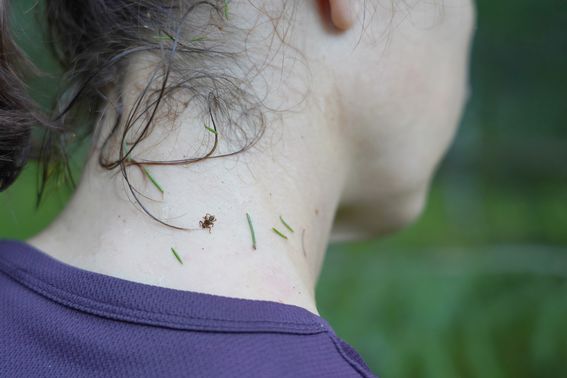
Ylirisku developed an orientation-based research method for taking posthumanist theories into the woods, seeking to generate a new kind of thinking in which sensory ways of knowing are paramount. While conducting research She navigated in the forests of Uusimaa district for nearly a thousand kilometers.
Photos: Henrika and Pasi Ylirisku



Read more news

Significant donation to boost pavement engineering research and education
Companies and associations in the field have donated €400,000 to the School of Engineering.
‘Mesoscale’ swimmers could pave way for drug delivery robots inside the body
Researchers have discovered how tiny organisms break the laws of physics to swim faster — such secrets of mesoscale physics and fluid dynamics can offer entirely new pathways for engineering and medicine.
Design strengthens industrial competitiveness – human-centered factory work at the core
Factory work is undergoing a transformation: new technologies and artificial intelligence are changing the content and roles of work. Aalto University’s Department of Design is studying this change from a human-centered perspective in the HiFive project.